



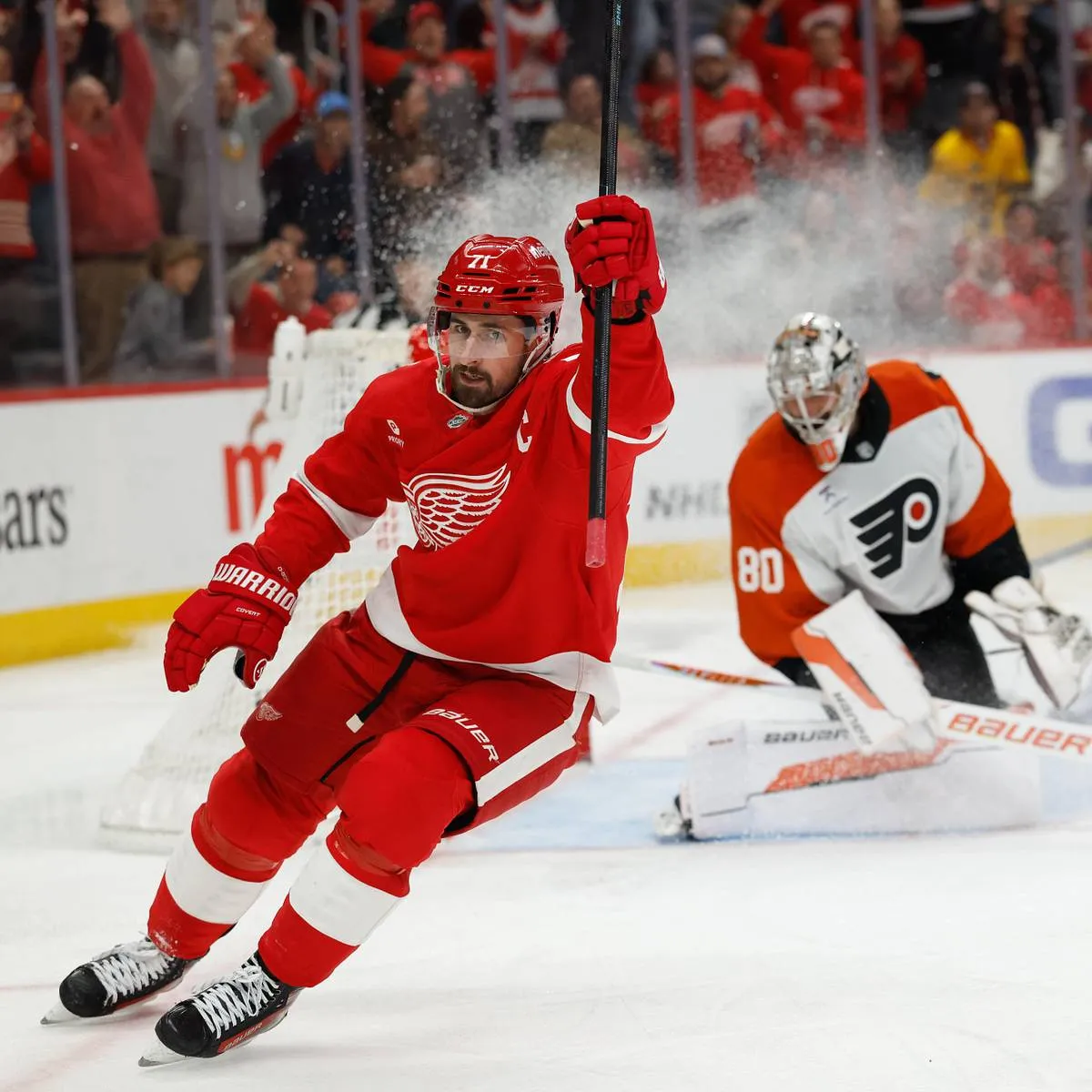
Dylan Larkin possesses only five games of Stanley Cup playoff experience across 11 NHL seasons with the Detroit Red Wings.
A Decade of Missed Playoffs
Larkin debuted in 2015-16 and appeared in exactly five postseason games that spring before the Red Wings began their extended absence from the playoffs. The team finished outside the postseason in each of the subsequent nine seasons through 2024-25. Larkin himself reached a career high of 34 goals in 2024-25 while playing at least 71 games in nine of his ten full seasons. Detroit held a playoff position at the 4 Nations Face-Off break yet finished outside the postseason for the tenth straight year.
The 2023-24 campaign followed an identical pattern. Detroit occupied a playoff spot at the trade deadline before missing by a tiebreaker. Yzerman’s front office added Justin Faulk and David Perron at the 2025 deadline without addressing center depth behind Larkin. Those acquisitions produced no measurable improvement in the standings.
Larkin signed an eight-year extension in March 2023 carrying an $8.7 million average annual value through the 2030-31 season. He has served as captain since January 2021. The Red Wings preached patience throughout the rebuild yet produced no net gain in Atlantic Division standing over the ten-year drought.
Management Inaction and Roster Gaps
Yzerman retained his role as general manager into the 2025-26 season. The organization possessed cap space, first-round draft picks and prospects yet chose measured deadline moves that left the roster short of contention. Larkin, at age 29 during the 2024-25 campaign, had already supplied multiple opportunities for the front office to convert Detroit into an annual playoff participant.
The late-season collapse in 2024-25 mirrored prior disappointments. Detroit battled for the Atlantic lead before the Olympic break only to fall out of the picture. Larkin missed time due to injury near the start of that slide but still logged substantial minutes across the schedule. The absence of aggressive roster upgrades at the deadline left the captain without additional support at the most critical juncture.
Larkin’s agent and Yzerman offered no public comment on the specific triggers for the request. The pattern of repeated near-misses and unchanged front-office direction supplied the cumulative weight. Five seasons remained on the contract at the moment of the request, giving Larkin leverage to influence his destination without forcing an outright holdout.
Leverage and Future Implications
A true number-one center commands significant return in any trade. The Red Wings could pursue a hockey trade that brings back another top-line center or a package of prospects and draft capital. Larkin maintained the leverage to avoid an extended public dispute with the organization that drafted him. Fans directed frustration at the player initially, yet the decade of missed opportunities pointed directly at management decisions.
The request closed the chapter on the patient rebuild approach. Detroit had developed a core yet never assembled the depth required for consistent postseason qualification. Larkin’s prime years coincided exactly with that shortfall.
Frequently Asked Questions
Sources

Par Mike Jonderson
Mike Jonderson is a passionate hockey analyst and expert in advanced NHL statistics. A former college player and mathematics graduate, he combines his understanding of the game with technical expertise to develop innovative predictive models and contribute to the evolution of modern hockey analytics.