The Eastern Conference Hockey League (ECHL) ground to a halt on Friday as the Professional Hockey Players’ Association (PHPA) commenced job action, forcing the immediate postponement of 13 games across the developmental league. The work stoppage marks a dramatic escalation in collective bargaining negotiations that have stretched on since January, leaving players, teams, and fans in limbo during the critical holiday season. With 30 teams affected—29 in the United States and one in Trois-Rivières, Quebec—the strike represents the first significant labor stoppage in the league’s recent history and raises serious questions about working conditions in professional hockey’s lower tiers.
The league, which operates two levels below the NHL, finds itself at a crossroads as both sides dig in on issues ranging from player compensation to travel conditions that have long been contentious among minor league athletes. The timing could not be worse for the ECHL, which typically draws its strongest attendance during the winter months and holiday breaks.
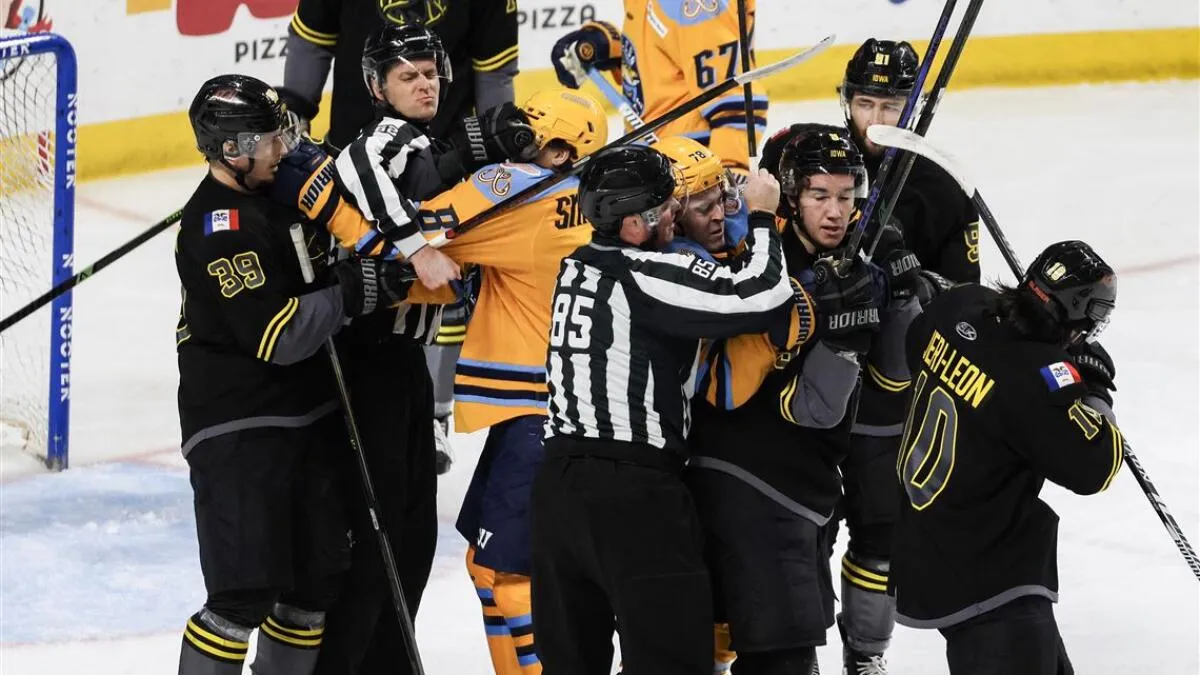
ECHL postpones 13 games due to players strike: immediate impact on the schedule
The first wave of cancellations hit the league Friday morning as the ECHL front office announced that 13 scheduled matchups would be postponed indefinitely. While specific team matchups were not detailed in the initial league statement, the affected games represented a significant portion of the weekend slate across the ECHL’s three divisions. The Florida Everblades, one of the league’s more prominent franchises, were among those bracing for impact as their players prepared to join the picket lines rather than take the ice for a five-game homestand at Hertz Arena.
Logan Lambdin, the players union representative for the Florida Everblades, expressed surprise at how quickly the situation escalated. “It’s not something we were expecting fully,” Lambdin told local media. “We thought we'd come to a deal before anything was set in stone that we were going to strike. But unfortunately now that it’s here, it’s kind of a shock that we're actually—to play the game of hockey—we got to go through a strike.” His comments reflect the uncertainty that has permeated locker rooms across the league as negotiations reached an impasse.
The league’s swift action to postpone rather than cancel games suggests hope for a resolution, but the financial clock is ticking. Each missed game represents lost revenue for teams that operate on razor-thin margins, while players face the immediate loss of weekly paychecks that already rank among the lowest in professional sports. The ECHL noted in a statement that “a strike would hurt everyone, including both the fans and the players themselves, who would stop getting paid and lose housing and medical benefits.”
Key issues behind the strike: travel, compensation, and working conditions
At the heart of the dispute are several core issues that players say make it nearly impossible to earn a sustainable living while maintaining peak performance. The PHPA has identified five primary sticking points in the negotiations: travel conditions for back-to-back games, holiday break provisions, guaranteed contracts, offseason health benefits, and overall player compensation.
Travel conditions represent perhaps the most contentious issue. Players report that grueling bus journeys between games are routinely counted as “days off” by the league, even when trips stretch to nine hours or more. This practice leaves athletes exhausted and recovery time minimal, creating serious safety concerns on the ice. For a league that schedules frequent back-to-back games to maximize revenue, the travel demands have become a breaking point for players who see their performance and health suffering.
Compensation remains a fundamental concern. Last season, ECHL rookies earned as little as $530 per week, while returning players made just $575 weekly. For a season that runs approximately 30 weeks, that translates to annual earnings between $15,900 and $17,250—barely above the poverty line in many markets where teams operate. The union is pushing for significant increases to account for inflation since the last CBA was signed in 2019, while the league counters that its latest proposal already represents a substantial improvement.
Negotiations breakdown: both sides present their case
The divide between the PHPA and ECHL management has grown increasingly bitter as both sides accuse the other of negotiating in bad faith. According to PHPA executive director Brian Ramsay, the union has been trying in earnest to reach a fair agreement. “Our members are simply seeking reasonable improvements that allow them to work safely and earn a sustainable living while continuing to perform at a high level,” Ramsay said in a statement announcing the strike. He added that “despite the union’s repeated efforts to meet and engage in bargaining, the league has continued to communicate directly with players in a manner that bypasses the union’s role as the exclusive bargaining representative.”
The ECHL presents a starkly different narrative. League officials claim they presented a “last, best, and final offer” that would have delivered a 20 percent salary increase in the first year alone, alongside higher per diems, more guaranteed off days, and expanded equipment provisions. The league’s proposal reportedly ups the salary cap by 19.8 percent, an improvement from the 16.4 percent increase posted publicly earlier in the week. “Unfortunately, union leaders deprived players of the opportunity to vote on our last, best, and final offer,” the league stated. “We did everything possible to avoid this outcome and hope that the union leadership will drop its unworkable scheduling demands, let the players vote on our offer, and make it possible for players to return to work.”
The standoff intensified last week when PHPA members voted overwhelmingly to authorize its negotiating committee to call for a strike. That vote gave union leadership the leverage it needed to take action after months of what they describe as stalled progress at the bargaining table. The league and union have been engaged in collective bargaining since January, making this one of the longest negotiation periods in recent ECHL history.
Impact on the hockey ecosystem: from prospects to communities
The ripple effects of the ECHL postpones 13 games due to players strike extend far beyond the immediate financial pain for players and teams. As a primary developmental feeder for both the AHL and NHL, the ECHL serves as a critical training ground for young prospects and a landing spot for veterans hoping to climb back to hockey’s highest levels. With games on hold, player development stalls, scouts lose evaluation opportunities, and the entire hockey pyramid feels the disruption.
For the communities that host ECHL franchises, the impact is equally severe. Many teams serve as affordable entertainment options in midsized markets, drawing families and dedicated fan bases that support local businesses on game nights. The loss of revenue during the holiday season—the ECHL’s busiest time—could prove catastrophic for some franchises operating on the financial edge. The league’s expansion in recent years, while growing the game’s footprint, has also stretched resources thin and created additional pressure to maintain profitability.
Players themselves face immediate consequences. Beyond the loss of weekly salary, striking players risk losing housing arrangements and medical benefits provided through their teams. The league was quick to point this out, noting that “a strike would hurt everyone, including both the fans and the players themselves, who would stop getting paid, and lose housing and medical benefits—something we all want to avoid.” For many players living paycheck to paycheck, the decision to strike represents an enormous personal sacrifice.
Fan reaction has been mixed, with many expressing solidarity for players seeking better conditions while lamenting the loss of their favorite winter pastime. Social media posts show supporters holding signs outside arenas, and some have begun fundraising efforts to help players cover expenses during the work stoppage. The passionate response underscores the deep connections between ECHL teams and their communities, relationships now strained by the labor dispute.
What happens next: path to resolution remains uncertain
The ECHL has made clear that its latest offer represents the best terms players can expect, warning that future proposals may need to account for revenue losses from missed games. “The ECHL made clear to union leadership that this was the best offer and that any future offers likely will need to account for losses in revenue attributable to missed games from a player strike,” the league stated. This positions the current proposal as a take-it-or-leave-it option, leaving little room for further negotiation.
For the PHPA, the challenge is maintaining unity among a membership that includes both young prospects eager to prove themselves and veteran players concerned about their hockey careers. The union must balance the legitimate grievances that led to the strike with the financial reality facing its members. As Everblades representative Lambdin noted, “We want to be out on the ice giving the fans what they pay for. And we want to be out there just as bad. But the end goal is getting treated fairly by the league at the end of the day.”
The coming days will be critical. If the strike extends beyond the initial postponements, the ECHL may be forced to cancel games outright, triggering contract clauses that could further complicate the relationship between players and teams. The league’s 30 franchises, already navigating the challenges of operating in smaller markets, will need to find ways to maintain fan engagement and community support while games remain on hold.
Historical precedent offers little guidance. Minor league hockey has seen labor disputes before, but few have resulted in full-scale strikes during the season. The uniqueness of this situation, combined with the ECHL’s role as a developmental league, means both sides are essentially writing the playbook as they go. What is certain is that the longer the work stoppage continues, the more difficult it becomes for either side to claim victory, and the greater the risk of lasting damage to the league’s reputation and financial stability.
The ECHL postpones 13 games due to players strike represents a watershed moment for minor professional hockey in North America. As negotiations remain at an impasse, the entire hockey community watches and waits to see whether the league and its players can find common ground before the damage becomes irreversible. For fans, players, and team owners alike, the hope is that the passion for the game that built the ECHL will ultimately forge a path back to the ice—but that path grows more uncertain with each passing day.
Frequently Asked Questions

Par Mike Jonderson
Mike Jonderson is a passionate hockey analyst and expert in advanced NHL statistics. A former college player and mathematics graduate, he combines his understanding of the game with technical expertise to develop innovative predictive models and contribute to the evolution of modern hockey analytics.