






The Edmonton Oilers entered the 2025-26 season with sky-high expectations after another deep playoff run, but the path to opening night proved to be one of calculated roster decisions, intense training camp battles, and strategic planning. With Connor McDavid’s new extension serving as the offseason’s marquee storyline and significant roster turnover throughout the lineup, the organization faced critical decisions that would shape their Stanley Cup ambitions for the coming campaign.
From the moment 55 players gathered for training camp in mid-September to the final roster cuts in early October, the Oilers’ journey toward jumpstarting their season reflected both continuity and change. The departure of familiar faces through trades and free agency created opportunities for prospects and newcomers alike, setting the stage for a fascinating evolution of a team that has been knocking on the championship door.
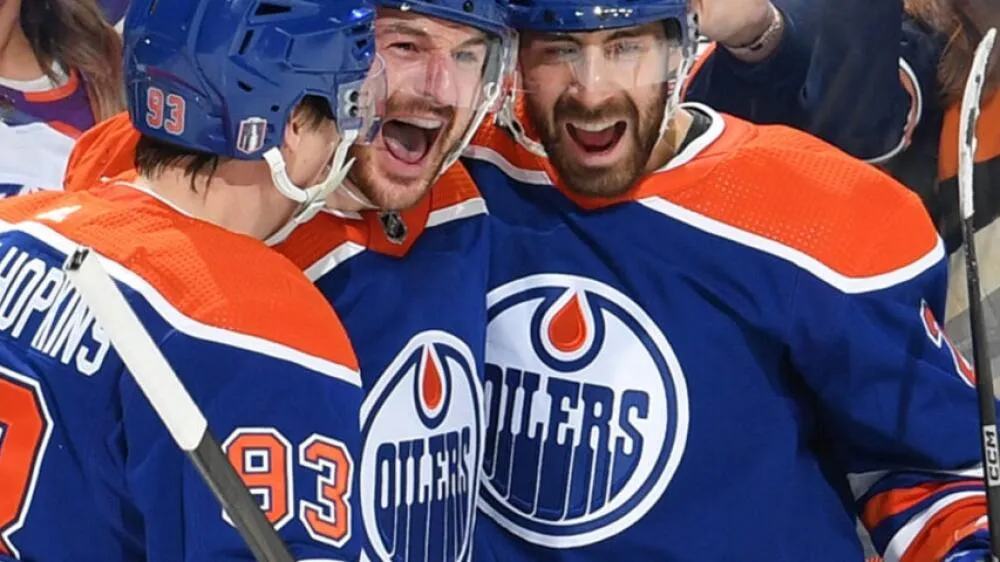
How the Edmonton Oilers jumpstart season 2025-26 began with training camp battles
Training camp opened on September 17th with one of the largest groups the Oilers have assembled in recent memory. The 55-player camp roster included 33 forwards, 16 defensemen, and six goaltenders, all competing for a limited number of NHL positions. Unlike previous seasons, general manager Stan Bowman opted not to bring in any professional tryout (PTO) candidates, signaling a clear organizational philosophy: internal development would take precedence over short-term veteran additions.
The absence of PTO invites surprised many analysts who expected the team to add depth, particularly in goal. With Alexander Georgiev signing elsewhere and the free agent market thinning rapidly, the decision to rely on internal options represented both confidence and risk. Players like former fan-favorite Klim Kostin expressed interest in returning, but the Oilers brass remained committed to giving their prospects every opportunity to seize roster spots.
The rookie games against the Calgary Flames during that opening weekend provided immediate clarity about who had NHL potential. Matt Savoie emerged as perhaps the most impressive prospect, dominating shifts and showcasing the high-end skill that made him a first-round selection. His performance sparked debates about whether the 21-year-old was ready for prime-time duty or if another development season would better serve his long-term trajectory.
Beyond Savoie, several dark horse candidates made compelling cases. Noah Philp impressed with his two-way awareness, while Ike Howard’s skating and offensive instincts caught the coaching staff’s attention. David Tomasek, Josh Samanski, Quinn Hutson, and Viljami Marjala all flashed moments of NHL-caliber play, creating genuine competition for the available roster spots. This depth of talent represented a marked improvement from recent seasons when Philip Broberg and Dylan Holloway were the only high-end prospects knocking on the door.
The training camp structure emphasized both individual skill development and team system integration. Head coach Kris Knoblauch rotated line combinations extensively during practice sessions and preseason games, searching for chemistry and evaluating how different players fit within the team’s structured yet aggressive playing style. The coaching staff paid particular attention to which players could adapt quickly to the NHL pace and which needed more seasoning in the AHL.
Building the Edmonton Oilers jumpstart season 2025-26 opening night roster
By October 8th, the final roster took shape, and the decisions reflected both organizational priorities and injury circumstances. The team settled on a 23-player active roster with two players on injured reserve, creating a delicate balance given their precarious salary cap situation. With under $1,000 in cap space remaining, roster flexibility became virtually non-existent, placing enormous pressure on player health and performance.
The forward group featured a blend of established stars, offseason acquisitions, and surprising inclusions:
- Top-tier talent: Connor McDavid and Leon Draisaitl anchored the attack as always
- Veteran additions: Trent Frederic and Andrew Mangiapane brought new dimensions acquired through offseason trades
- Returning core: Ryan Nugent-Hopkins, Adam Henrique, Kasperi Kapanen, and Vasily Podkolzin provided familiar faces
- Young blood: Matthew Savoie, James Hamblin, and Noah Philp earned their NHL opportunities
Notably absent from opening night were Zach Hyman and Mattias Janmark, both sidelined with injuries that would test the team’s forward depth immediately. These injuries paradoxically created the roster flexibility that allowed younger players like Savoie to make the team, though they weakened the overall lineup strength in the short term.
The defensive corps maintained considerable continuity with eight blue-liners making the cut. Evan Bouchard, Darnell Nurse, and Mattias Ekholm formed the veteran leadership core, while newcomer Jake Walman brought offensive instincts from the left side. Brett Kulak, Ty Emberson, Troy Stecher, and Alec Regula rounded out the group, with the latter two expected to rotate as healthy scratches depending on matchups. Both Stecher and Regula had proven their value during the previous season’s playoff run, making them valuable insurance policies who required waivers for AHL assignment.
Between the pipes, Stuart Skinner and Calvin Pickard returned as the tandem, providing stability in the crease. The decision not to pursue additional goaltending depth via PTO reflected organizational confidence in both netminders, though it left little margin for error if either struggled or suffered injury. As outlined in the recent analysis of the Oilers’ opening 10 games, goaltending performance would become a critical storyline in the early season.
Strategic roster construction for the Edmonton Oilers jumpstart season 2025-26
The offseason roster turnover represented one of the most significant in franchise history, with the departures fundamentally altering the team’s identity. Trading Evander Kane freed up substantial cap space while removing a player whose injury history had become problematic. Viktor Arvidsson’s departure via trade represented another salary cap casualty, despite his offensive contributions during the playoff run.
Free agency saw an exodus of familiar faces that had contributed to the team’s success. Connor Brown, who had provided valuable depth scoring, signed elsewhere. Drake Caggiula returned to free agency after his second stint with the organization. Perhaps most notable was Jeff Skinner’s departure—the veteran winger had signed a one-year deal hoping to revitalize his career but found himself moved on after a single season.
These departures created opportunities that the front office addressed through strategic acquisitions. Andrew Mangiapane arrived via trade, bringing a proven track record of two-way play and playoff experience. His 200-foot game fit precisely what the Oilers needed as they sought to balance offensive firepower with defensive responsibility. Trent Frederic came over from Boston, adding physicality and net-front presence that would prove valuable on the power play and in playoff-style games.
The salary cap management required surgical precision. With McDavid’s extension kicking in and Draisaitl having signed his lucrative long-term deal, the Oilers operated in a cap environment that left virtually no room for error. Every roster decision carried financial implications, and the lack of cap flexibility meant that performance issues or injuries could create cascading problems without easy solutions.
Bowman’s willingness to trust prospects rather than veterans on minimum contracts or PTOs reflected lessons learned from previous roster management mistakes. The Philip Broberg and Dylan Holloway situations—where two promising young players eventually left for offer sheets elsewhere—served as cautionary tales about the importance of giving prospects NHL opportunities when they’re ready. The organization appeared determined not to repeat those errors with Savoie and other prospects knocking on the door.
Key players driving the Edmonton Oilers jumpstart season 2025-26 momentum
Connor McDavid’s presence loomed over every aspect of the team’s preparation. Ryan Nugent-Hopkins has started the 2025-26 season with impressive production, but McDavid remained the engine driving the entire operation. His new extension, which would keep him in Edmonton through the prime years of his career, provided organizational stability and sent a message about championship expectations. Early in the season, McDavid took on expanded responsibilities including additional penalty-killing duties, showcasing his commitment to all aspects of the game.
Leon Draisaitl entered the campaign fresh off signing his own massive extension, cementing the McDavid-Draisaitl partnership as the NHL’s most formidable duo for years to come. The German superstar’s willingness to play both center and wing provided Knoblauch with tactical flexibility, allowing the coach to load up the top line or spread talent across multiple lines depending on game situations. Draisaitl’s chemistry with McDavid remained unparalleled, but his ability to drive his own line made the Oilers a nightmare for opponents trying to match up.
The integration of newcomers proved critical to the season’s early trajectory. Andrew Mangiapane needed to establish chemistry quickly, initially drawing opportunities alongside McDavid and Draisaitl before finding his optimal role within the lineup. His defensive awareness and responsible two-way play provided the kind of complementary skill set that championship teams require from their middle-six forwards. Trent Frederic brought a physical dimension that the Oilers had lacked, willing to engage in board battles and create space for skilled linemates.
Among the young players, Matthew Savoie’s inclusion generated the most excitement and scrutiny. The skilled forward brought creativity and offensive instincts that the coaching staff hoped to harness within a structured system. His development curve during the opening weeks would determine whether he remained with the NHL club all season or benefited from additional AHL seasoning. The organization’s patience with Savoie’s learning process would be tested by both his inevitable rookie mistakes and the team’s pressing need for depth scoring.
On defense, Evan Bouchard carried enormous responsibility as the team’s quarterback on the power play and primary puck-mover at even strength. His offensive production remained vital to the team’s success, but improved defensive play represented the key to his evolution into a true number-one defenseman. Mattias Ekholm provided steady veteran presence and shutdown capability, often matching up against opponents’ top lines while contributing offensively when opportunities arose.
Tactical approach defining the Edmonton Oilers jumpstart season 2025-26
Head coach Kris Knoblauch entered his second full season with clear systems and expectations firmly established. The team’s defensive structure showed marked improvement from previous campaigns, with better gap control, more aggressive stick work in passing lanes, and improved commitment to protecting the slot. These defensive improvements didn’t come at the expense of offense—the Oilers still generated substantial chances through their transition game and power play prowess.
The heavy reliance on McDavid and Draisaitl became evident immediately, with both superstars logging over 22 minutes per game among the highest totals for NHL forwards. This workload reflected both their elite capabilities and concerning depth issues that emerged when either player left the ice. Knoblauch’s willingness to deploy his stars in all situations, including penalty killing, demonstrated both trust and necessity given the roster construction.
Line combinations remained in flux during the early season as the coaching staff searched for optimal chemistry. The decision to initially unite McDavid and Draisaitl on the same line represented a tactical choice driven by specific matchups and game situations. This “mega-line” approach maximized offensive firepower but left secondary lines without superstar talent, creating a strategic trade-off that Knoblauch navigated based on score, opponent, and personnel availability.
Special teams excellence remained non-negotiable for a team with championship aspirations. The power play, featuring Bouchard at the point with McDavid and Draisaitl orchestrating, needed to maintain elite conversion rates to compensate for any even-strength struggles. The penalty kill faced questions given personnel changes, requiring young players and newcomers to quickly master the system and communication necessary for success while shorthanded.
Challenges facing the Edmonton Oilers jumpstart season 2025-26 campaign
The opening weeks exposed vulnerabilities that the organization hoped to address as the season progressed. Offensive droughts emerged as a concerning pattern, with the team struggling to generate sustained pressure during certain stretches despite possessing elite talent. These scoring slumps often coincided with goaltending challenges, creating difficult games where the margin for error disappeared entirely.
Depth scoring remained perhaps the most pressing concern. With Hyman and Janmark sidelined, the middle-six forward group needed players to step up and contribute consistent offense. The question of whether Mangiapane, Frederic, Henrique, and others could provide 15-20 goals each loomed large over the season’s prospects. Young players like Savoie faced pressure to contribute immediately rather than being afforded typical rookie development grace periods.
Injury management became critical given the razor-thin cap situation. The team lacked the financial flexibility to make significant in-season additions without moving salary out, meaning that any extended absences would need to be filled internally. The depth in Bakersfield would be tested repeatedly, and prospects needed to be ready for NHL call-ups on short notice. This placed enormous importance on organizational depth and development systems.
Goaltending consistency represented another potential pressure point. Stuart Skinner needed to build on his previous season’s strong finish and establish himself as a number-one netminder capable of carrying the team through extended stretches. Calvin Pickard’s role as a reliable backup became magnified given the lack of organizational depth at the position. Any prolonged struggles in goal would force difficult decisions with limited options for external solutions.
The defensive corps, while experienced, lacked the true number-one shutdown defenseman that elite teams typically possess. Bouchard’s offensive gifts were undeniable, but matching him against opponents’ top lines presented challenges that often required creative deployment. Ekholm provided stability, but at 34 years old, questions about workload management and maintaining effectiveness over an 82-game season were legitimate. The team needed its depth defensemen—Emberson, Stecher, Regula—to provide solid minutes when called upon without exposing weaknesses that opponents could exploit.
What the Edmonton Oilers jumpstart season 2025-26 means looking ahead
The franchise finds itself in a championship window that won’t remain open indefinitely. With McDavid and Draisaitl both locked into long-term contracts, the organizational commitment to winning now couldn’t be clearer. The roster construction choices made during the offseason and training camp reflected this urgency, prioritizing proven NHL players over potential while still creating opportunities for select prospects ready to contribute.
The decisions made in constructing this season’s roster will echo beyond 2025-26. How the organization manages young talent like Savoie, whether prospects develop into reliable NHL players, and if depth additions prove sufficient—all these factors will influence future roster building. Learning from past mistakes with Broberg and Holloway means giving opportunities, but also having patience when growing pains emerge.
Financial constraints will continue shaping every decision. The salary cap situation, while manageable, requires creative solutions and calculated risks. The team cannot simply add pieces at the trade deadline without subtracting elsewhere, meaning that internal development and health will largely determine how far this group can advance. Any significant upgrade likely requires moving out a roster player, creating difficult decisions about who is expendable.
The early season performance, as documented in detailed breakdowns of the opening games, provides data points about what’s working and what needs adjustment. Underlying metrics, possession numbers, and advanced statistics will help the coaching staff and management identify areas requiring attention. The willingness to make in-season adjustments—whether tactical or personnel-based—could mean the difference between another deep playoff run and an earlier-than-expected exit.
The Oilers’ approach to jumpstarting the 2025-26 season balanced continuity with change, veteran presence with youthful energy, and star power with depth development. Whether these decisions prove wise will be determined over the coming months as the team navigates the grueling NHL schedule. With expectations set squarely on championship contention, anything less than a return to the Stanley Cup Finals will likely be viewed as disappointing. The pieces are in place for success—now the challenge lies in maximizing the potential of this carefully constructed roster through adversity, adjustment, and unwavering commitment to the ultimate goal.

Par Mike Jonderson
Mike Jonderson is a passionate hockey analyst and expert in advanced NHL statistics. A former college player and mathematics graduate, he combines his understanding of the game with technical expertise to develop innovative predictive models and contribute to the evolution of modern hockey analytics.