




The Edmonton Oilers find themselves at a crossroads. After two consecutive trips to the Stanley Cup Final, the team’s early-season struggles have ignited intense speculation about potential roster moves. At the center of the rumor mill sits Nashville Predators goaltender Juuse Saros, whose name has been linked to Edmonton as a potential solution to the team’s inconsistent netminding. The buzz around a possible blockbuster deal has captivated fans and analysts alike, but the reality of executing such a trade presents significant challenges that extend far beyond simple desire.
General manager Stan Bowman returned from the NHL GM meetings with a measured message about the team’s goaltending situation, calling the current tandem “average” while emphasizing that defensive breakdowns and inconsistent offensive play share responsibility for the team’s struggles. Yet the whispers about Saros persist, fueled by the Oilers’ championship aspirations and the urgent need to stabilize a position that has been questioned throughout the season.
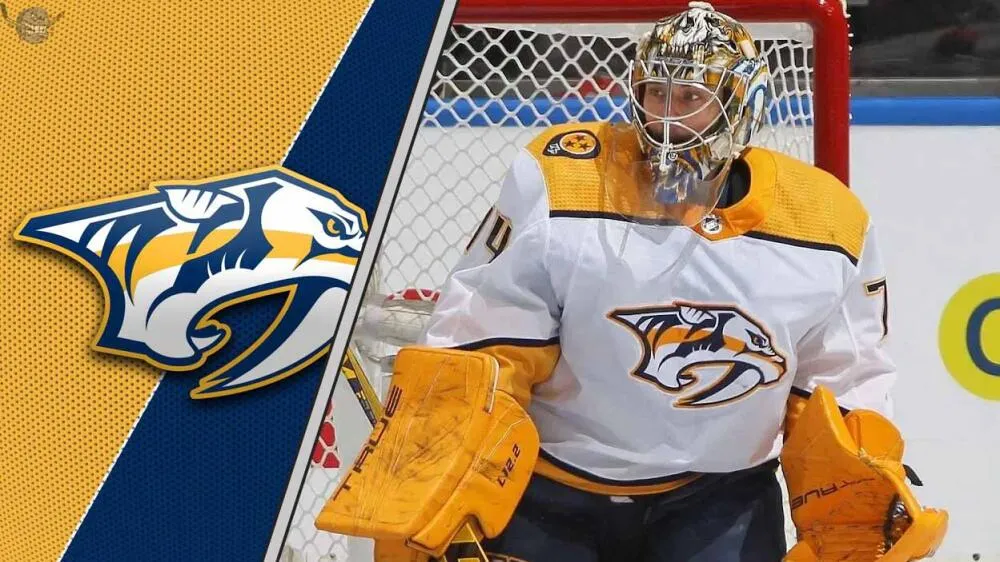
Understanding the Juuse Saros trade speculation involving Edmonton Oilers
The connection between the Edmonton Oilers and Juuse Saros makes sense on paper. The Finnish netminder has established himself as one of the NHL’s most consistent goaltenders over the past several seasons, delivering reliable performances for a Nashville team that has often struggled to provide adequate defensive support. Multiple league sources have confirmed that Edmonton is among several teams monitoring Saros’ availability, recognizing his experience and proven track record in high-pressure situations.
Saros carries a cap hit of $7.74 million through the 2032-33 season, having signed an eight-year extension that kicks in this year. At 30 years old, he represents the type of veteran presence that could theoretically provide the stability Edmonton needs between the pipes. His career save percentage of .918 and his ability to handle significant workloads make him an attractive target for any team with championship ambitions.
However, the enthusiasm surrounding this potential acquisition has been tempered by several prominent insiders who question whether Saros truly represents the answer to Edmonton’s problems. The Hockey Writers reported that analyst Frank Seravalli poured cold water on the idea, arguing that Saros’ hefty contract, declining numbers, and playoff concerns make him a poor fit for Edmonton. Seravalli suggested that the only scenario in which the Oilers pursue Saros would be if Nashville retained significant salary or attached sweeteners to make the deal more palatable.
The skepticism extends beyond just the financial implications. Saros is entering the first year of a contract that will take him through his age-39 season, raising legitimate questions about long-term value and potential decline. For a team already dealing with cap constraints and limited trade assets, committing to such a lengthy deal represents an enormous gamble that could handcuff the organization for years to come.
The financial puzzle of Edmonton Oilers Juuse Saros trade rumors
Perhaps the most significant obstacle to any potential deal between Edmonton and Nashville involves the salary cap mathematics. The Oilers currently operate with minimal cap flexibility, making it nearly impossible to absorb Saros’ $7.74 million hit without significant maneuvering. This reality has forced analysts to construct elaborate trade scenarios that involve multiple moving parts and substantial salary retention.
According to The Athletic’s analysis, making a Saros deal work would likely require Nashville to accept Stuart Skinner and Adam Henrique in return while also retaining a portion of Saros’ salary. Even with such adjustments, Edmonton would need to include premium assets like first-round picks and promising young players such as Matt Savoie to convince the Predators to facilitate such a complicated transaction.
The complexity doesn’t end there. Edmonton has several players with no-movement or no-trade clauses that limit Bowman’s flexibility in constructing a competitive offer. Beyond the untouchables like Connor McDavid, Leon Draisaitl, and Zach Hyman, contracts held by players such as Darnell Nurse and the newly acquired Trent Frederic include various forms of trade protection that complicate any significant roster shakeup.
Jason Gregor of Sports 1440 emphasized the challenge from Nashville’s perspective, stating flatly that “The Predators aren’t going to retain 50% on Juuse Saros. They’d probably trade him, but not at 50%.” This assessment highlights the fundamental disconnect between what Edmonton needs to make the money work and what Nashville would reasonably accept in a trade negotiation.
The Oilers’ limited trade chips further complicate matters. Beyond their draft picks their second-round selection in 2026 and their first and second-rounders in 2027 dmonton lacks the type of young, controllable assets that typically headline blockbuster deals. The team has already sacrificed significant draft capital in recent years to bolster their championship window, leaving the cupboard somewhat bare when it comes to future assets.
Alternative goaltending solutions for the Edmonton Oilers beyond Saros trade rumors
While Juuse Saros dominates the headlines, prudent management suggests exploring less costly alternatives that could address Edmonton’s needs without mortgaging the future. The concept of a “shake-up trade” doesn’t necessarily require landing the biggest name available; sometimes the right fit matters more than the biggest splash.
Detroit’s Sebastian Cossa has emerged as an intriguing option for teams seeking goaltending help. The young netminder has posted impressive numbers in the AHL, recording save percentages of .913 and .911 over his last two full seasons while starting this campaign with a sparkling .939 mark through four games. His development trajectory suggests he could provide meaningful NHL contributions sooner rather than later, and his entry-level contract would give Edmonton cost certainty and cap flexibility.
Another name that continues to circulate in Edmonton circles is Marc-Andre Fleury. Though there’s been no indication that the future Hall of Famer plans to return from his retirement, as discussed in recent Oilers goaltending analysis, Bowman would be wise to maintain communication with Fleury’s camp. The veteran’s championship pedigree and mentorship abilities could provide immeasurable value if he chose to make a comeback, even for a short-term rental situation.
The broader goaltending market presents additional possibilities that don’t carry Saros-level commitments. Columbus’ Elvis Merzlikins, Buffalo’s Ukko-Luukkonen, and even more under-the-radar options from teams outside the playoff picture could become available at more reasonable price points. These alternatives might not generate the same excitement as landing a marquee name, but they could provide incremental improvement without devastating the asset cupboard.
Some analysts have suggested that addressing the backup position might be more realistic than swinging for a new starter. Calvin Pickard has struggled in his limited action, and upgrading that role with a younger goaltender who could potentially develop into something more would give Edmonton options both now and in future seasons when Stuart Skinner, Pickard, and AHL netminder Connor Ingram all reach free agency.
What Edmonton Oilers Juuse Saros trade rumors reveal about team’s championship window
The persistent speculation surrounding a potential Saros acquisition reflects deeper truths about the Oilers’ current organizational philosophy and timeline. Management clearly views the team’s championship window as open now, with McDavid and Draisaitl in their prime years and a core that has proven capable of reaching hockey’s biggest stage. This urgency makes bold moves tempting, even when the cost-benefit analysis suggests caution.
The friction between competing philosophies has become increasingly apparent. On one hand, ownership and a passionate fanbase expect the team to capitalize on generational talent and maximize every opportunity to compete for championships. On the other, sound management principles suggest avoiding desperate moves that compromise long-term stability for uncertain short-term gains. Finding the balance between ambition and prudence represents Bowman’s greatest challenge in his first season leading hockey operations in Edmonton.
The team’s current struggles have amplified these tensions. Sitting with an inconsistent record and facing questions about goaltending, defensive structure, and secondary scoring, the Oilers have provided plenty of ammunition for critics who believe more aggressive intervention is necessary. Yet the organization also recognizes that knee-jerk reactions to early-season adversity can create problems that far outlast temporary slumps.
Understanding the trade market landscape provides additional context for why the Saros rumors may ultimately lead nowhere. Other teams with goaltending needs or example the Carolina Hurricanes, Colorado Avalanche, or even Toronto Maple Leafs depending on how their season unfolds ould emerge as more appealing trade partners for Nashville. These organizations might offer cleaner deals without the cap complications that plague Edmonton’s pursuit, potentially pricing the Oilers out of serious contention before negotiations gain momentum.
The reality facing Edmonton likely involves patience rather than spectacle. While recent analysis of the Oilers’ goaltending challenges has explored various trade scenarios, the most probable outcome may be riding with the current tandem while making smaller adjustments around the edges. This approach might not satisfy fans clamoring for immediate action, but it preserves flexibility for deadline moves when the market dynamics shift and more reasonable options emerge.
The path forward for Edmonton as Juuse Saros trade rumors simmer
As November progresses into December and the trade deadline approaches, the Edmonton Oilers face critical decisions about their goaltending situation and overall roster construction. The Juuse Saros speculation has served its purpose in highlighting the team’s needs and exploring potential solutions, but translating rumor into reality requires overcoming substantial obstacles that may prove insurmountable.
Stan Bowman’s challenge involves distinguishing between genuine opportunities and fool’s gold. A Saros trade might check certain boxes from a talent perspective, but the financial gymnastics required and the long-term commitments involved suggest this particular solution creates as many problems as it solves. The shrewd play might involve patience, allowing the current group to work through early-season inconsistencies while monitoring the market for more palatable alternatives.
The broader lesson from the Edmonton Oilers Juuse Saros trade rumors extends beyond one potential transaction. It reveals a franchise at an inflection point, weighing immediate championship aspirations against sustainable roster building. How Bowman navigates these competing priorities will define not just this season but the remainder of the team’s window with McDavid and Draisaitl as the foundation. Whether that involves a blockbuster goalie trade, a series of smaller moves, or staying the course with internal solutions remains to be seen, but the speculation alone demonstrates the high stakes and intense pressure surrounding every decision in Oil Country.
Frequently Asked Questions

Par Mike Jonderson
Mike Jonderson is a passionate hockey analyst and expert in advanced NHL statistics. A former college player and mathematics graduate, he combines his understanding of the game with technical expertise to develop innovative predictive models and contribute to the evolution of modern hockey analytics.