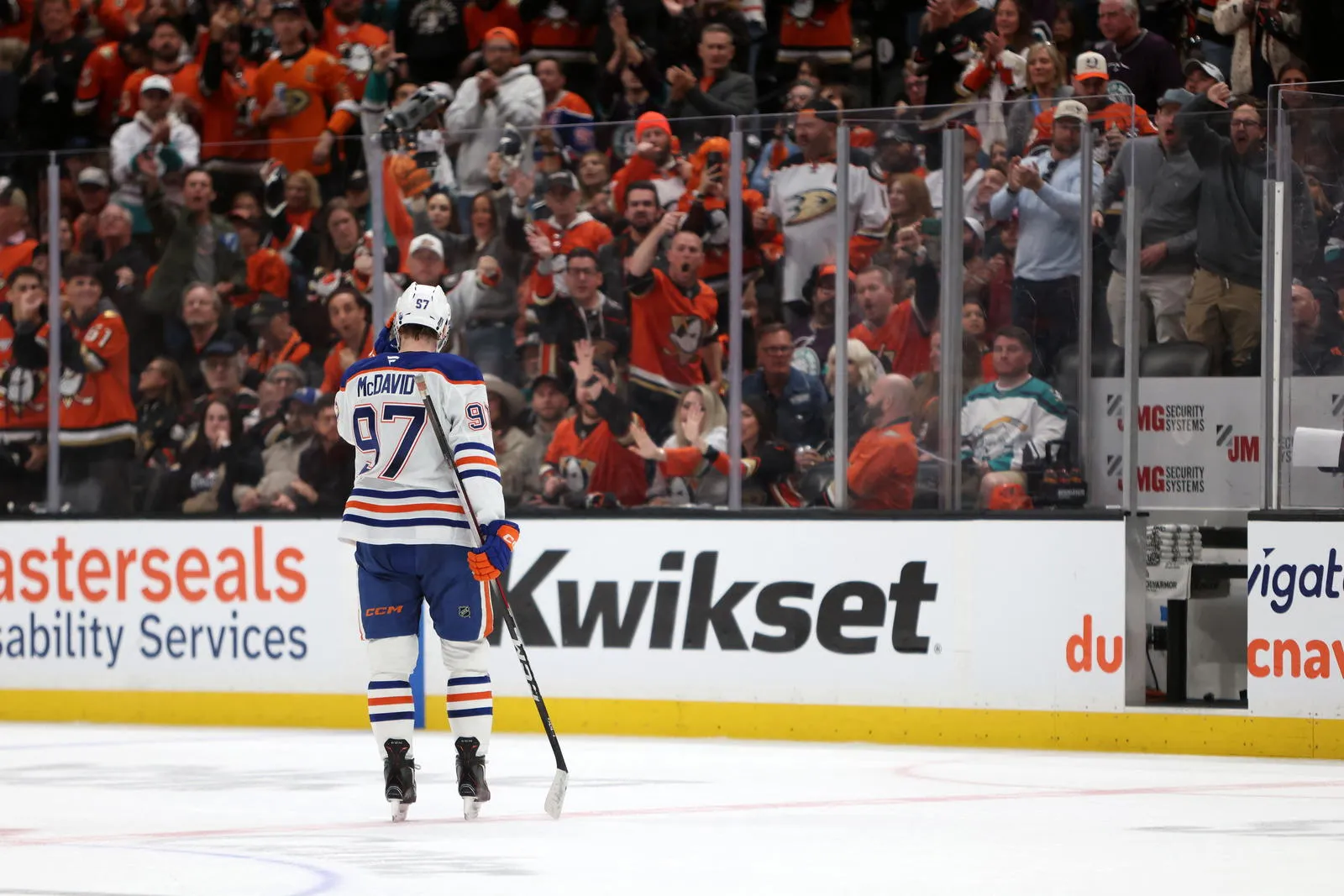
The Edmonton Oilers entered the 2025-26 Stanley Cup playoffs with home-ice advantage and the weight of back-to-back final appearances. Yet, they fell 4-2 to the Anaheim Ducks in the first round, capped by a 5-2 Game 6 loss.[1][2] Connor McDavid and Leon Draisaitl led the core, but the team never recaptured its elite form. “We were an average team all year. When you’re an average team with high expectations, you’re going to be disappointed,” McDavid said after the elimination.[3]
Coach Kris Knoblauch acknowledged the roster gaps post-Game 6. “There was a lot of (high) expectations on this team. We had some holes with our team. I thought we made the most of it.” The Oilers’ season exposed persistent issues in net, depth and health, turning promise into frustration.
What went wrong in the playoffs
The Oilers started strong with a Game 1 win, thanks to depth like Kasperi Kapanen. But the Ducks quickly asserted control, frustrating McDavid early—he went pointless in the first two games—and exploiting Edmonton’s slow starts.[3] Anaheim’s speed and power play overwhelmed, tying the series before pulling ahead 3-1 after a controversial Game 4 OT goal. Edmonton clawed back in Game 5 with a 4-1 victory, but couldn’t sustain momentum.
Lack of urgency defined the series. The Ducks, who challenged Edmonton regularly in the regular season, outscored them decisively. McDavid noted post-elimination, “That’s been the whole year—we’ve been searching for consistency the whole year. Obviously, we didn’t find it in the playoffs.”[3] Draisaitl echoed, “Never really found what you need to find this time of year… just not good enough.”
Defensive structure held initially with the league’s top six blueliners, but penalties and special teams faltered. The penalty kill missed key contributors like Adam Henrique, sidelined early. Anaheim capitalized, advancing past the first round for the first time since 2017.[4]
Overall, the Oilers paced themselves too leisurely, mirroring a regular season plagued by inconsistency. They underestimated a Pacific rival capable of matching their offense.
Goaltending instability plagued the core
Management punted on early offseason promises to upgrade netminding. Sticking with Stuart Skinner and Calvin Pickard bred uncertainty from training camp. GM Stan Bowman traded for Tristan Jarry midseason as a fallback, but he struggled to integrate after a solid Penguins start.
Connor Ingram arrived as a “project” from Utah and outperformed expectations on a cheap deal. Yet neither inspired confidence in high-stakes moments. Jarry’s two remaining contract years loom as a burden, while Ingram hits UFA status seeking a bigger role.[3]
The carousel eroded trust. Early signs pointed to Skinner trade rumors, but no blockbuster like Juuse Saros materialized. Goaltending woes amplified other flaws, wasting prime years from McDavid and Draisaitl.[5]
Pickard’s AHL demotion midseason underscored the mess. Depth goaltending remains a priority, but cap constraints from recent extensions complicate fixes.
Forward depth failed to materialize
Bowman cleared cap for McDavid’s extension drama by moving Viktor Arvidsson, letting Corey Perry and Connor Brown walk, and absorbing prior offer-sheet losses like Dylan Holloway. Midseason signing Jack Roslovic added regular-season pop but vanished in playoffs—one point in six games.
Rookies Matt Savoie impressed, but Isaac Howard languished in the AHL. New additions Jason Dickinson, Connor Murphy and Colton Dach offered mixed results—only Dach holds RFA control. Kasperi Kapanen shone with six playoff points, but his price tags a decision.
Long-term bets like Trent Frederic’s eight-year pact yielded seven points in 74 games. Jake Walman’s seven-year extension and Mattias Ekholm’s three-year deal tied up funds without forward solutions. Henrique’s injury hurt faceoffs and PK.
The top stars carried too much. Without reliable third- and fourth-line production, the Oilers lacked the layers for a deep run.
Here’s a snapshot of key forward UFAs:
- Jack Roslovic: Depth regular, playoff fade
- Kasperi Kapanen: Playoff performer, term/cost questions
- Adam Henrique: PK specialist, short-term fit?
- Jason Dickinson: Two-way center, re-sign target
Injuries compounded the struggles
Draisaitl’s lower-body issue sidelined him for the final 14 regular-season games; he returned for playoffs but wasn’t full strength.[6] Zach Hyman missed six contests before a rusty Game 82 return. McDavid’s Game 2 ankle tweak forced him to overcompensate through the series.
These ailments hit at critical junctures. McDavid played hurt, limiting explosiveness against Ducks’ containment. Draisaitl and Hyman couldn’t provide full support.[7]
Health derailed depth too. Henrique’s early playoff absence exposed PK weaknesses. Ekholm battled injuries amid contract pressure.
Cumulative toll amplified roster holes. A fully healthy group might have advanced, but reality exposed vulnerabilities.
Offseason crossroads ahead
Nine NHL UFAs loom, including 10 with Pickard. Retaining Murphy at 33 risks term for AAV savings. Dickinson merits a two-way deal, but cap math forces choices.
Burning questions persist:
- Offload Frederic’s albatross?
- Pursue top-six forward?
- Rookies like Savoie ready for elevation?
- Knoblauch’s job secure?
McDavid’s recent extension bought a window, but this flameout fuels trade whispers. He’s contracted and committed—for now.[3]
Bowman faces pressure to retool around the core. For more on the Ducks’ upset, check NHL.com’s series coverage.[4]
The Oilers must address net, depth and consistency swiftly. Another average year won’t cut it with Cup-or-bust stakes. A smart offseason could reignite contention; missteps risk fracturing the dynasty dream.
Frequently Asked Questions

Par Mike Jonderson
Mike Jonderson is a passionate hockey analyst and expert in advanced NHL statistics. A former college player and mathematics graduate, he combines his understanding of the game with technical expertise to develop innovative predictive models and contribute to the evolution of modern hockey analytics.