











The Edmonton Oilers find themselves at the centre of NHL trade speculation once again as the 2025-26 season unfolds. Two names have dominated recent discussions: defenceman Darnell Nurse and Buffalo Sabres goaltender Ukko-Pekka Luukkonen. While Nurse has been the subject of fan-driven trade chatter for months, Luukkonen has emerged as a realistic target to address the Oilers’ persistent goaltending concerns. These rumours intersect at a critical juncture for general manager Stan Bowman, who must balance salary cap constraints with the imperative to maximize the championship window of Connor McDavid and Leon Draisaitl.
The speculation surrounding both players reveals much about Edmonton’s current roster challenges. Nurse carries a hefty $9.25 million cap hit and a no-movement clause that complicates any potential deal, while Luukkonen represents a more affordable option at $4.75 million annually. Understanding the substance behind these rumours requires separating fan frustration from legitimate insider reporting and examining the financial realities that shape every potential transaction.
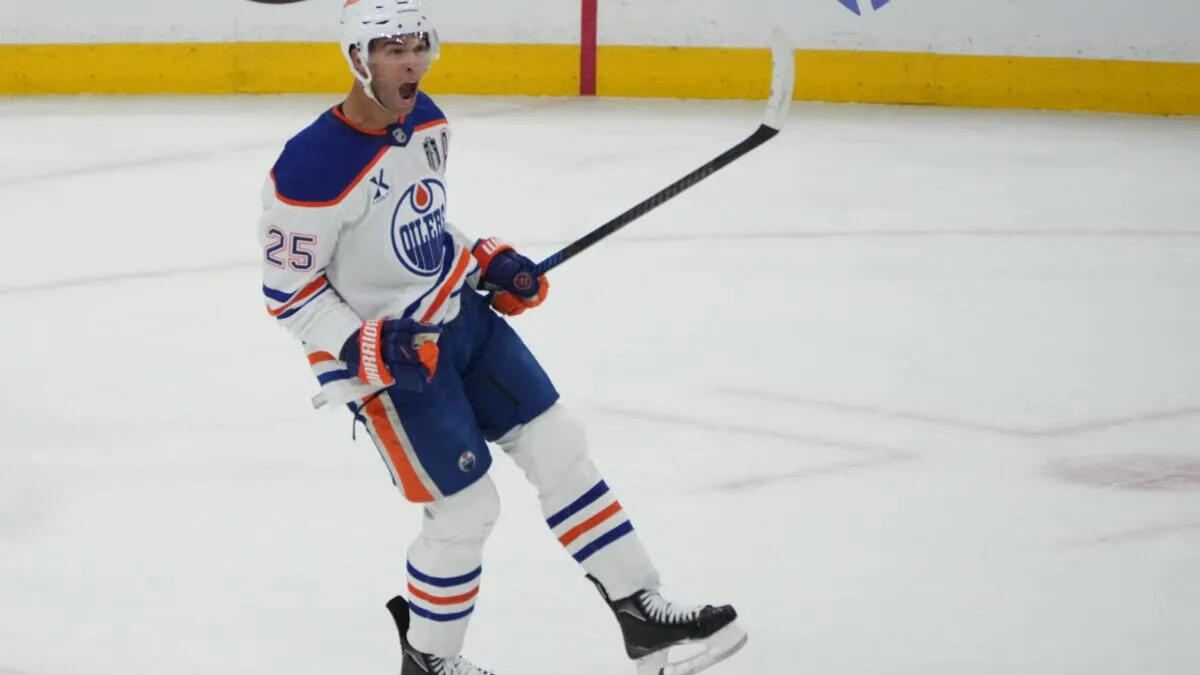
The Darnell Nurse trade speculation: separating fact from fiction
Trade chatter involving Darnell Nurse has become an annual tradition in Edmonton, but the 2025-26 season brought unprecedented intensity to the discussion. The veteran defenceman’s performance struggles early in the campaign sparked widespread calls for management to explore options, with fans on social media openly questioning whether his $74 million contract extension had become an anchor weighing down the roster.
Why Nurse trade rumours gained traction this season
The frustration reached a boiling point after Nurse posted just seven points and a minus-8 rating through his first 21 games. His on-ice miscues and ill-timed penalties reminded many observers of past postseason disappointments. The situation became so heated that Nurse reportedly responded to the speculation by posting a cryptic meme on social media, though he later clarified his intent wasn’t to address trade rumours specifically.
The defenceman’s situation isn’t helped by Edmonton’s salary cap reality. With McDavid and Draisaitl consuming significant cap space, every dollar matters. Nurse’s $9.25 million annual hit represents nearly 11% of the team’s total cap allocation, placing him among the highest-paid blueliners in the league. For that price, the Oilers need elite performance, and when Nurse struggled, the spotlight intensified.
The contract complication: NMC and cap implications
What makes any Nurse trade extraordinarily difficult is his contract structure. The deal includes a full no-movement clause for the first six seasons, meaning Nurse controls his destination entirely. He also holds a 12-team no-trade list that will activate later in the contract, but for now, he can block any transaction completely.
Beyond the contractual hurdles, the financial mathematics present a significant obstacle. Edmonton would likely need to retain salary to facilitate any deal, further hampering their already tight cap situation. The Oilers would also be selling low on a player who, despite recent struggles, has shown playoff excellence and physical dominance when at his best. Any team acquiring Nurse would demand value, but Edmonton might struggle to get equal return while also solving their cap concerns.
Recent performance silencing the speculation
Trade talk cooled significantly after Nurse responded to criticism with improved play. He scored two goals in a single game against Tampa Bay and dropped the gloves with Lightning enforcer Curtis Douglas, showcasing the physical edge that makes him valuable. According to insider David Pagnotta, the persistent trade speculation “doesn’t have any merit” and appears driven more by fan discontent than actual organizational intent.
Pagnotta noted on a recent podcast that Edmonton hasn’t actively shopped Nurse, and the player himself seems committed to remaining with the organization. With the Oilers finding their footing in the standings, the urgency to make a major defensive shakeup has diminished. Nurse’s partnership with newcomer Jake Walman has also shown promise, potentially addressing the long-standing question of who can thrive alongside the hulking defender.
Ukko-Pekka Luukkonen emerges as realistic Oilers trade target
While Nurse rumours may be overblown, Edmonton’s interest in upgrading their goaltending is very real. Ukko-Pekka Luukkonen has emerged as a prime candidate, with multiple insiders linking the Sabres netminder to the Oilers. The connection makes sense on several levels: Buffalo’s goaltending logjam creates a surplus, Luukkonen’s contract is relatively manageable, and Edmonton desperately needs stability between the pipes.
Oilers goaltending struggles fuel trade urgency
The statistics paint a grim picture for Edmonton. Stuart Skinner has posted a .889 save percentage and 2.75 goals-against average through 13 games, while backup Calvin Pickard has been even worse with a .836 SV% and 4.00 GAA. The team’s save percentage ranks among the NHL’s worst, putting excessive pressure on an offence that should be elite with McDavid and Draisaitl leading the charge.
The Oilers have cycled through multiple goaltending tandems during the McDavid era, from Cam Talbot to Mike Smith to Jack Campbell before landing on Skinner. None have provided the consistent high-end goaltending required for a championship run. With the core players in their prime, management can no longer afford to hope for internal solutions.
Luukkonen’s Buffalo situation creates opportunity
The Sabres present an interesting trade partner. Buffalo currently carries three NHL goalies on their roster: Luukkonen, Alex Lyon, and Colten Ellis, with promising prospect Devon Levi waiting in the wings. This surplus means general manager Kevyn Adams must eventually make a move to clear the logjam and allocate resources elsewhere.
Luukkonen, 26, signed a five-year, $23.75 million extension after a strong 2023-24 campaign but has since lost his starting job to Lyon. In limited action this season, his numbers have dipped to a .877 SV% and 2.91 GAA, though those figures come behind a struggling Sabres squad. The cap hit of $4.75 million is substantial but not prohibitive for a team willing to bet on his upside.
The Oilers could view Luukkonen as a potential long-term solution. At 6-foot-5, he possesses the size modern teams covet, and his previous success suggests he could rebound in a better defensive structure. Edmonton would need to get creative with salary cap gymnastics, but the acquisition cost in trade assets might be lower than for elite veteran options.
Other potential goaltending targets
Luukkonen isn’t the only name connected to Edmonton. Insider reports have mentioned several alternatives:
- Alex Lyon: The Sabres’ current starter represents a cheaper option at $1.5 million, though his ceiling as a true number-one goalie remains questionable.
- Elvis Merzlikins: The Columbus Blue Jackets netminder has a $5.4 million cap hit and has shown flashes of excellence, though consistency has been an issue.
- Jordan Binnington: The St. Louis Blues champion comes with a $6 million cap hit and playoff pedigree, but his regular season play has trended downward.
- Juuse Saros: The Nashville Predator would be the dream acquisition, but his $7.74 million cap hit makes him nearly impossible to fit under Edmonton’s cap without major salary going the other way.
Among these options, Luukkonen strikes a balance between youth, potential, and financial feasibility that appeals to a cap-strapped contender.
What insiders are saying about Oilers trade plans
The most credible information comes from established insiders like David Pagnotta and Elliotte Friedman, who have consistently reported on Edmonton’s situation. Their analysis suggests the Oilers are exploring options but aren’t desperate enough to overpay or make rash decisions.
Pagnotta’s insights on Oilers goaltending search
Pagnotta has been particularly vocal about Edmonton’s predicament. On a recent edition of “Inside Sports,” he addressed the Luukkonen speculation directly: “Yeah, Saros would be nice; Binnington would be nice; Merzlikins; UPL; but those guys are making $5M+; it’s just not attainable now.” This candid assessment highlights the core challenge facing Stan Bowman.
The insider also noted that while the Oilers have cap constraints now, they could become more aggressive in the offseason when they have more flexibility. This suggests any Luukkonen trade might wait until summer, though the team’s performance could accelerate the timeline if goaltending continues to falter.
The defence partner question
Beyond goaltending, Pagnotta has addressed the Nurse situation, indicating that trade speculation is largely fan-driven rather than based on organizational discussions. The addition of Jake Walman at the trade deadline appears to have provided Nurse with a more suitable partner than previous options, potentially stabilizing the top-four without requiring a major trade.
Nurse himself seems to have taken the criticism in stride, using it as motivation rather than letting it affect his play. His recent improved performance, combined with the no-movement clause, makes any trade highly unlikely during the season.
Salary cap realities shaping all decisions
Every conversation about Oilers trades must acknowledge the salary cap elephant in the room. With McDavid ($12.5M), Draisaitl ($8.5M), and Nurse ($9.25M) accounting for over $30 million in cap space, Edmonton has limited flexibility. The team is essentially operating in a permanent salary cap crunch, forcing creative solutions for any acquisition.
The challenge of making Luukkonen fit
Acquiring Luukkonen at $4.75 million would require Edmonton to send significant salary to Buffalo or have the Sabres retain salary. Potential candidates to include in a deal include Warren Foegele ($2.75M) or Brett Kulak ($2.75M), though both players have value to the Oilers’ depth.
More likely, the Oilers would need Buffalo to retain 25-50% of Luukkonen’s salary to make the math work. This would increase the trade cost in terms of draft picks or prospects but might be necessary for financial viability. Edmonton could also wait until the offseason when they have more cap space and can make corresponding moves to clear room.
Alternative paths to improvement
The Oilers might also consider smaller, incremental upgrades rather than a splashy goaltending trade. Improving the defence in front of their current goalies could yield better results at lower cost. The emergence of young players like Philip Broberg provides internal options, while a depth defenceman acquisition might be more feasible than a starting goalie.
Edmonton’s championship window remains open, but it won’t stay that way forever. The organization must weigh the cost of waiting against the risk of missing opportunities while McDavid and Draisaitl are at their peak.
The trade market will continue to evolve as teams jockey for playoff position and others accept their fate as sellers. Buffalo’s situation with three NHL goalies makes them a logical trade partner, but they won’t give away assets for nothing. The Oilers must be prepared to offer fair value, likely in the form of draft picks or prospects, to address their most significant weakness.
Edmonton Oilers fans have endured years of goaltending uncertainty, and the current duo of Skinner and Pickard hasn’t inspired confidence. While Darnell Nurse trade rumours appear overblown, the interest in Ukko-Pekka Luukkonen represents a legitimate attempt to solve the team’s most glaring deficiency. The financial constraints are real, but so is the championship window. Stan Bowman faces perhaps his most critical decision since taking over as general manager: find a way to upgrade the goaltending without mortgaging the future or disrupting the core that has taken the Oilers to consecutive Stanley Cup Finals. The coming months will determine whether Edmonton can finally stabilize the crease and give their superstar forwards the support they need to capture hockey’s ultimate prize.
Frequently Asked Questions

Par Mike Jonderson
Mike Jonderson is a passionate hockey analyst and expert in advanced NHL statistics. A former college player and mathematics graduate, he combines his understanding of the game with technical expertise to develop innovative predictive models and contribute to the evolution of modern hockey analytics.