









The Edmonton Oilers find themselves in a familiar position for contending teams—managing a tight salary cap while trying to ice their best possible lineup. With star forward Zach Hyman nearing a return from a fractured jaw suffered during last season’s playoff run, general manager Stan Bowman faces a critical decision. The most likely solution appears to be moving veteran defenseman Troy Stecher, a well-respected player who has unfortunately become expendable as the team’s defensive depth chart fills out.
According to reports from Sportsnet insider Elliotte Friedman, the Oilers are actively testing the trade market for Stecher, seeking what the organization calls a “soft landing” for the 31-year-old blueliner. With several players returning from injury, including forwards Hyman and Mattias Janmark, along with defenseman Alec Regula, Edmonton needs to clear both roster spots and cap space to accommodate their returning contributors. The situation highlights the delicate balancing act teams must perform when operating near the NHL’s salary cap ceiling.
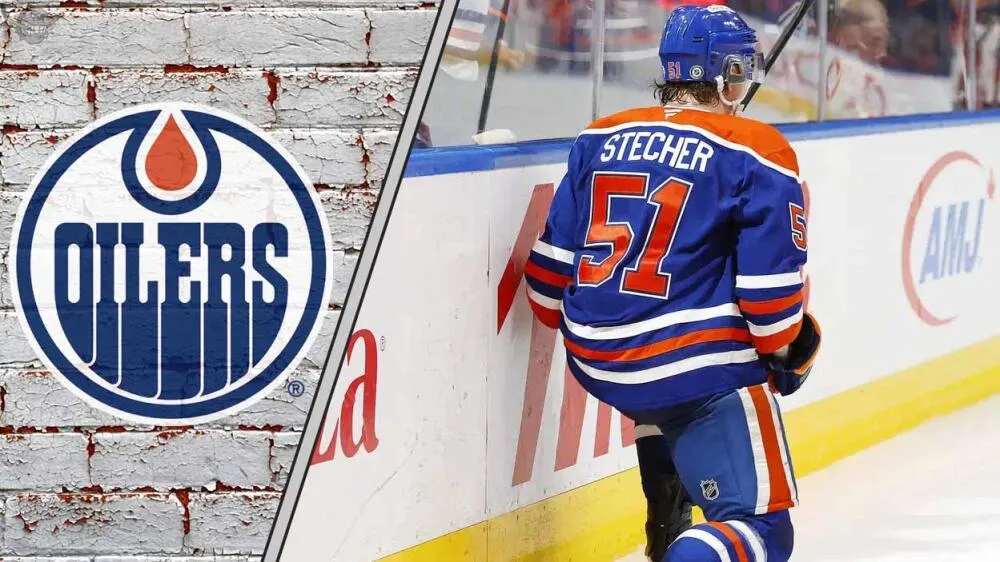
Why the Edmonton Oilers trade Troy Stecher to free up cap space for Zach Hyman makes sense
The mathematics of the situation are straightforward but challenging. The Oilers currently carry seven healthy defensemen on their roster, with an eighth in Regula set to come off injured reserve shortly. Stecher, earning $787,500 this season in the final year of his contract, has been a healthy scratch for nine of Edmonton’s first 15 games. His absence from the lineup hasn’t been due to poor performance but rather a numbers game that has left him on the outside looking in.
Stecher’s situation represents the harsh reality of playing for a championship contender. The Richmond, BC native has carved out an impressive 566-game NHL career as an undrafted player, earning respect in every locker room he’s entered. He joined the Oilers at the 2024 trade deadline from Arizona but managed just eight games before suffering a season-ending injury ahead of the playoffs. Last season saw him suit up for 66 regular season games plus eight more in the postseason, proving his value as a reliable depth option.
The emergence of younger options has complicated Stecher’s roster status. Ty Emberson, acquired from San Jose in exchange for Cody Ceci before the 2024-25 season, has established himself as a more viable long-term option. At 25 years old compared to Stecher’s 31, Emberson offers youth and a longer runway for development. While his $1.3 million cap hit is higher than Stecher’s, he’s signed through next season, providing the Oilers with cost-controlled depth for an additional year.
When fully healthy, Edmonton’s defensive lineup features Mattias Ekholm alongside Evan Bouchard on the top pair, with Darnell Nurse paired with Jake Walman on the second unit. Brett Kulak and the returning Alec Regula form the third pairing, leaving Emberson as the seventh defenseman. This configuration pushes Stecher to eighth on the depth chart, making his departure increasingly inevitable. The Edmonton Oilers trade rumors focus on Stecher and Skinner amid championship window discussions underscore how difficult roster management becomes for teams with championship aspirations.
The cap space equation for Zach Hyman’s return
Hyman’s impending return is the catalyst forcing Bowman’s hand. The 33-year-old forward has been one of Edmonton’s most valuable acquisitions in recent years, forming lethal chemistry with Connor McDavid while bringing a work ethic and net-front presence that perfectly complements the Oilers’ skill players. Last season, Hyman contributed significantly to the team’s run to the Stanley Cup Final, making his return a priority for a team looking to make another championship push.
The fractured jaw Hyman suffered during the playoffs has kept him sidelined to start the 2025-26 campaign, but multiple reports indicate he’s nearing full health. His return will add approximately $5.5 million to Edmonton’s active roster cap hit, money that’s currently being used by injured reserve relief. Once Hyman is medically cleared, the Oilers must be cap-compliant, which means moving salary out to accommodate his activation.
Beyond the immediate financial concerns, the Oilers need to balance roster composition. Hockey teams can carry a maximum of 23 players on their active roster—typically 13 forwards, eight defensemen, and two goaltenders. With Hyman, Janmark, and Regula all expected back within a similar timeframe, Edmonton could potentially need to make multiple moves. Trading Stecher addresses both the cap and roster spot requirements in one transaction.
According to reports from The Hockey Writers, the Oilers have explored various options, with the choice narrowing down to either Stecher or Emberson. Given Emberson’s age, contract status, and slightly higher upside, league observers believe Stecher represents the more logical move. The veteran defenseman’s expiring contract also makes him a cleaner asset to move without long-term cap implications.
The Oilers’ front office has reportedly received interest from other teams, likely rebuilding franchises seeking veteran leadership to help mentor younger players. Stecher’s character and professionalism make him an ideal acquisition for teams not competing for immediate playoff positions. His experience and ability to serve as a stabilizing presence could prove valuable for a younger roster looking to learn winning habits.
Navigating the Edmonton Oilers trade Troy Stecher to free up cap space for Zach Hyman process
Finding a trade partner willing to take on Stecher shouldn’t prove overly difficult given his modest cap hit and expiring contract. Teams with ample cap space and a need for defensive depth could view him as a low-risk addition. The challenge for Bowman lies in securing any return value while also honoring the organization’s commitment to finding Stecher a situation where he can play regularly.
Friedman’s mention of the Oilers seeking a “soft landing” for Stecher speaks to the organization’s approach to player relationships. Rather than simply placing him on waivers—where he could be claimed by any team regardless of their competitiveness or his playing time opportunities—Edmonton appears willing to work with Stecher to find a mutually beneficial destination. This approach, while potentially limiting trade options, helps maintain positive relationships with players and agents, which can benefit the organization in future transactions and free agency pursuits.
The return package for Stecher likely won’t be substantial. At best, the Oilers might receive a late-round draft pick or future considerations. Some scenarios could see Edmonton retaining a portion of Stecher’s already minimal salary to facilitate a deal, though at his cap figure, retention shouldn’t be necessary. The primary goal is freeing the roster spot and cap space rather than acquiring significant assets in return.
Potential destinations for Stecher could include teams like the Chicago Blackhawks, Columbus Blue Jackets, or San Jose Sharks—franchises in various stages of rebuilding that could benefit from veteran presence without committing significant assets. The Anaheim Ducks, another team focusing on youth development, might also make sense. These organizations typically have ample cap space and can offer Stecher regular playing time while mentoring younger defensemen.
Edmonton’s salary cap situation remains precarious even after a potential Stecher trade. According to cap tracking websites, the Oilers are operating with minimal flexibility, making every dollar count. Moving Stecher’s $787,500 helps, but the team will need to continue managing their finances carefully through the season. Future injury situations or trade deadline ambitions could require additional maneuvering.
Implications beyond the immediate roster move
The decision to trade Troy Stecher rather than waive him reflects Edmonton’s organizational philosophy under Bowman and president of hockey operations Jeff Jackson. Both executives came to Edmonton with reputations for treating players fairly and maintaining strong relationships throughout the hockey community. By actively seeking a trade that benefits Stecher, even if it means accepting less return value or working harder to find a partner, the Oilers demonstrate their commitment to these principles.
This approach can pay dividends in unexpected ways. Players around the league notice how organizations treat their veterans, particularly those who have been good teammates and professionals. When Edmonton enters future free agency negotiations or attempts to recruit players via trade, their reputation for handling these situations with class can become a recruiting advantage. Similarly, agents remember which teams work with their clients versus those that simply make the most expedient hockey decision.
The broader context of this move involves Edmonton’s championship window. With McDavid and Leon Draisaitl both in their prime, the Oilers have built a roster capable of competing for the Stanley Cup. Managing the salary cap efficiently while keeping the team’s core intact represents one of management’s most important responsibilities. Every roster spot and cap dollar must be allocated thoughtfully to maximize the team’s championship chances.
Hyman’s return significantly boosts Edmonton’s forward depth and scoring potential. His ability to play alongside McDavid while converting rebounds and deflections makes him invaluable to the Oilers’ offensive system. Last season, despite the jaw injury that ended his playoffs prematurely, Hyman demonstrated his importance through consistent production and a physical style that created space for his skilled linemates. Getting him back into the lineup should be viewed as a major addition for a team looking to avenge last season’s Stanley Cup Final loss.
The timing of these moves early in the 2025-26 season also matters. By addressing roster and cap concerns in November rather than letting them fester, Bowman allows the team to establish its identity and settle into consistent lineups. According to Daily Hive, the moves need to happen within the next week or two, giving the front office a clear timeline for decision-making.
Looking ahead at the Edmonton Oilers’ roster construction
Once the Edmonton Oilers trade Troy Stecher to free up cap space for Zach Hyman is completed, the team’s roster should stabilize with their preferred lineup. The forward group will feature the dynamic duo of McDavid and Draisaitl driving separate lines, with Hyman presumably returning to his familiar spot on McDavid’s wing. The depth scoring provided by players like Ryan Nugent-Hopkins, Viktor Arvidsson, and Jeff Skinner gives Edmonton multiple scoring threats that opposing teams must account for.
Defensively, the Oilers have assembled a group that balances offensive capability with defensive responsibility. Bouchard continues to develop into one of the league’s premier offensive defensemen, while Ekholm provides steady veteran presence. Nurse, despite facing criticism at times for his contract, brings physicality and minutes consumption that few defensemen can match. The addition of Walman via free agency has provided another puck-moving option who can contribute to the power play and transition game.
Goaltending remains a question mark, with Stuart Skinner serving as the undisputed starter but facing scrutiny after playoff struggles. The organization’s confidence in Skinner will be tested throughout the season, though for now, he retains the starting role. Backup Calvin Pickard provides adequate depth, though Edmonton’s championship hopes likely depend on Skinner elevating his game in crucial moments.
The Stecher situation, while attracting attention due to the transactional necessity, represents just one piece of Edmonton’s larger roster puzzle. Throughout the season, Bowman will likely face additional decisions regarding asset management, trade deadline additions, and cap gymnastics. The ability to navigate these challenges while keeping the team focused on their championship goal will define the Oilers’ season.
Looking at the Pacific Division standings and the Western Conference landscape, Edmonton enters the season as one of the favorites despite a somewhat inconsistent start. The return of Hyman, combined with the team’s established core, should help the Oilers find their rhythm. Managing the business side of hockey—including difficult decisions like trading respected veterans—remains part of the challenge for teams operating in the salary cap era.
The coming days will likely bring resolution to Stecher’s status. Whether through trade or another roster move, the Oilers will create the necessary space for Hyman’s return. For Stecher, the next chapter presents an opportunity to contribute meaningfully for another organization rather than watching from the press box. For Edmonton, it represents another step in their ongoing pursuit of the franchise’s first Stanley Cup since 1990, a quest that requires difficult decisions and efficient roster management at every turn.

Par Mike Jonderson
Mike Jonderson is a passionate hockey analyst and expert in advanced NHL statistics. A former college player and mathematics graduate, he combines his understanding of the game with technical expertise to develop innovative predictive models and contribute to the evolution of modern hockey analytics.