While Canada is widely celebrated as the birthplace of modern ice hockey, the sport’s ancestral roots stretch back centuries before the first organized game in Montreal in 1875. The journey of hockey-like games across frozen European landscapes—from Dutch canals to Scottish lochs—reveals a rich tapestry of stick-and-ball traditions that predate Canadian innovations by hundreds of years. Understanding these European origins challenges the conventional narrative and offers fascinating insight into how disparate cultural practices eventually coalesced into the game we know today.
The story of hockey before Canada is not one of a single invention, but rather a convergence of various games played across the frozen waterways of Northern Europe. From the medieval period onward, communities adapted their summer stick games to the ice, creating winter pastimes that would eventually influence the development of modern hockey.
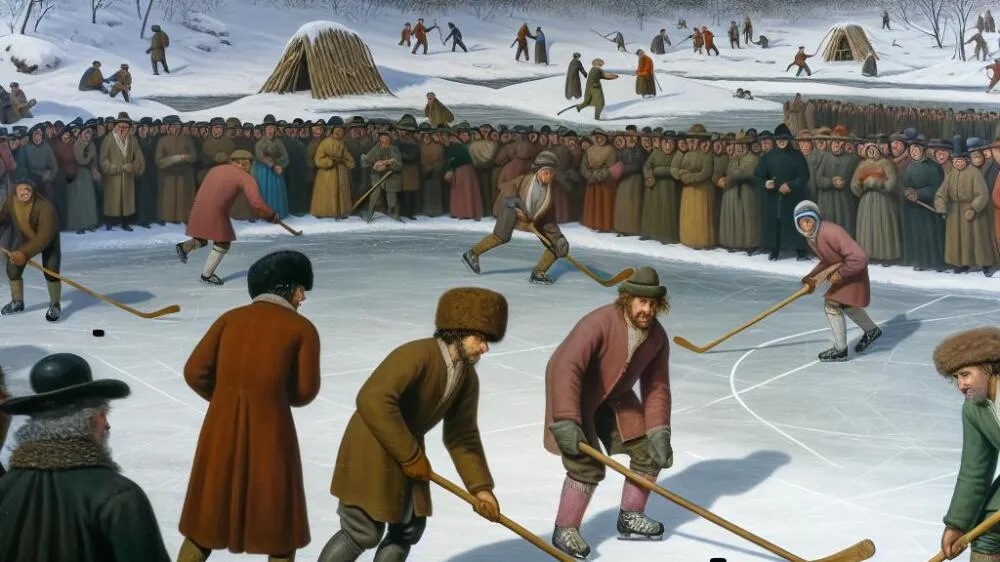
Ancient stick-and-ball games that shaped the origins of hockey in Europe before Canada
Long before skates touched Canadian ice, European civilizations engaged in various stick-and-ball games that laid the conceptual groundwork for hockey. The Vikings played a game called knattleikr as early as the medieval period, which involved hitting a ball with curved sticks in competitive team play. While not exclusively played on ice, this Norse tradition demonstrated the fundamental elements that would become central to hockey.
The ancient Irish sport of hurling dates back over 2,000 years and remains one of the fastest field games in the world. Played with wooden sticks called hurleys and a small ball known as a sliotar, hurling showcased the skill and physical intensity that would later characterize ice hockey. Irish immigrants would eventually carry these traditions across the Atlantic, contributing to the cultural melting pot that birthed Canadian hockey.
Scotland developed its own variant called shinty, also known as camanachd in Scottish Gaelic. The earliest recorded reference to this game being played on ice appeared in Scottish texts from 1607-1608, describing “chamiare” being contested on the frozen Firth of Forth. This represents one of the earliest documented instances of a hockey-like game being adapted specifically for ice conditions.
These games shared common characteristics: curved sticks, a ball or puck-like object, team competition, and goals to defend. The transition from playing these games on grass to ice was a natural evolution in regions where winter dominated the calendar for months at a time. The fundamental skills required—hand-eye coordination, teamwork, and strategic positioning—transcended the playing surface.
Dutch kolven and the frozen canals: early origins of hockey in Europe before Canada
The Netherlands holds a particularly significant place in hockey’s prehistory through the game of kolven. Dating back to at least the 13th or 14th century, kolven was played with golf-like curved sticks and balls, with posts serving as goals. What makes Dutch kolven especially relevant to hockey’s evolution is its widespread practice on frozen canals and ponds during the harsh winter months.
Pieter Bruegel the Elder’s famous 1565 painting “The Hunters in the Snow” depicts what appears to be kolven being played on ice, providing visual evidence of the game’s winter variant. The State of Hockey in the Netherlands was well-established long before British colonists set foot in Canada, with the Dutch perfecting ice skating techniques and adapting their traditional games to frozen waterways.
The game involved striking a ball toward designated targets using a curved wooden implement called a kolf. Players would navigate the natural irregularities of frozen canal ice, much like modern hockey players read the surface for optimal puck control. The Dutch innovation of attaching metal blades to boots for improved ice mobility—developed as early as the 13th century—proved crucial for the eventual evolution of ice hockey.
Dutch settlers who emigrated to New Amsterdam (later New York) in the 17th century brought kolven traditions with them. Historical records indicate they continued playing variations of the game on frozen ponds around Manhattan, creating one of the earliest North American exposures to ice-based stick sports. This cultural transmission represents a direct link between European ice games and the New World.
The Netherlands’ extensive network of canals provided ideal natural rinks for winter sports. Communities would gather on frozen waterways for recreation, transforming necessary winter transportation routes into social and athletic venues. This cultural embrace of winter ice activities established patterns that would later influence hockey development in colder climates worldwide.
Scottish and British contributions to the origins of hockey in Europe before Canada
Scotland’s role in hockey’s prehistory extends beyond shinty to include the country’s innovative approach to organized winter sports. The 1607-1608 references to chamiare on ice represent some of the earliest written documentation of hockey-like games specifically adapted for frozen surfaces, predating Canadian hockey by nearly 270 years.
The Scottish Highlands’ clan culture fostered competitive stick games as both entertainment and training for warfare. These chaotic mass games involved entire communities and could range across vast stretches of frozen lochs. The combination of Scotland’s frequent freezing conditions and established stick-game traditions created ideal circumstances for proto-hockey development.
British contributions expanded in the 19th century when the game of bandy emerged in England. Bandy shared many characteristics with modern ice hockey—teams, goals, sticks, and a ball on ice—but was played on much larger surfaces similar to soccer fields. The first organized bandy match occurred in England in the 1850s, and the game quickly spread throughout the British Isles and into Scandinavia.
England’s establishment of the first artificial ice rink in London in 1903 marked a technological breakthrough that would revolutionize ice sports. Prior to this, all ice games depended on natural winter freezing, limiting play to certain months and geographic regions. Artificial ice democratized the sport, allowing year-round practice and competition.
The British military played an instrumental role in spreading ice hockey variants throughout their empire. British soldiers and administrators stationed in cold climates adapted familiar stick games to local conditions, creating regional variations that would eventually feed back into the sport’s evolution. This colonial network helped disseminate hockey concepts long before the NHL existed.
Bandy’s evolution and the continental origins of hockey in Europe before Canada
Bandy deserves special recognition in any discussion of hockey’s European roots, as it represents perhaps the most direct ancestor of modern ice hockey outside of Canada. The sport developed primarily in England during the 19th century, with the first recorded game played in 1813. Unlike modern ice hockey, bandy utilized a ball rather than a puck and featured eleven players per side on football-sized rinks.
The game spread rapidly across Northern Europe, finding particular enthusiasm in Russia and Scandinavia. By the 1870s—around the same time organized hockey was developing in Canada—bandy leagues were forming throughout Sweden, Norway, and Finland. These countries embraced the sport with such fervor that bandy remains popular today, with professional leagues and international competitions.
Bandy’s rules shared remarkable similarities with ice hockey: face-offs, penalties, designated goal areas, and timed periods. The primary differences lay in field size and the use of a ball versus a puck. Many European hockey players trained in bandy during summer months, and the sports influenced each other’s tactical development throughout the 20th century.
Russia’s adoption of bandy proved particularly significant for hockey’s global spread. Russian bandy traditions created a skating and stick-handling culture that would later translate into Soviet hockey dominance. The USSR’s hockey program drew heavily from bandy-trained athletes when the country embraced ice hockey in the 1940s, demonstrating the direct lineage between European ice games and modern hockey excellence.
The International Ice Hockey Federation has acknowledged band’s importance in hockey’s development, recognizing that multiple parallel evolutions occurred simultaneously across different regions. Rather than a single point of origin, hockey emerged from a confluence of similar games adapting to ice conditions across the Northern Hemisphere.
The cultural context of winter sports in pre-Canadian European hockey origins
Understanding the origins of hockey in Europe before Canada requires appreciating the cultural significance of winter in Northern European societies. For communities facing months of frozen waterways and snow-covered landscapes, winter sports weren’t merely recreational—they represented essential social cohesion and physical activity during dark, confined months.
Medieval and early modern European societies organized winter festivals around ice activities. These gatherings featured competitions, gambling, and community bonding, with stick-and-ball games serving as centerpieces. The stakes could be surprisingly high, with regional pride and even property changing hands based on game outcomes.
The Protestant Reformation’s emphasis on moral recreation paradoxically boosted winter sports in Northern Europe. Religious authorities who discouraged drinking and gambling viewed organized athletic competition as healthier alternatives. This moral framework encouraged the development of structured rules and formalized competition, moving ice games from chaotic melees toward organized sport.
Social class divisions influenced how different European communities approached winter sports. The Dutch middle class embraced canal skating and kolven as democratic activities accessible to merchants and craftspeople. Scottish Highland clans used shinty to maintain warrior traditions. British aristocrats developed bandy with formal rules and organized clubs. These varying approaches would later merge in Canada’s multicultural environment.
European artistic traditions documented these winter sports extensively. Dutch Golden Age painters like Hendrick Avercamp created detailed scenes of ice festivities, while British and Scottish writers described frozen games in literature. This documentation provides modern historians with invaluable evidence of hockey’s pre-Canadian existence and evolution.
Immigration and the transatlantic transfer shaping hockey’s eventual Canadian development
The crucial link between European ice games and Canadian hockey lies in immigration patterns of the 18th and 19th centuries. Scottish, Irish, Dutch, and English settlers brought their winter sporting traditions to British North America, where these games would eventually hybridize into modern ice hockey. This cultural transfer represented not replacement but synthesis.
British military regiments stationed in Canada during the 19th century played organized games resembling both shinty and bandy on frozen harbors and lakes. Historical records from Halifax and Kingston document British soldiers playing ice games in the 1850s and 1860s, predating the famous 1875 Montreal game often cited as hockey’s birth.
Irish immigrants carried hurling traditions that emphasized speed, physical contact, and stick skills. Scottish settlers brought shinty’s emphasis on individual ball-handling and strategic positioning. English influences included bandy’s organized structure and formal rules. Dutch innovations in skating technique enhanced mobility and speed. The Canadian crucible melted these diverse traditions into something new yet familiar.
The multicultural environment of 19th-century Canadian cities created unique conditions for hockey’s crystallization. Montreal, with its Scottish, Irish, English, and French populations, became the perfect laboratory for cultural sporting exchange. University students and young professionals who had grown up playing various ice games collaborated to create standardized rules that borrowed from multiple traditions.
This synthesis explains why early Canadian hockey differed from any single European predecessor while containing elements of all of them. The use of a puck rather than a ball came from Indigenous North American traditions. The rink size fell between compact Dutch canals and expansive British bandy fields. The rules blended Scottish physicality with English organizational structure. Canada didn’t invent hockey from nothing—it perfected a recipe with ingredients gathered from across the Atlantic.
The narrative that hockey sprang fully formed from Canadian ice in 1875 obscures centuries of European innovation and cultural development that made the sport possible. From medieval Viking knattleikr to Dutch kolven on frozen canals, from Scottish chamiare to English bandy, the origins of hockey in Europe before Canada represent a rich heritage of winter sporting traditions. These games evolved independently yet shared fundamental characteristics that would eventually converge in the sport we celebrate today.
Recognizing hockey’s European roots doesn’t diminish Canada’s crucial role in modernizing and popularizing the game. Rather, it enriches our understanding of hockey as a truly international phenomenon, shaped by diverse cultures adapting to harsh winters through athletic innovation. The next time you watch a hockey game, consider the centuries of frozen lakes, curved sticks, and competitive spirit that made that moment possible—a legacy stretching far beyond Canadian borders into Europe’s distant past.

Par Mike Jonderson
Mike Jonderson is a passionate hockey analyst and expert in advanced NHL statistics. A former college player and mathematics graduate, he combines his understanding of the game with technical expertise to develop innovative predictive models and contribute to the evolution of modern hockey analytics.