






The Chris Kreider trade sent shockwaves through Madison Square Garden, marking the end of an era for the New York Rangers. When the organization moved their longest-tenured player to the Anaheim Ducks in June 2025, it wasn’t just about shedding salary cap space or acquiring prospects—it represented a fundamental shift in how the Rangers would approach their roster construction. The deal sent Kreider and a 2025 fourth-round pick to Anaheim in exchange for center prospect Carey Terrance and a 2025 third-round pick, creating immediate ripple effects across both the team’s defensive structure and offensive output.
After 13 seasons in New York, Kreider’s departure left a gaping void in multiple facets of the Rangers’ game. The 34-year-old veteran had been a cornerstone of the franchise, contributing 326 goals and 582 points across 883 regular-season games. His final campaign in Manhattan proved to be his most challenging, as he managed just 22 goals and 30 points in 68 games while battling persistent back injuries. The trade wasn’t merely about moving on from declining production—it signaled a complete organizational reset that would force the Rangers to reimagine their identity on both ends of the ice.
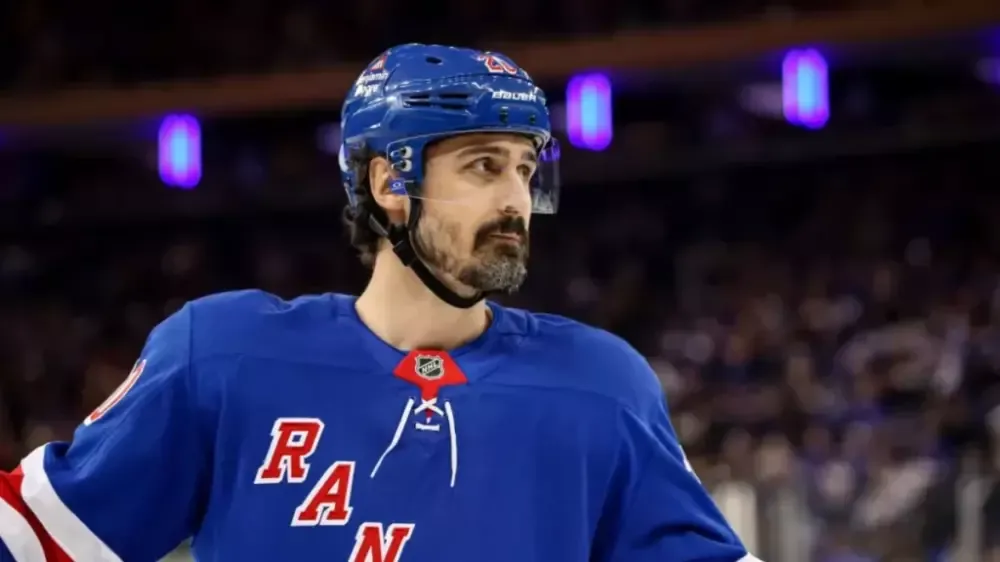
How the New York Rangers Kreider trade impact on defense and scoring altered lineup structure
The immediate aftermath of the Kreider trade forced head coach Peter Laviolette to completely overhaul his line combinations and deployment strategies. Kreider had been a versatile weapon who could slot into any position in the top nine, providing consistent net-front presence on the power play while contributing defensively on the penalty kill. His absence created a cascade of adjustments that extended far beyond simply replacing one forward.
Without Kreider’s physical presence in front of opposing goaltenders, the Rangers’ power play unit lost one of its most defining characteristics. Tied for the franchise record with 116 power-play goals alongside Camille Henry, Kreider’s departure meant the team needed to completely redesign their man-advantage strategy. The Rangers had relied on Kreider’s ability to screen goaltenders, deflect shots, and create chaos in the crease for years. His unique combination of size, speed, and timing made him nearly impossible to defend in those high-traffic areas.
The defensive implications proved equally significant. While Kreider wasn’t primarily known as a defensive stalwart, his 6-foot-3, 230-pound frame provided crucial support on the forecheck and along the boards. His ability to kill penalties and contribute shorthanded chances—particularly alongside longtime linemate Mika Zibanejad—gave the Rangers flexibility in their special teams deployment. Losing that versatility meant other forwards would need to absorb additional penalty-killing responsibilities, potentially exposing defensive weaknesses elsewhere in the lineup.
Perhaps most importantly, Kreider’s leadership presence in the locker room provided intangible defensive value. As Braden Schneider once noted, Kreider offered constructive criticism and guidance to younger players without calling them out publicly. This mentorship helped establish defensive accountability throughout the roster. His departure removed a crucial voice that helped maintain the team’s defensive structure and commitment.
The New York Rangers Kreider trade impact on defense and scoring through special teams restructuring
The Rangers’ power play had been a well-oiled machine for several seasons, but Kreider’s trade forced a complete philosophical shift. During the 2024-25 season, the power play had already shown signs of decline, with Kreider managing just six man-advantage goals. Opposing teams had studied the Rangers’ tactics extensively, knowing that Kreider would invariably position himself near the crease awaiting deflections and rebounds.
With Kreider now wearing a Ducks sweater, the Rangers needed to identify new net-front options who could replicate even a fraction of his production. Will Cuylle emerged as a potential candidate, possessing similar size and willingness to battle in high-traffic areas, but lacked Kreider’s experience and instinctual timing. The power play would need time to develop new patterns and chemistry, potentially costing the Rangers crucial goals in tight games.
The penalty kill also required recalibration. Kreider had been among the team’s most reliable shorthanded forwards, using his speed to create breakaway opportunities and his defensive awareness to disrupt opposing power plays. According to Natural Stat Trick data, he had posted respectable numbers on the penalty kill, allowing just 12 goals against while shorthanded. Replacing those minutes meant increased ice time for forwards who might not possess the same two-way capabilities.
The Rangers’ coaching staff needed to experiment with different combinations to compensate for Kreider’s absence. This trial-and-error period could lead to increased goals against on special teams, particularly as younger players adjusted to heightened responsibilities. The learning curve would be steep, and any struggles on special teams would directly impact the team’s overall defensive metrics and scoring efficiency.
Offensive production challenges: New York Rangers Kreider trade impact on defense and scoring
Kreider’s 22 goals during the 2024-25 season represented a significant decline from his previous standards, but even that diminished output needed to be replaced. The Rangers entered the offseason needing to identify scoring solutions from within their existing roster or through free agency. General Manager Chris Drury’s decision to move Kreider freed up $6.5 million in annual cap space, providing financial flexibility to pursue offensive reinforcements.
The signing of Boston College star Gabe Perreault represented one potential solution. The young winger arrived with considerable offensive upside and a team-friendly contract, potentially filling some of the void left by Kreider’s departure. However, expecting a rookie to immediately replace a 13-year veteran’s production—even in a down year—would be unrealistic. Perreault would need time to adjust to NHL speed and physicality while developing chemistry with his linemates.
The trade also impacted Mika Zibanejad’s production potential. The Swedish center had spent years developing chemistry with Kreider, understanding exactly where his linemate would position himself and how to deliver passes into scoring areas. Breaking up this long-standing partnership meant Zibanejad would need to develop new on-ice relationships, potentially affecting his assist totals and overall offensive effectiveness. The two had been linemates for so long that their separation could have unforeseen consequences for the Rangers’ top-six scoring depth.
Additionally, the Rangers needed to consider how losing Kreider’s goal-scoring touch would affect their overall offensive balance. Even during his challenging season, Kreider remained a threat to score from multiple areas of the ice. His willingness to drive to the net and accept physical punishment created space for teammates, leading to secondary scoring chances. Without that element, opposing defenses could potentially tighten up against other Rangers forwards, making scoring opportunities more difficult to generate. For more insights on how the Rangers have been adjusting their roster, check out how the Fox-Gavrikov top defense pair emerges for the New York Rangers has been shaping their defensive strategy.
Prospect acquisition and future considerations
The return for Kreider—center prospect Carey Terrance and a third-round pick—represented an investment in the Rangers’ future rather than immediate competitive advantage. Terrance, drafted 59th overall by Anaheim in 2023, brings intriguing upside as a two-way center with solid skating ability. In 45 OHL games during the 2024-25 season with the Erie Otters, he posted 20 goals and 39 points, though those numbers represented a step back from his previous campaign’s 29 goals and 52 points.
According to The Hockey Writers’ analysis, Terrance possesses a similar build to Kreider at 6-foot-1 and 186 pounds, with room to add strength to his frame. The Rangers envision him developing with the Hartford Wolf Pack in the AHL, where he can refine his two-way game and potentially emerge as a middle-six center within a few seasons. This patient approach aligns with the organization’s need to inject youth into their prospect pipeline while maintaining competitive ambitions in the short term.
The third-round pick acquired from Toronto (via Anaheim) provides additional draft capital that Drury could use in multiple ways. The Rangers could package their various draft picks to trade up into the first round, targeting a higher-profile prospect who might contribute sooner. Alternatively, they could use their multiple third-round selections to add depth throughout their organizational system, building a foundation for sustained success.
The financial flexibility created by the trade cannot be overstated. With Igor Shesterkin’s record-breaking contract extension kicking in and several young players like Will Cuylle and K’Andre Miller requiring new deals, clearing Kreider’s $6.5 million cap hit provided crucial breathing room. ESPN noted that the Rangers now have significant cap space to address their restricted free agent class and potentially pursue impact players in free agency.
The long-term defensive and scoring implications depend largely on how Drury allocates the newly available resources. If the Rangers can sign or trade for forwards who complement their existing core while maintaining defensive responsibility, the Kreider trade could ultimately prove beneficial. However, if they struggle to replace his production and leadership, the team might find itself in a prolonged competitive decline.
Locker room dynamics and leadership void
Beyond statistics and cap calculations, Kreider’s departure created an unmeasurable leadership vacuum within the Rangers’ organization. As the longest-tenured Ranger and a de facto leader, Kreider represented continuity and institutional knowledge that cannot be easily replaced. His serious approach to training, strict dietary regimen, and commitment to excellence set a standard for younger players throughout the organization.
Multiple teammates had praised Kreider’s mentorship style over the years. He didn’t dominate conversations or demand attention, but when he spoke, everyone listened. His constructive criticism came from a place of genuine desire to help teammates improve, never to embarrass or belittle. This type of leadership is invaluable in a professional sports environment where egos can clash and accountability can falter.
The Rangers’ younger players, particularly those who benefited from Kreider’s guidance, would now need to find new mentors within the organization. Players like Matt Rempe, who Kreider had taken under his wing, would need to adapt to life without their primary support system. This transition period could affect on-ice performance as younger players navigate professional hockey’s challenges without Kreider’s steady presence.
The defensive structure of the team also relied on Kreider’s leadership. When defensive breakdowns occurred or the penalty kill struggled, Kreider’s voice in the locker room helped realign focus and commitment. Without that stabilizing influence, the Rangers risked developing communication issues and defensive lapses that could prove costly in close games. The team would need other veterans to step forward and fill this leadership void, but replicating Kreider’s particular combination of respect, experience, and communication style would prove challenging.
His connection to New York City and the Rangers franchise ran deeper than most players experience in their careers. Since retiring from the NHL, Henrik Lundqvist had left Kreider as the face of the franchise—the player most synonymous with Rangers hockey. Non-Rangers fans frequently expressed surprise that Kreider wasn’t the team’s captain, a testament to his leadership presence and importance to the organization. For more context on how former Rangers players have found success elsewhere, read about Trouba and Kreider’s resurgence with the Anaheim Ducks.
The Chris Kreider trade fundamentally altered the New York Rangers’ trajectory in ways that extend far beyond simple roster mathematics. While the immediate defensive and scoring impacts remain uncertain, the long-term implications will depend on how effectively the organization leverages its newfound cap flexibility and develops its acquired prospects. The Rangers have made a calculated bet that shedding Kreider’s contract and acquiring young assets positions them better for sustained success, even if it means enduring short-term growing pains. Whether this gamble pays off will likely become clear over the next two seasons, as the organization navigates life without one of its most iconic players and attempts to build a championship contender around a restructured core. The defensive systems will need refinement, the scoring touch will require new sources, and the leadership void must be filled—but if successful, the Rangers could emerge from this transition stronger and more balanced than the team that disappointed in 2024-25.

Par Mike Jonderson
Mike Jonderson is a passionate hockey analyst and expert in advanced NHL statistics. A former college player and mathematics graduate, he combines his understanding of the game with technical expertise to develop innovative predictive models and contribute to the evolution of modern hockey analytics.