


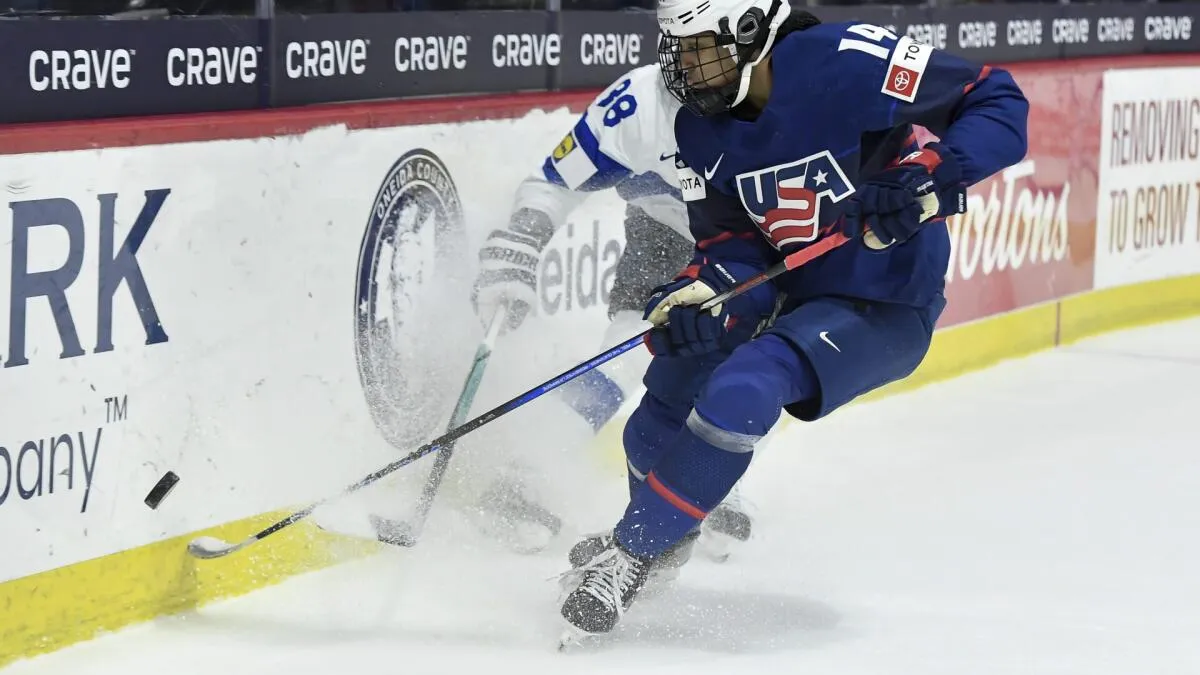
Laila Edwards, a 6-foot-1 forward from Wisconsin, stands poised to make history at the 2026 Milan Cortina Winter Olympics. As the first Black woman to represent Team USA in women’s ice hockey, she will lace up for the opening-round game against Czechia on Thursday at Milano Rho Ice Hockey Arena.[1] At just 22 years old, Edwards has already captured two national championships with the Badgers and earned medals at two IIHF Women’s World Championships.[2]
Her path from a Cleveland Heights home marked by indoor puck battles to the Olympic stage highlights resilience, talent and the power of representation. Edwards embraces the weight of her milestone, knowing young Black girls watching could see themselves in the sport for the first time.
Indoor games and family roots in Cleveland Heights
Black puck marks still scar the white walls behind the gray couch in the Edwards family living room. Rollerblades and sticks left grooves in the hardwood as Laila’s siblings forced her into goalie duty during intense indoor matches. They outgrew that strategy quickly as she grew into a dominant force.
Her mother, Charone Gray-Edwards, often caught them upstairs despite the basement and outdoors available. Hockey homes share these tales, but this one birthed an Olympian. The family’s passion stemmed from father Robert Edwards, who discovered the sport watching Cleveland Heights High School triumphs in the 1970s and ’80s.
Robert started hockey late at 12, facing barriers in a progressive yet challenging community. He vowed his kids would skate first and receive his advocacy. The Cleveland Heights Community Center bridged their entry, where siblings Bobby, Chayla and Laila explored skating and stickhandling.
Laila idolized Alexander Ovechkin, taping sticks like the Capitals star and mimicking his moves. A clinic mix-up saw her snipe on an older goalie, stunning onlookers. Her effortless style—standing still then exploding—marked her early genius.
Transition to competitive youth hockey
The Edwards kids ditched figure skating for hockey’s thrill. Weekends filled with morning practices, TV viewings and “Chelsea Dagger” sing-alongs. Tournaments pulled them far from home, trading Easter dinners for Popeyes in Brampton, Canada.
Travel intensified with Europe trips for college exposure, demanding passports and funds. Ohio’s boys-dominated scene pushed elite girls to boarding schools. Chayla pioneered at age 14 with Shady Side Academy and Pittsburgh Penguins Elite.
Laila joined Bishop Kearney High School at 13, recruited by Kathy Pippy. The Rochester program, barely a year old, built on trust with the family valuing education alongside hockey. Edwards adjusted to living away, facing older athletes and isolation as the lone Black player on buses.
Racial slurs stung early, like being called the N-word during boys’ games. Coach Dean comforted her tears, building resilience. Socioeconomic gaps emerged with teammates’ Prada bags versus her hand-me-downs, but support from staff like Cari Coen eased fears.
Growth and stardom at Bishop Kearney
A dormitory height wall tracked Edwards’ growth spurt to 6 feet by senior year. Soreness accompanied her mechanics tweaks to avoid injury. She blocked shots on penalty kills, intimidating foes with size alone.
Coaches shifted her to defense seamlessly, quarterbacking power plays like Bobby Orr. Her vision slowed or sped games at will. “She’s generational,” Coen said, an artist seeing plays ahead.[3]
Three national titles and 413 points in 287 games capped her prep career. Senior stats: 38 goals, 97 points. Self-reliant and versatile, she headed to Wisconsin ready for college elite.
Kearney alumni like teammate Caroline Harvey dot Team USA’s roster. Edwards mentored successors like Chloe Brinson, sharing survival tips in predominantly white spaces. Her legacy there endures.
College dominance with the Wisconsin Badgers
Wisconsin checked every box: history, coaches, academics and sister Chayla. The Badgers boast eight titles, mirroring UConn women’s basketball prowess. Laila arrived in 2022, reuniting siblings amid PWIs’ challenges.
Campus diversity strained at 3.9% Black students, hockey team their main community. Hair care, food differences and mix-ups as “the Black players” tested them. Yet, freshman year brought a national title.
Sophomore explosion: 21 goals, national points tie. 2024 Worlds: six goals, MVP, silver medal. Junior year: nation-leading 35 goals, title win, Kazmaier finalist.[2]
Challenges persisted, like MCL injury sidelining her recently. Fans, especially Black youth, approached her family post-games. A mother drove from Ann Arbor for warmups, eyeing Milan tickets.
Pioneering role on Team USA and position switch
Edwards debuted for U.S. senior team in 2023, first Black woman ever.[3] Worlds gold in 2025 followed. For Olympics, she pitched defense to coach John Wroblewski, echoing her Kearney versatility.
Miscues arose against top forwards, but vision and reach shone. Rivalry Series: stripped Renata Fast, sparked rush, scored. Wroblewski compares her to Zdeno Chara for size-agility blend.
Optics questioned shifting a Black star positionally, but coach prioritized dreams. Not permanent; forward prowess remains. Family backs her commitment. For more on hockey returns to the Olympics preview, check this analysis.
Youngsters like Edwards, Harvey signal future post-Knight era. Olympic hockey odds favor USA gold.[4]
Lasting impact beyond the ice
Edwards mentors Chyna Taylor, bound for Wisconsin. Cleveland coach Seanna Conway showcases her humility to Gilmour Prep. Role model pride swells: kids say “you look like me,” parents credit her for persistence.
Visibility shifts perceptions, echoing Ovechkin’s D.C. reach. U.S. trails Canada in participation, but growth hits 5% yearly. Edwards embodies progression alongside Bolden, Koelzer.
Off-ice: Netflix’s “Grey’s Anatomy” fan, Beyoncé devotee, Ovechkin tattooed (“GR8”). Starstruck at concerts, Capitals diehard. Tattoos chronicle life; dad knows few.
Her Olympics debut inspires, potentially reshaping hockey’s face. As Team USA chases gold, Edwards’ conviction fortifies belief in her limitless potential. What comes next could redefine U.S. women’s hockey for generations.
Frequently Asked Questions

Par Mike Jonderson
Mike Jonderson is a passionate hockey analyst and expert in advanced NHL statistics. A former college player and mathematics graduate, he combines his understanding of the game with technical expertise to develop innovative predictive models and contribute to the evolution of modern hockey analytics.