


NHL players are heading back to the Olympics for the first time since 2014 in Sochi, marking a significant moment for international hockey. The Milan Cortina Games, set for early February 2026, will feature best-on-best competition on the men’s side, while women’s teams have competed without interruption. Excitement builds as 12 men’s teams and 10 women’s squads prepare for the spotlight, though challenges like arena construction loom.
This tournament revives a tradition paused by labor disputes, COVID disruptions and logistical hurdles. Fans can expect high-stakes action over 18 days, with NHL stars suiting up for their nations minus those from Russia due to ongoing sanctions.
Tournament dates and schedule
The women’s tournament kicks off on February 5, with round-robin play running through February 10. Quarterfinals begin February 13, leading to semifinals and medal games on February 19 for both bronze and gold.
Men’s action starts February 11, with preliminary rounds until February 18. Qualification playoffs for lower seeds occur February 17, followed by quarterfinals, semifinals and medals on February 21 and 22.
This staggered schedule allows both genders to shine without overlap in key phases. Organizers have planned for intense knockout hockey, building tension toward the finals.
Shorter intermissions—15 minutes versus the NHL’s 18—will keep the pace brisk. Medal rounds feature extended 20-minute overtimes until a goal decides the winner.
Spectators should mark their calendars early, as time zones between Italy and North America could mean late-night viewing for many.
Countries competing in Milan Cortina
Twelve nations enter the men’s draw: Canada, Czechia, Denmark, France, Germany, Italy, Latvia, Slovakia, Sweden, Switzerland, Finland and the United States. Finland defends its 2022 gold, aiming to repeat Canada’s feat from 2010 and 2014.
Canada leads all-time with nine men’s golds, while the U.S. boasts eight silvers. Men’s hockey dates back to the 1920 Summer Olympics before becoming a Winter staple in 1924.
The women’s field includes 10 teams: Canada, United States, Czechia, Finland, France, Germany, Italy, Japan, Sweden and Switzerland. Only Canada and the U.S. have won gold since 1998, dominating with few exceptions.
Czechia has risen quickly, finishing among the top four recently. Finland eyes bronze hardware after consistent podium threats.
These lineups promise diverse matchups, from powerhouse rivalries to emerging threats.
Why NHL participation matters
The NHL’s return after skipping 2018 and 2022 feels monumental. Players participated from 1998 to 2014, but owners balked at costs like insurance, travel and lost revenue from pauses.
The NHLPA fought for inclusion in the latest CBA, securing Olympics through 2026 and beyond. COVID derailed 2022 plans, but momentum from the 4 Nations Face-Off has everyone aligned.
NHL commissioner Gary Bettman emphasizes player safety amid venue concerns. “The safety of NHL players remains the league’s primary concern,” deputy commissioner Bill Daly echoed.
This best-on-best format showcases stars like Sidney Crosby globally, boosting the sport’s profile. It mirrors the intensity of recent internationals, where Team USA claimed world gold in 2025.
Fans relish seeing club rivals don national jerseys, reigniting Olympic magic.
Tournament format and rule tweaks
Women’s play splits into two groups of five, with all teams facing off once. Group A all advance to quarters, plus top three from Group B.
Men’s features three groups of four, playing three games each. Teams rerank by points, goal differential, goals scored and IIHF ranking. Top four bye to quarters; 5-12 play qualifiers.
Points differ: three for regulation win, two for OT/shootout win, one for loss. Prelims have five-minute OT then shootout with five shooters per side.
Medal games use 20-minute OT no shootout. No fighting allowed, per IIHF rules. Rosters cap at 25 skaters including three goalies, dressing 20 per game.
These tweaks create urgency, favoring skilled play over grind. NHL.com offers full coverage of the setup.
Challenges with the Milano Santagiulia arena
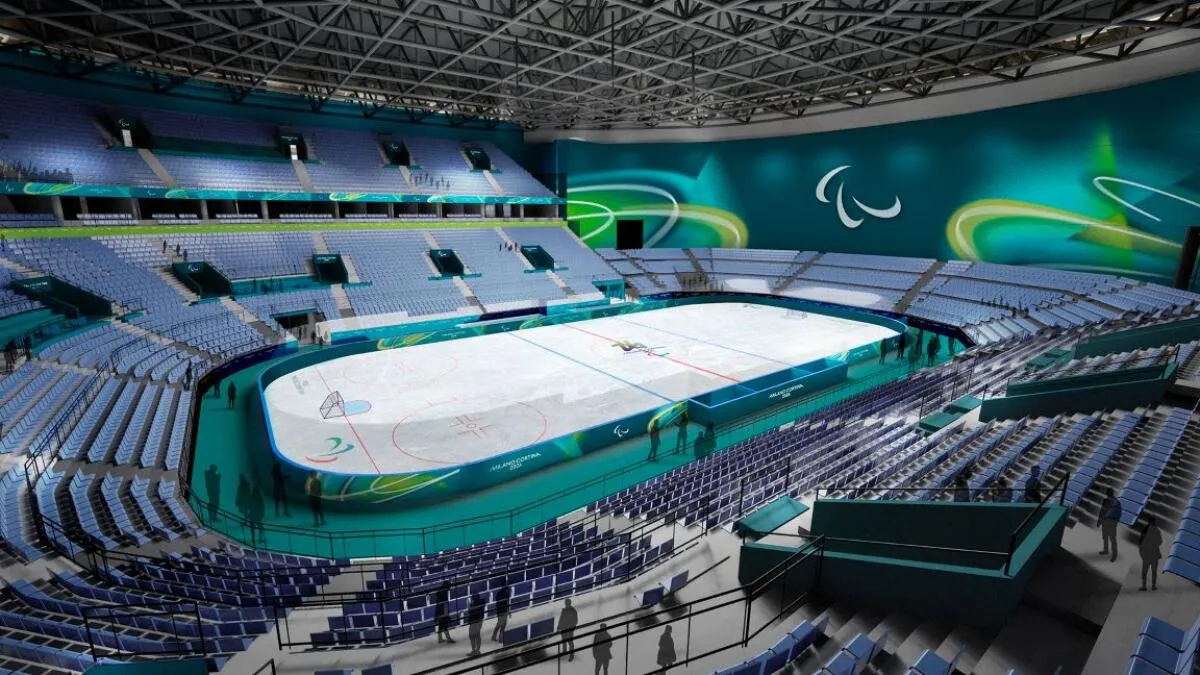
Construction delays plague the Milano Santagiulia Ice Hockey Arena, the main venue. As of mid-December 2025, ice wasn’t installed, forcing cancellation of test events.
Thousands of workers toil around the clock, but NHL officials demand proof of safety. “We have offered to help,” Daly noted, deploying ice experts.
The rink measures 196.85 by 85.3 feet—shorter than NHL’s 200 by 85—matching Beijing 2022 but sparking debate. IIHF deems it fine, but NHL prioritizes athlete welfare.
Milano Santagiulia delays threaten readiness, with further arena concerns highlighting risks. No Plan B exists officially.
Inspections continue, with NHL ready to pull players if unsafe. This saga underscores Olympic logistics strains.
Key players lighting up the ice
Canada’s women rely on captain Marie-Philip Poulin, a three-time Olympic gold winner and reigning IIHF Player of the Year. Natalie Spooner, 2024 awardee, joins stars like Sarah Nurse and Brianne Jenner.
U.S. captain Hilary Knight boasts four Olympic medals and 10 worlds golds. Teammates include Alex Carpenter and Kendall Coyne Schofield, plus rookies Laila Edwards and Caroline Harvey.
Finland’s Jenni Hiirikoski and Michelle Karvinen shine internationally. Czechia’s Kristyna Kaltounkova leads a surging squad.
Men’s non-NHL standouts include Czechia’s Roman Cervenka and Switzerland’s Leonardo Genoni. NHL-heavy teams like Canada feature Crosby and McDavid, per recent roster news.
These athletes blend experience and youth for compelling narratives.
Medal favorites and dark horses
Canada and U.S. lead men’s odds after 4 Nations Face-Off and U.S. 2025 worlds win. Finland defends, with Sweden and Czechia medal threats.
Women’s duel pits Canada and U.S. again, but Finland’s bronzes and Czechia’s rise challenge. Only 2006 avoided their final.
Switzerland eyes men’s podium after worlds silvers. Tight margins define these tournaments.
History favors North America, but cohesion wins internationals.
No Russian teams due to sanctions
IOC upholds bans on Russia and Belarus for invading Ukraine, barring teams from group sports. Individual neutral athletes may compete.
This follows 2018-2022 doping penalties, where Russians competed under neutral flags. IIHF aligned in May 2025.
Absence reshapes brackets, elevating others.
As Milan Cortina nears, anticipation grows despite hurdles. NHL’s commitment promises elite hockey, with rink resolution key. Expect rivalries to deliver drama, crowning new champions by February 22. Stay tuned for roster reveals and previews.
Frequently Asked Questions

Par Mike Jonderson
Mike Jonderson is a passionate hockey analyst and expert in advanced NHL statistics. A former college player and mathematics graduate, he combines his understanding of the game with technical expertise to develop innovative predictive models and contribute to the evolution of modern hockey analytics.