



















The Anaheim Ducks received devastating news Friday when the team announced that goaltender Lukas Dostal will miss two to three weeks with an upper-body injury. This timeline puts the Pacific Division leaders in a precarious position as they navigate a crucial stretch of the regular season without their starting netminder. Dostal, who has been instrumental in the Ducks’ surprising first-place standing, sustained the injury during a recent outing, though the exact nature and cause remain undisclosed by the organization.
The timing couldn’t be worse for Anaheim, which has built momentum behind Dostal’s stellar play and strong home ice performances. At 11-5-1 with a 2.81 goals against average and .904 save percentage this season, the 25-year-old Czech goaltender ranks among the league’s top performers in several advanced metrics. His absence leaves a significant void between the pipes for a team that has relied heavily on his consistency to maintain their division lead.
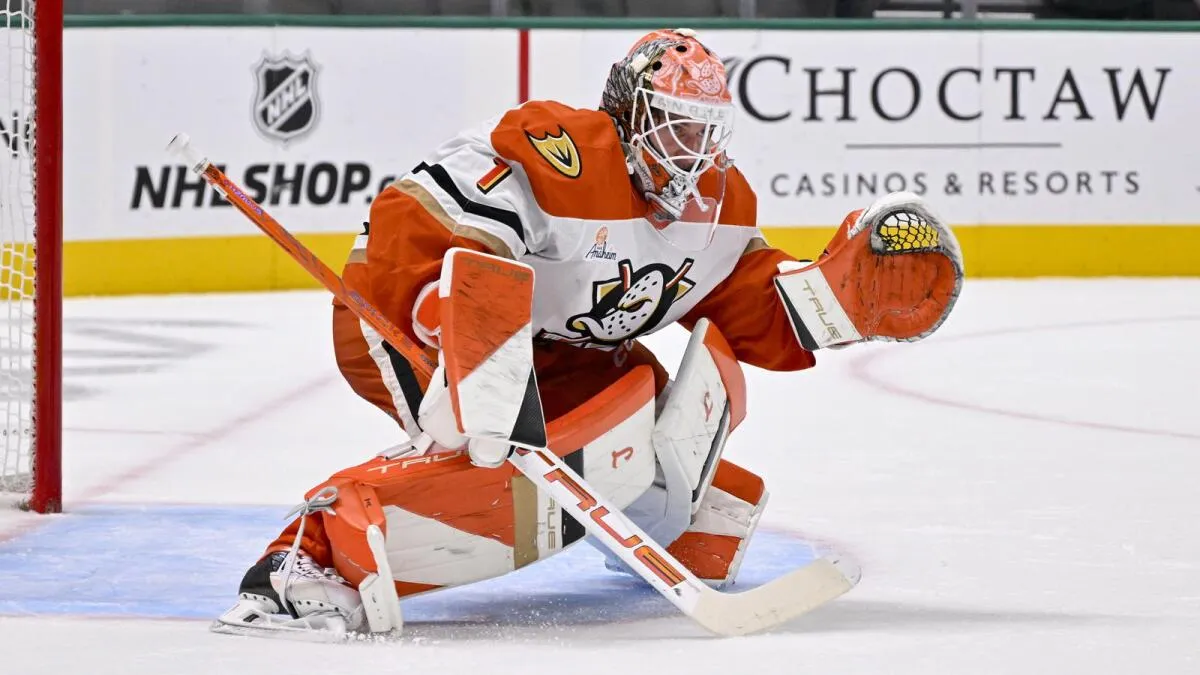
What we know about the Lukas Dostal upper body injury timeline
Injury details and initial diagnosis
Dostal’s upper body injury first surfaced as a day-to-day concern following Anaheim’s 4-3 overtime victory against the Vegas Golden Knights last Saturday. The goaltender played the entire game without apparent incident, making 31 saves to secure the win. However, he was held out of Wednesday’s 5-4 loss to the Vancouver Canucks, prompting speculation about his availability moving forward. The team initially categorized his status as day-to-day, suggesting a minor issue that might resolve quickly.
The situation grew more serious following further evaluation, prompting medical staff to extend the timeline significantly. Ducks general manager Pat Verbeek announced the two-to-three week recovery period before Friday’s matchup against the Los Angeles Kings, confirming fans’ fears about the severity of the injury. While the specific diagnosis remains protected under team policy, the extended absence indicates something beyond routine soreness or maintenance.
Recovery expectations and return to play protocol
Based on the current timeline, Dostal will miss approximately 10 regular season games, including the contest he already sat out against Vancouver. The two-to-three week window suggests the injury falls into a moderate severity category—significant enough to require substantial rest and treatment, but not severe enough to threaten his season. Medical professionals typically recommend gradual progression through rehabilitation phases before clearing players for full contact and game action.
The Ducks have not yet placed Dostal on injured reserve, leaving open the possibility of a quicker return if his recovery progresses ahead of schedule. However, given the conservative nature of modern injury management, particularly with franchise goaltenders, the team will likely exercise caution. Dostal’s return to play protocol will involve several stages: initial rest and treatment, gradual on-ice activities, full practice participation, and finally, medical clearance for game action. Each phase requires symptom-free progression before advancing to the next level.
Anaheim Ducks goaltending depth chart without Dostal
Petr Mrazek steps into starting role
With Dostal sidelined, veteran Petr Mrazek assumes the starter’s workload for Anaheim. The 32-year-old Czech goaltender, acquired in the June trade that sent longtime Duck John Gibson to Detroit, brings nine seasons of NHL experience to the crease. Mrazek has appeared in five games this season, posting a 3-3-0 record with an .881 save percentage and 2.12 goals saved above expected at 5v5 play. While his traditional statistics lag behind Dostal’s, his underlying numbers suggest he’s performed reasonably well in limited action.
Mrazek’s style differs from Dostal’s, relying more on positioning and experience than athleticism. He played his first game as a starter this season Friday against the Kings, with Ville Husso backing him up. Head coach Greg Cronin will likely lean on Mrazek for the bulk of starts, though the team may implement a more traditional tandem approach rather than the clear starter-backup dynamic they employed with Dostal healthy. Mrazek’s familiarity with the Pacific Division from his time with San Jose should help him navigate the upcoming schedule.
Ville Husso’s opportunity after strong AHL performance
Ville Husso made his season debut Friday against Los Angeles after spending the season’s first two months with the San Diego Gulls in the AHL. The 29-year-old Finnish goaltender compiled an impressive resume in the minors, posting a 6-4-3 record with a .908 save percentage and three shutouts in 13 games. His performance demonstrated readiness for NHL action and earned him the call-up when Dostal’s injury required roster reinforcement.
Husso’s NHL track record includes stints with St. Louis and Detroit, where he showed flashes of brilliance mixed with inconsistency. His presence gives the Ducks a legitimate NHL-caliber backup rather than forcing them to rely on an inexperienced third-stringer. The combination of Mrazek and Husso provides Anaheim with adequate goaltending depth, though neither matches Dostal’s ceiling or ability to steal games. How quickly Husso adapts to NHL speed and chemistry with the Ducks’ defense corps will significantly impact the team’s ability to weather Dostal’s absence.
Pacific Division standing remains precarious during Dostal absence
Current positioning and competitive landscape
As of Friday, the Ducks sit atop the Pacific Division with a 14-8-1 record, holding a narrow lead over Vegas (36 points) and Seattle (35 points). The division race promises to remain tight throughout the season, with little margin for error during any extended stretch. Dostal’s injury arrives at a critical juncture, as Pacific Division rivals position themselves for the second half push toward playoff seeding.
The Ducks’ success stems from a balanced approach, ranking middle of the pack in goals for and against but excelling in close games. Dostal’s 5v5 goals saved above expected of 10 ranks fourth league-wide, highlighting his importance to Anaheim’s defensive structure. His ability to make key saves at crucial moments has masked some defensive lapses and allowed the team’s young offensive core to play with confidence. Without that safety net, the Ducks must tighten their defensive zone coverage and reduce high-danger scoring chances against.
Upcoming schedule challenges
Anaheim faces a demanding schedule over the next two to three weeks, with multiple games against Pacific Division opponents who can directly impact their standing. The team plays three sets of back-to-back games during Dostal’s projected absence, testing the goaltending tandem’s endurance and consistency. Division matchups against Calgary, Edmonton, and Seattle loom large, as these four-point swings could determine playoff positioning come April.
The Ducks’ home ice dominance, built largely on Dostal’s 8-1 record at Honda Center, faces its sternest test. Mrazek and Husso must replicate that success to maintain Anaheim’s comfortable home-ice advantage. Road games against Central Division powers Colorado and Winnipeg add further difficulty to the stretch. Points earned during this period will count equally toward the final standings, but the psychological impact of maintaining first place without their MVP-caliber goaltender could resonate through the roster.
Long-term implications for Anaheim’s season outlook
Contract situation and franchise stability
Dostal’s injury, while significant in the short term, doesn’t jeopardize his long-term future with the franchise. The goaltender signed a five-year, $32.5 million contract extension this summer that carries a $6.5 million cap hit through the 2029-30 season. That commitment underscores the organization’s belief in Dostal as their foundational piece between the pipes. The trade of John Gibson, who held the starting job for nearly a decade, cleared the path for Dostal to cement his status as the undisputed number one.
The financial investment and contractual security mean the Ducks will prioritize Dostal’s health over any short-term gains. Rushing him back before full recovery risks re-injury or chronic issues that could plague the franchise for years. Anaheim’s medical staff understands the stakes, balancing the desire to compete for a division title against the imperative of protecting their most valuable long-term asset. The organization’s patience with Gibson through various injuries provides a template for handling Dostal’s situation conservatively.
Depth chart evaluation and future moves
This injury period serves as an extended audition for both Mrazek and Husso, potentially influencing roster decisions beyond Dostal’s return. Mrazek’s performance could determine whether he remains the preferred backup or becomes trade bait at the deadline. His $3.8 million cap hit becomes more palatable if he proves capable of handling significant starts. Conversely, strong play from Husso might make Mrazek expendable, allowing Anaheim to recoup assets while committing to Husso as the long-term secondary option.
The Ducks’ organizational depth at goaltender includes several prospects developing in the minors, but none appear ready for NHL responsibility. This reality makes the performance of the current tandem even more critical. If Mrazek and Husso struggle, general manager Pat Verbeek may need to explore the trade market for additional insurance. However, the team’s cap situation and commitment to building through youth suggest they’ll likely stand pat and hope their internal options suffice. The coming weeks will answer many questions about Anaheim’s goaltending depth and championship aspirations.
The Lukas Dostal upper body injury represents a pivotal moment for the surprising Anaheim Ducks. How they navigate this two-to-three week stretch without their franchise goaltender will reveal whether their Pacific Division lead was built on sustainable team strength or relied too heavily on one exceptional player. With Mrazek and Husso manning the crease, the Ducks must emphasize defensive structure and opportunistic offense to maintain their standing. The organization’s future looks bright with Dostal locked in long-term, but the present challenges test the team’s maturity and resilience at the most important position in hockey.
Frequently Asked Questions

Par Mike Jonderson
Mike Jonderson is a passionate hockey analyst and expert in advanced NHL statistics. A former college player and mathematics graduate, he combines his understanding of the game with technical expertise to develop innovative predictive models and contribute to the evolution of modern hockey analytics.