







Martin St. Louis coaching struggles with Montreal Canadiens 2025 season: timeouts, power-play slumps and growing outside noise
The Bell Centre used to erupt after a Nick Suzuki snipe or an Arber Xhekaj hit; now the loudest reactions come when the camera catches Martin St. Louis motionless behind the bench while another opponent celebrates. Two weeks into November 2025 the Canadiens have been out-scored 12-1 in back-to-back embarrassments, the power play is 0-for-17 since November 4, and every post-game scrum feels like a referendum on the second-year head coach. The same city that hailed him as a culture-changer in 2023 is asking a blunt question: has the St. Louis magic vanished, or was it never enough to cover a roster that is still one line and one defensive pair short of contention?
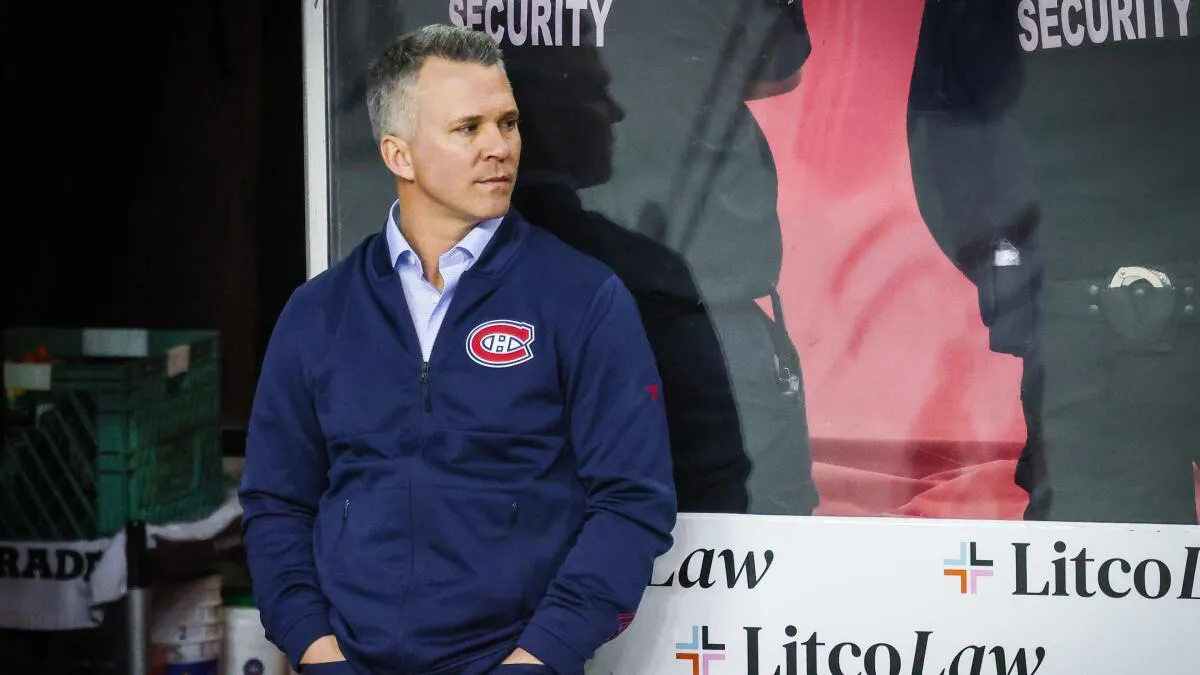
From feel-good story to first in the hot-seat: how Martin St. Louis coaching struggles with Montreal Canadiens 2025 season hit full boil
Only 18 months ago St. Louis was the toast of the league for turning a 32nd-place club into a 90-point sleeper. The honeymoon faded quickly once expectations flipped. A 7-0 home loss to Dallas on November 7 was followed by a 5-1 no-show against Boston five nights later; social-media clips of fans chanting “Fire Marty” in the concourse racked up millions of views before the Zamboni doors opened. Radio host Gilbert Delorme summed up the mood on 98.5 FM: “Good culture is great, but culture doesn’t bail you out when the other team is on a five-on-three and your bench looks like a museum.”
The numbers are uglier than the sound-bites. Through 17 games the Canadiens sit sixth in the Eastern conference with 22 points, but their underlying metrics scream wild-card mirage:
- 30th in shots-against per 60 (35.4)
- 28th in power-play efficiency (12.7%)
- 26th in save percentage at 5-on-5 (.894)
- 22 giveaways in the second period alone during the past three outings
St. Louis himself conceded the obvious after the Boston defeat: “We’re holding our sticks like they’re jack-hammers. When you want something too badly you forget to breathe.” The quote lit up highlight packages, yet the in-game adjustments many expected never materialised—no timeout during either five-on-three, no goalie change after the fourth goal, and only one forward line shuffle that lasted two shifts.
System vs. spontaneity: why the coach’s laissez-faire approach is under fire
The critique is no longer about effort—the Canadiens still win more puck battles than they did in the Dominique Ducharme era—but about real-time problem solving. Analysts point to a recurring script: strong opening 20, flat middle frame, frantic third that depends on Samuel Montembeault acrobatics. The Athletic’s Montreal beat noted that St. Louis has used a timeout in just 3 of 14 games when trailing after the second period, the lowest rate in the NHL. Former Hab Mike Weaver told RDS viewers, “Sometimes you need to stop the bleeding, even if it’s just to let the kids reset.”
St. Louis counters that he wants players to learn autonomy. “We’re not going to build winners by treating them like robots,” he said last week. The philosophy mirrors the approach he used when transforming the locker-room culture in 2023, but believers are thinning. One Eastern conference scout told The Hockey News the Canadiens “have a Plan A and a Plan A-plus, but no Plan B when the ice tilts.”
Special-teams sinkhole: power-play woes deepen Martin St. Louis coaching struggles with Montreal Canadiens 2025 season
Montreal entered the year hoping Lane Hutson’s quarterback instincts and Ivan Demidov’s sleight-of-hand would turbo-charge a unit that finished 19th in 2023-24. Instead the man-advantage has become a momentum gift for opponents. The club is scoreless on its last 17 chances and has managed just three high-danger shots during two separate five-on-threes—both against Boston—over a combined 3:18 of two-man advantage. Assistant coach Alex Burrows, hired explicitly to run the power play, is feeling heat equal to St. Louis.
The structural issue is predictability. Demidov runs the half-wall “Kucherov” set, but without a right-handed one-timer threat opponents overload the passing lane. When the puck does reach Cole Caufield, he’s 10 feet closer to the blue-line than last year because Hutson has crept down low. The result: 47% of Caufield’s attempts are now from above the circles, compared to 31% in 2023-24. St. Louis admitted “we’re telegraphing,” yet practice footage shows the same five-man unit working the same rotation for eight straight days. As our earlier look at Montreal’s second-period collapses highlighted, systemic rigidity is costing them goals—and now points.
Lineup politics, prospect impatience and the playoff math tightening
Injuries have not helped. Alex Newhook’s lower-body ailment forced St. Louis to plug 21-year-old Jared Davidson into a top-nine role he’s unlikely to grow into overnight. The bigger headache is on defence, where Kaiden Guhle’s recurring shoulder issue leaves a minute-munching hole next to David Savard. St. Louis doubled-shifted Mike Matheson to 28:49 against Boston—Matheson played well, but the workload is unsustainable over 82 games.
Meanwhile, prospects are knocking. Owen Beck has 19 points in 14 AHL games and is already a better face-off man than any centre on the roster. Logan Mailloux averages 24 minutes in Laval and leads the league in shots from the point. Promoting either would require St. Louis to bench a veteran—Jake Evans or Johnathan Kovacevic—and risk the “accountability” mantra he preaches. The coach chose patience on November 15, telling reporters “development isn’t linear,” yet every loss narrows the leash. At the current clip the Canadiens need 91 points to make the playoffs in a watered-down East; that means a 42-30-7 finish, or a 35-23-6 sprint from here. Drop three more in a row and the gap becomes a canyon.
What the numbers say about St. Louis’ job security—separating noise from narrative
Fan frustration is loud; internal evaluation is cooler. Team president Jeff Gorton reiterated last week that “we’re not evaluating the coach on a week-long slide,” and ownership sources told The Gazette that St. Louis signed a two-year extension in July that carries virtually no buyout penalty. Translation: a mid-season firing is unlikely unless the locker-room fractures. Veterans still laud his communication—Suzuki said, “He talks to us like humans, not employees”—and the front office values the cultural reset that turned the Canadiens from lottery team to playoff hopeful.
Still, sports is a results business. If Montreal is outside the wild-card picture by U.S. Thanksgiving (still 1½ weeks away) the whispers will crescendo. History says Canadiens coaches don’t survive prolonged losing: Claude Julien got the axe in February 2021 during a .500 stretch, and Michel Therrien was dismissed in 2017 two points removed from a playoff berth. St. Louis has the added shield of a respected playing career in the city, but that shield cracks with every empty power-play and every uncontested slot shot Montembeault fishes out of the net.
Forward-looking note: can adjustments save the season—and the coach?
The schedule offers a reprieve: six of the next eight games come against non-playoff teams from a year ago (Columbus, Chicago, San Jose, Utah), and four are on the road where external pressure eases. St. Louis has already tweaked the top power-play unit, inserting Slafkovsky’s 6-foot-4 screen in front and moving Demidov to the opposite wall to open the one-timer for Hutson. Internally, the staff is experimenting with a “20-second rule”: if the puck doesn’t leave the zone cleanly within that window, the defence must skate it out rather than reverse behind the net—an attempt to cut the costly second-period turnovers.
Whether those tweaks land in time will decide more than standings points. They will shape the narrative of whether Martin St. Louis is the long-term architect of the next great Canadiens team or simply the bridge that bought time until the roster matured. For now the city waits, the power-play sputters, and the coach who once could do no wrong hears every boo raining down from the rafters. The next three weeks will tell if he can turn the noise back into cheers—or if Montreal’s famously quick trigger will claim another bench boss.
Frequently Asked Questions

Par Mike Jonderson
Mike Jonderson is a passionate hockey analyst and expert in advanced NHL statistics. A former college player and mathematics graduate, he combines his understanding of the game with technical expertise to develop innovative predictive models and contribute to the evolution of modern hockey analytics.