













Montreal Canadiens second period struggles: why the middle frame keeps sinking the Habs
The Montreal Canadiens second period struggles have become the nightly story that writes itself. For the third consecutive season, the bleu-blanc-rouge step off the Bell Centre ice after forty minutes more often behind than ahead, and the numbers are getting uglier. Through 18 games in 2025-26, the Habs have been out-scored 29-15 in the second period, a minus-14 goal differential that is the worst in the NHL and nearly double the next-poorest club. Coaches have tweaked systems, players have promised sharper starts, and Martin St-Louis has even flipped dressing-room stall assignments—yet the middle twenty minutes remain Montreal’s personal Bermuda Triangle.
What makes the slide so maddening is that the Canadiens usually exit the first period in decent shape. They have held the lead eight times and been tied six times, only to watch points slip away once the ice gets chopped up and match-ups loosen. Fans have coined the phrase “second-period swoon” on social media, television panels debate it every intermission, and the organization itself now tracks “second-period scoring chances” as an internal KPI. The issue is no longer anecdotal; it is a structural crack that threatens to swallow a playoff-worthy roster.
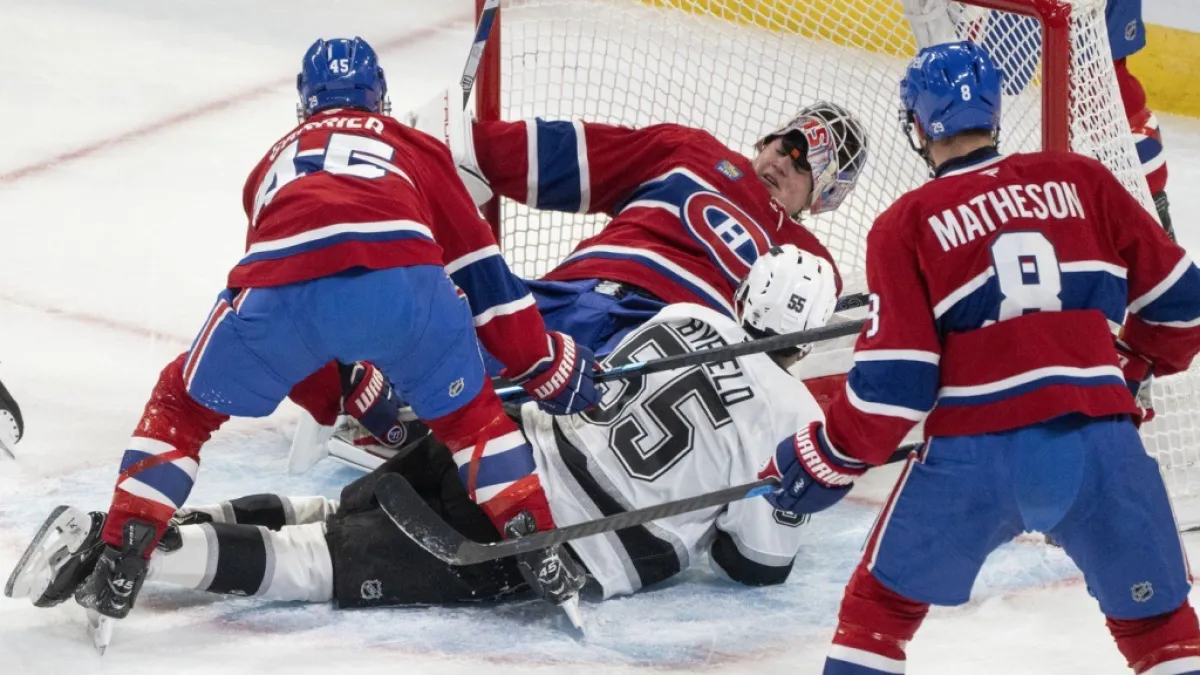
How the Montreal Canadiens second period struggles compare to the rest of the NHL
Montreal’s minus-14 goal differential in the second frame is dead last, but the gap to 31st place is startling. Columbus sits 31st at minus-8, while Buffalo, Anaheim and Seattle each check in at minus-6. Put differently, the Canadiens have been twice as bad as the league’s next-worst middle frame. The problem is also getting worse: after a minus-23 differential last season, the club targeted a league-average break-even mark for 2025-26. Instead, they are on pace for minus-64, a regression that has the analytics department sounding internal alarms.
The shot share tells the same story. Natural Stat Trick shows Montreal’s second-period Corsi at 45.1 percent, third-worst in the league, while their expected-goals share is 43.4 percent. When you combine poor puck possession with the NHL’s second-worst team save percentage in the middle stanza (.872), the result is a goals-against average that balloons to 3.83. No other club is above 3.20. In short, the Canadiens spend the second period hemmed in their own zone, and when pucks reach the net, they are not getting saves.
Inside the numbers: where the Montreal Canadiens second period struggles actually happen
Break the ice into 20-game rolling segments and the trend is impossible to miss. Since December 2023, Montreal has allowed 2.05 goals per 60 in the first period, 3.83 in the second, and 2.31 in the third. Coaches often talk about “tipping points”; for the Habs, the second period is a cliff. A closer look at the shot map reveals that 41 percent of the goals against come from the high-danger slot, compared with 31 percent league-wide. Opponents are not simply throwing pucks on net; they are walking into the kitchen.
Special teams amplify the damage. The Canadiens have drawn only 14 second-period power plays this season while surrendering 27, the league’s worst ratio. That minus-13 differential means the club spends nearly an extra two minutes per game shorthanned in the frame they already trail. Meanwhile, their penalty kill clicks at just 73.7 percent during the second, versus 84.1 percent in the other two periods. Add in three shorthanded goals against—tied for most in the NHL—and the scoreboard tilts quickly.
System, fatigue or mindset? Dissecting the root causes of Montreal Canadiens second period struggles
Head coach Martin St-Louis has experimented with line matching, icing defensive zone starts for Nick Suzuki’s trio and offensive starts for the Sean Monahan line. Yet the structural tweak has not solved the riddle. One theory inside the dressing room is roster imbalance: the Canadiens dress seven rookies or second-year players most nights, and the middle frame is when veteran savvy typically tilts momentum. Another theory is travel fatigue; Montreal plays the most back-to-back sets in the Eastern Conference, and the second period is when legs go heavy.
The players themselves point to a mental component. “We come out feeling good after the first, and maybe we get too comfortable,” defenseman Mike Matheson said after a 5-2 loss to Florida in which the Panthers scored three times in the second. “Next thing you know we’re chasing the game.” St-Louis has started showing the club video of forecheck gaps widening between periods one and two, evidence that the group sits back. Whether the cause is physical or psychological, the outcome is the same: scoreboard pressure flips, and the young roster tightens.
What the coaching staff is doing to fix Montreal Canadiens second period struggles
St-Louis and his assistants have implemented three concrete changes over the past month:
- Shortened bench earlier: Rather than roll four lines for the first half of the second, the staff now shortens to nine forwards by the 30-minute mark, double-shifting Suzuki or Kirby Dach to keep skill on the ice.
- “Red-line” drill in practice: Every practice begins with a full-ice 2-on-2 that ends only when the puck crosses the offensive red line, reinforcing north-south habits.
- Goalie rotation: Because the second-period save percentage is .872, the club has started splitting back-to-backs more aggressively, giving Cayden Primeau two additional starts to keep both netminders fresh for the middle frame.
Early returns are modest but trending up. Over the last five games, the Canadiens have been out-scored only 4-3 in the second period, including a 2-0 advantage during a 3-1 win in Seattle. St-Louis, however, refuses to celebrate. “Four games is a blip, not a pattern,” he told reporters. “We need 20 in a row before I sleep better.”
Player focus: five Canadiens most affected by second-period slide
While the problem is collective, certain skaters grade out especially poorly in middle-frame shot share:
- Johnathan Kovacevic – 42.1 CF%, on ice for 10 second-period goals against
- Juraj Slafkovsky – 43.7 CF%, minus-8 goal differential when on ice in the second
- Jake Evans – 44.0 CF%, centre of the fourth line that sees defensive zone usage
- Kaiden Guhle – 44.2 CF%, rookie learning curve exposed against top lines
- Cole Caufield – 45.0 CF%, sniper must learn to defend leads, not just build them
Each player has been given individual video homework. Guhle, for example, studies clips of Scott Niedermayer’s gap control, while Caufield watches how Alex DeBrincang back-pressures through the neutral zone. The staff believes that if these five can push their shot share above 48 percent, the team number will creep toward break-even.
Historical context: have the Montreal Canadiens ever had second period struggles this bad?
Montal records date back to 1955, and the short answer is yes—but rarely. The worst second-period differential in franchise history belongs to the 1998-99 squad (minus-54), a team that finished 23-47-12. That group, however, was intentionally rebuilding after the Patrick Roy trade. The current roster, by contrast, expected to fight for a wild-card berth. The last time a competitive Canadiens team bled this badly in the middle frame was 2001-02 (minus-33), yet even that club rebounded with a plus-12 third period and squeaked into the postseason.
What makes 2025-26 unique is the speed of the collapse. Through 18 games, the minus-14 pace projects to minus-64, which would shatter the 1999 mark. Historians note that the 1999 team played in a higher-scoring era; goals per game league-wide was 5.55, versus 6.35 today. Adjusted for era, this season’s Canadiens are actually surrendering goals at a faster rate than the franchise’s most infamous also-ran.
What Montreal Canadiens second period struggles mean for the 2025-26 playoff race
The Eastern Conference wildcard cut-line has hovered between 92 and 94 points over the past five seasons. Montreal currently sits on pace for 86, and the six-point gap is almost entirely explained by second-period goal differential. Convert even half of those collapses to ties, and the club would project to 94 points—squarely in the mix. Conversely, if the trend continues, general manager Kent Hughes will face a dilemma at the March trade deadline: buy to support a flawed roster, or sell assets such as Monahan and David Savard to bolster the 2026-27 pipeline.
The next 15 games will decide the narrative. Five of those are against direct wildcard opponents (Detroit, Washington, Pittsburgh), and all but two feature at least one rest day, minimizing fatigue as an excuse. According to MoneyPuck’s playoff odds model, the Canadiens’ postseason probability drops from 52 percent to 27 percent if the second-period goal share remains below 40 percent. In short, the middle frame is not just a statistical curiosity; it is the single biggest lever between a spring with playoff revenue and another early tee time.
Key takeaways and looking ahead
The Montreal Canadiens second period struggles are no longer a subplot—they are the story of the season. Whether the root is structural, physical or psychological, the outcome is measurable: 29 goals against in 18 games, a minus-14 differential that dwarfs the rest of the league, and a playoff probability that swings on twenty minutes of hockey. St-Louis has begun to shorten benches, emphasize north-south drills, and rotate goaltenders, but the sample remains too small to declare victory.
For fans tracking the race, the next month is critical. If the Canadiens can push their second-period expected-goals share above 48 percent and keep their save percentage north of .900, the standings will tighten quickly. If not, the front office must decide whether a roster loaded with youth needs another year of seasoning. Either way, the answer will come between 20:00 and 40:00 on the game clock—Montreal’s most important twenty minutes.
Frequently Asked Questions

Par Mike Jonderson
Mike Jonderson is a passionate hockey analyst and expert in advanced NHL statistics. A former college player and mathematics graduate, he combines his understanding of the game with technical expertise to develop innovative predictive models and contribute to the evolution of modern hockey analytics.