



Milan-Cortina 2026 Olympic ice hockey arena readiness: No backup plan as construction goes down to the wire
The clock is ticking for Milan-Cortina 2026 organizers as they race to complete the Olympic ice hockey arena with no contingency plan in place. Construction delays at the Santa Giulia Ice Hockey Arena have pushed the project perilously close to the Games’ opening, raising questions about whether the premier venue will be ready to host NHL stars returning to Olympic competition for the first time since 2014.
Andrea Francisi, chief games operations officer for Milan Cortina, delivered a stark message to the Associated Press: “There is no plan B.” This admission underscores the precarious situation facing organizers as they work to deliver a 16,000-seat arena that will serve as the centerpiece for Olympic ice hockey. The first women’s preliminary match is scheduled for February 5, just one day before the opening ceremony, leaving virtually no margin for error.
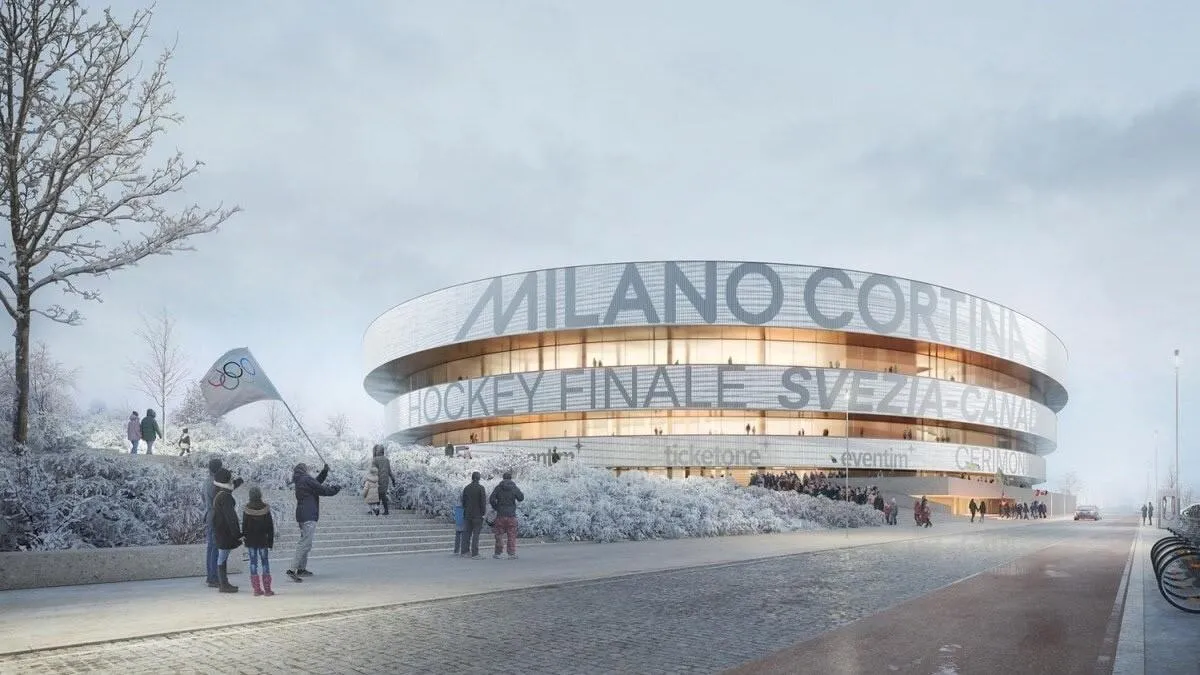
Santa Giulia arena construction faces critical timeline crunch
Construction crews are working around the clock to complete the Pala Italia Santa Giulia arena on Milan’s outskirts. The venue, designed by David Chipperfield Architects, remains visibly incomplete with daily updates showing progress but also persistent delays. Originally slated for testing by November 2025, the arena missed that crucial milestone, forcing organizers to reschedule test events to January 9-11—less than a month before Olympic competition begins.
The compressed timeline represents a significant departure from standard Olympic protocols. Typically, new venues undergo rigorous testing at least a year before hosting medal events. This process encompasses far more than ensuring a quality ice surface. Organizers must verify concession operations, bathroom facilities, security screening, ventilation systems, and crowd flow management. Each element requires time to test, adjust, and retest before thousands of spectators and the world’s best hockey players arrive.
Francisi maintains daily communication with construction teams and reports “great collaboration” between organizers and builders. “The companies which are involved with the building of the facility have sped up their work significantly,” he explained, expressing “healthily optimistic, but 100 per cent we'll do it” confidence. This optimism, however, cannot change the immutable calendar counting down to February 5.
Venue significance for Olympic hockey and NHL return
The Santa Giulia arena represents far more than another Olympic venue—it symbolizes the return of best-on-best hockey after a 12-year absence. When NHL players last competed at Sochi 2014, they showcased the sport at its highest level. The league’s decision to participate in Milan-Cortina 2026 has generated enormous anticipation among fans eager to see current superstars like Connor McDavid, Auston Matthews, and Leon Draisaitl represent their nations.
The arena’s 16,000-seat capacity matches the scale expected for hockey’s premier international showcase. Located in the developing Milano Santa Giulia district, the venue will serve as the primary hockey location, complemented by the secondary Rho Ice Hockey Arena at the Fiera Milano Rho exhibition centre. While Rho will host some early-round games in a repurposed pavilion, Santa Giulia will handle the marquee matchups and medal rounds.
After the Olympic flame is extinguished, the arena transitions to its legacy role as Milan’s main sports and entertainment venue, replacing the aging Mediolanum Forum. This long-term purpose has driven the ambitious design, but it also contributed to construction complexity as builders worked to create a facility that serves both Olympic specifications and future commercial needs.
Operational risks of proceeding without contingency options
Organizers’ admission of no backup plan reveals a calculated gamble with Olympic schedules and athlete preparations. The “no plan B” stance means every system must function flawlessly from the first puck drop. Francisi acknowledged there is “no precise date” for the venue handover, creating a fluid situation where preparation time shrinks by the day.
The risks extend across multiple operational domains:
- Ice quality: The playing surface requires precise temperature and humidity controls, adequate thickness, and proper markings for Olympic competition
- Broadcast infrastructure: Global audiences depend on camera positions, lighting, and connectivity that must be tested extensively
- Safety systems: Emergency evacuation routes, medical facilities, and security screening need full-scale testing
- Spectator services: Food service, merchandise, restrooms, and accessibility features must handle peak demand
- Team facilities: Locker rooms, training areas, and anti-doping stations need to meet international standards
“We’re monitoring all that daily together with them,” Francisi said of the construction partnership. “We’re creating a coordinated plan between their work and our preparations.” This integrated approach, while logical, requires perfect execution when time has become the scarcest resource.
What makes the situation particularly concerning is that test events serve purposes beyond technical checks. They train volunteers, familiarize staff with workflows, identify bottlenecks, and build institutional knowledge. A January test event provides minimal time to implement changes before Olympic competition begins days later.
Tournament schedule and the ripple effect of delays
The Olympic hockey schedule is already set in stone, with the women’s tournament running February 5-19 and the men’s competition spanning February 11-22. Italy’s women’s team faces France in the opening game at Santa Giulia, a moment of national pride that organizers cannot afford to relocate. The men’s tournament featuring NHL stars begins six days later, theoretically allowing more construction time.
However, the shortage of preparation time affects both competitions. Teams typically arrive early to acclimate to facilities, adjust to ice conditions, and hold practice sessions. Without a fully operational arena, these crucial preparations become impossible. The secondary Rho arena can accommodate some practice needs but lacks the capacity and prestige of the main venue.
The construction delays have already forced one test event relocation. Organizers moved the originally scheduled competition rather than risk exposing incomplete conditions to international scrutiny. While new test dates are set for January 9-11, this represents a fraction of the usual testing timeline. Most Olympic venues undergo multiple test events across an entire year, providing time to address issues discovered during each trial run.
What’s at stake for the Olympic movement and hockey fans
The success or failure of Santa Giulia will resonate beyond the 2026 Games. The return of NHL players to the Olympics was hard-won after years of negotiations between the league, players’ association, and international federations. Any compromise to the hockey competition’s quality could jeopardize future participation agreements.
For Italian organizers, the arena represents a cornerstone of their Olympic legacy. The Milano Santa Giulia development is transforming former industrial land into a modern urban district, and the arena serves as its architectural centerpiece. Failure to deliver on time would undermine confidence in Italy’s ability to host major international events.
Fans who have waited over a decade for another Olympic dream team scenario face uncertainty. The 2010 Vancouver final, featuring Sidney Crosby’s golden goal, remains one of hockey’s most iconic moments. The prospect of similar drama with current NHL stars has fueled anticipation worldwide. Any degradation of the competition environment due to rushed construction would disappoint millions.
Conclusion: The final sprint to Olympic readiness
Milan-Cortina 2026 organizers are in a race against time that will determine the success of Olympic ice hockey. While confidence remains high among officials, the reality of completing a 16,000-seat arena while simultaneously preparing for the world’s premier winter sports event cannot be underestimated. The January 9-11 test event will provide the first real indication of whether Santa Giulia can meet Olympic standards with minimal preparation time.
The absence of a backup plan concentrates focus but also eliminates safety nets. Every construction milestone, equipment installation, and operational test must proceed flawlessly. For hockey fans worldwide, the hope is that this pressure creates precision rather than panic. With NHL superstars preparing to represent their countries and women’s hockey continuing its impressive growth trajectory, the sport deserves a showcase venue worthy of its Olympic stage.
As February approaches, all eyes turn to Milan’s outskirts, where construction crews and Olympic organizers share a simple mandate: deliver excellence, because there is no alternative. The legacy of Milan-Cortina 2026’s hockey competition will be written not just by the players on the ice, but by the workers racing to ensure that ice exists in a finished arena.
Frequently Asked Questions

Par Mike Jonderson
Mike Jonderson is a passionate hockey analyst and expert in advanced NHL statistics. A former college player and mathematics graduate, he combines his understanding of the game with technical expertise to develop innovative predictive models and contribute to the evolution of modern hockey analytics.