











Miles Wood’s clutch performance in overtime delivered the Columbus Blue Jackets their fourth consecutive road victory, culminating in a dramatic 4-3 win against the Buffalo Sabres on October 28, 2025. The game, which featured multiple lead changes and intense back-and-forth action, showcased Wood’s resilience as he returned from a five-game absence due to an eye injury. His two-goal performance, including the overtime winner just 2:53 into the extra frame, exemplified the kind of gritty determination that defines championship-caliber hockey.
The victory extended Columbus’s impressive road winning streak while simultaneously ending Buffalo’s four-game home winning run. For the Sabres, this marked their second consecutive overtime loss, a frustrating outcome for a team that had shown significant improvement after an 0-3 start to the season.
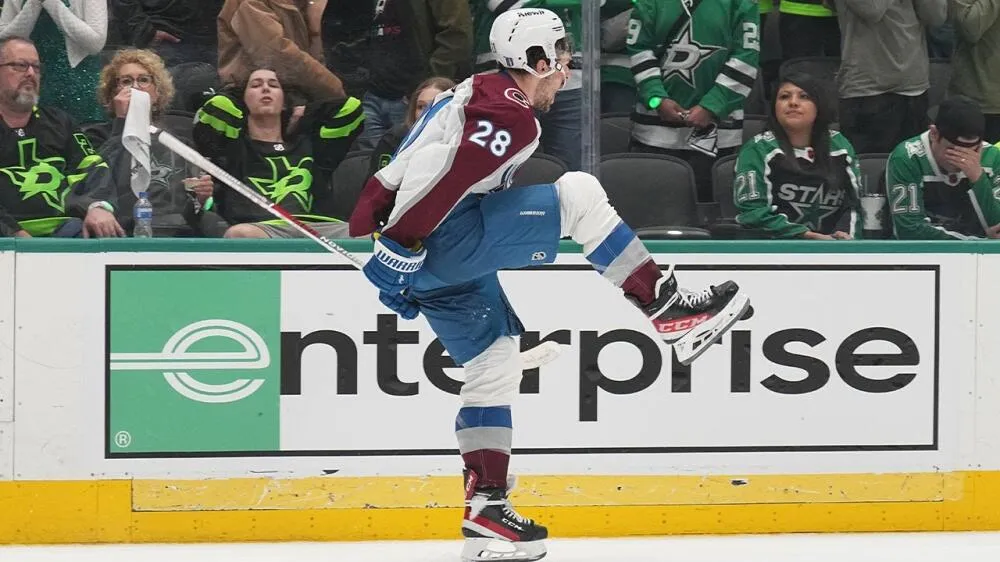
Miles Wood’s triumphant return from injury powers Blue Jackets
Miles Wood’s comeback story added an emotional layer to an already thrilling contest. The forward had been sidelined for five games following a frightening incident where New Jersey Devils defenseman Dougie Hamilton’s stick rode up beneath Wood’s shield and struck him in the left eye. The severity of the injury had initially raised concerns about a potentially lengthy absence, making his return all the more significant.
Wood wasted no time making his presence felt upon his return. His physicality and speed immediately provided the Blue Jackets with an added dimension to their attack. The veteran forward demonstrated no hesitation or tentative play, fully committing to every puck battle and forechecking opportunity throughout the contest.
His first goal came at a critical juncture in the third period, with Columbus trailing 3-2 and time running out. Wood positioned himself perfectly in front of the net, tipping in Yegor Chinakhov’s shot with 6:05 remaining in regulation. The redirection required both precise timing and courage, as Wood had to stand in the danger area where traffic and sticks converge.
The goal not only forced overtime but also injected new life into the Blue Jackets’ bench. It demonstrated Wood’s mental fortitude, showing no lingering effects from his eye injury as he fearlessly planted himself in the slot, undeterred by the potential for further contact.
The overtime heroics that sealed the Miles Wood overtime goal vs Buffalo Sabres
When the overtime period commenced, both teams understood the stakes. Buffalo had controlled significant portions of the game and appeared poised to claim victory in regulation before Wood’s late equalizer. The Sabres nearly ended the contest early when Jiri Kulich received a perfect setup on a breakaway just 40 seconds into overtime, but Columbus goaltender Jet Greaves kicked out his right pad to make a spectacular save.
That save proved pivotal, as it set the stage for Wood’s heroics. The winning sequence began with Isac Lundestrom displaying excellent vision and poise in the Buffalo zone. As pressure mounted, Lundestrom reversed direction up the boards and spotted Zach Werenski positioned in the left circle, completely unmarked by Buffalo’s defense.
Werenski, who finished the night with a goal and an assist, received the pass and immediately surveyed his options. Rather than shooting himself, he recognized Wood charging toward the net and threaded a precision pass through defensive coverage. Wood redirected the puck past Alex Lyon, who had made 35 saves on the night but couldn’t stop the game-winner.
The goal sent the Blue Jackets’ bench into celebration and silenced the KeyBank Center crowd. Wood’s teammates mobbed him near the boards, recognizing not just the importance of the goal but also the courage it took for him to return so quickly from a serious injury and immediately impact the game.
Buffalo’s offensive surge falls short despite strong performance
The Sabres deserved credit for their competitive performance, particularly after their slow start to the season. Buffalo entered the game with momentum, having won four of their previous six games and looking to build on their recent success at home. Their offensive attack generated consistent pressure throughout the contest, outshooting Columbus 38-39 in a game that featured end-to-end action.
Josh Doan opened the scoring for Buffalo, capitalizing on strong forechecking and puck possession. Connor Timmins redeemed himself after some first-period mistakes by winning a crucial board battle and setting up Doan, who grabbed his own rebound and buried it for the equalizer. Ryan McLeod added the second goal through a slick give-and-go play with Bowen Byram, with the puck deflecting off Damon Severson’s leg past goaltender Jet Greaves.
Josh Dunne provided Buffalo with their final lead of the night, scoring his first NHL career goal in the third period. The milestone moment came after Beck Malenstyn’s tenacious forecheck created a turnover, allowing Dunne to capitalize on the opportunity. For Dunne, the moment represented the culmination of years of hard work and development within the organization.
Despite these offensive contributions, Buffalo couldn’t hold their leads. The Sabres’ power play struggled to generate quality chances, managing only one shot during their first man-advantage opportunity. Captain Rasmus Dahlin and alternate captain Tage Thompson both had opportunities to extend Buffalo’s lead but were denied by Greaves, who stood tall when his team needed him most. Similar to John Tavares’s overtime goal that capped a Maple Leafs comeback against the Sabres just days earlier, Buffalo once again found themselves on the wrong end of an overtime thriller.
Zach Werenski’s two-way excellence drives Columbus’s winning streak
While Miles Wood deservedly earned the headlines for his overtime heroics, Zach Werenski’s contributions throughout the game proved equally vital to Columbus’s success. The elite defenseman recorded a goal and an assist, showcasing the complete skill set that has established him as one of the league’s premier blueliners.
Werenski’s goal came on the power play during the second period, with Buffalo already leading 2-1. From the top of the slot, Werenski unleashed a powerful slap shot that beat Lyon cleanly, tying the game at 2-2. The goal demonstrated Werenski’s offensive instincts and his ability to find shooting lanes through traffic, a skill that makes him invaluable in power-play situations.
Beyond his offensive production, Werenski logged heavy minutes in all situations, providing stability on Columbus’s backend. His defensive zone coverage helped limit Buffalo’s Grade-A scoring chances, while his transition game sparked numerous Blue Jackets rushes. The chemistry he displayed with his defensive partner proved crucial in managing Buffalo’s talented forward group.
Werenski’s assist on the overtime winner highlighted his hockey IQ and vision. Rather than forcing a shot from the circle, he recognized Wood’s positioning and made the smart play, threading the pass through defensive coverage to set up the game-winner. These subtle decisions separate elite players from good ones, and Werenski continues to demonstrate elite-level decision-making.
Goaltending battle showcases two determined netminders
The goaltending duel between Jet Greaves and Alex Lyon provided a compelling subplot to the evening’s drama. Both netminders faced 38-39 shots respectively, with the game’s outcome ultimately decided by razor-thin margins rather than any significant disparity in goaltending performance.
Greaves, making his fourth consecutive start for Columbus, continued to build on his recent success. The 23-year-old goaltender has seized his opportunity to establish himself as a reliable option for the Blue Jackets, and his 35-save performance reinforced his growing confidence. His breakaway save on Kulich in overtime proved to be the game’s most critical stop, denying what appeared to be a certain goal.
Lyon matched Greaves save-for-save throughout regulation, keeping Buffalo in contention despite facing consistent pressure from Columbus’s attack. His 35 saves included several highlight-reel stops, particularly during Columbus’s early first-period pressure when the Blue Jackets controlled possession and generated numerous quality chances. Lyon’s rebound control and positioning prevented several second-chance opportunities that could have tilted the game in Columbus’s favor.
Both goaltenders demonstrated the importance of steady netminding in tight contests. In a game featuring skilled offensive players and multiple momentum swings, neither goaltender allowed the game to get away from their respective teams. Their performances ensured that every goal required sustained effort and execution, raising the overall quality of the contest.
What the Miles Wood overtime goal vs Buffalo Sabres means for both teams moving forward
For the Columbus Blue Jackets, this victory represents more than just two points in the standings. Their four-game road winning streak—their longest since a five-game run spanning January 20 to February 12, 2022—demonstrates a maturity and resilience that has often eluded the franchise. Winning on the road requires mental toughness and the ability to weather adversity, qualities this Blue Jackets team is beginning to display consistently.
Miles Wood’s return adds a crucial element to Columbus’s lineup. His speed, physicality, and willingness to go to the net provide dimensions that complement the team’s skilled forwards. Having Wood back in the lineup gives head coach depth and versatility in his forward deployment, particularly in situations requiring energy and momentum shifts.
The Blue Jackets face an immediate challenge, hosting the Toronto Maple Leafs the following night. This quick turnaround tests their ability to maintain their winning form while managing fatigue from consecutive games. The team’s confidence should be riding high, but they’ll need to replicate the effort and execution that has fueled their road success.
For Buffalo, the loss continues a frustrating pattern of falling short in overtime games. Now 4-1-2 in their last seven games, the Sabres have shown considerable improvement from their 0-3 start, but they need to find ways to secure victories in extra time. Converting overtime losses into wins could be the difference between making and missing the playoffs.
The Sabres must quickly regroup as they travel to Boston to face the Bruins before returning home to host the Washington Capitals. Recent overtime setbacks have cost them valuable points, and the team needs to examine its three-on-three overtime strategy to maximize their chances in these critical situations. With the talent on their roster, particularly among their forward group and defensive corps, Buffalo possesses the pieces necessary for success—they simply need to finish games when opportunities arise.
The Miles Wood overtime goal vs Buffalo Sabres will be remembered as a signature moment in Columbus’s season, a testament to individual perseverance and team resilience that could serve as a catalyst for sustained success throughout the campaign.

Par Mike Jonderson
Mike Jonderson is a passionate hockey analyst and expert in advanced NHL statistics. A former college player and mathematics graduate, he combines his understanding of the game with technical expertise to develop innovative predictive models and contribute to the evolution of modern hockey analytics.