


Minnesota Frost 2025-26 bold predictions Walter Cup three-peat: Can history be made?
The Minnesota Frost enter the 2025-26 season with a target on their backs and history within reach. As the only two-time Walter Cup champions in Professional Women’s Hockey League history, they’re now pursuing what once seemed impossible: a three-peat in a league defined by its razor-thin parity. With expansion adding the Seattle Torrent and Vancouver Goldeneyes, and the Frost losing several key contributors in the process, this season represents their greatest challenge yet—but also their most compelling opportunity to cement a dynasty.
While some pundits question whether the Frost can overcome their offseason losses, the combination of retained leadership, championship experience, and tactical adjustments suggests this team remains the favorite. The path won’t be easy, but Minnesota has proven twice already that they play their best hockey when it matters most.
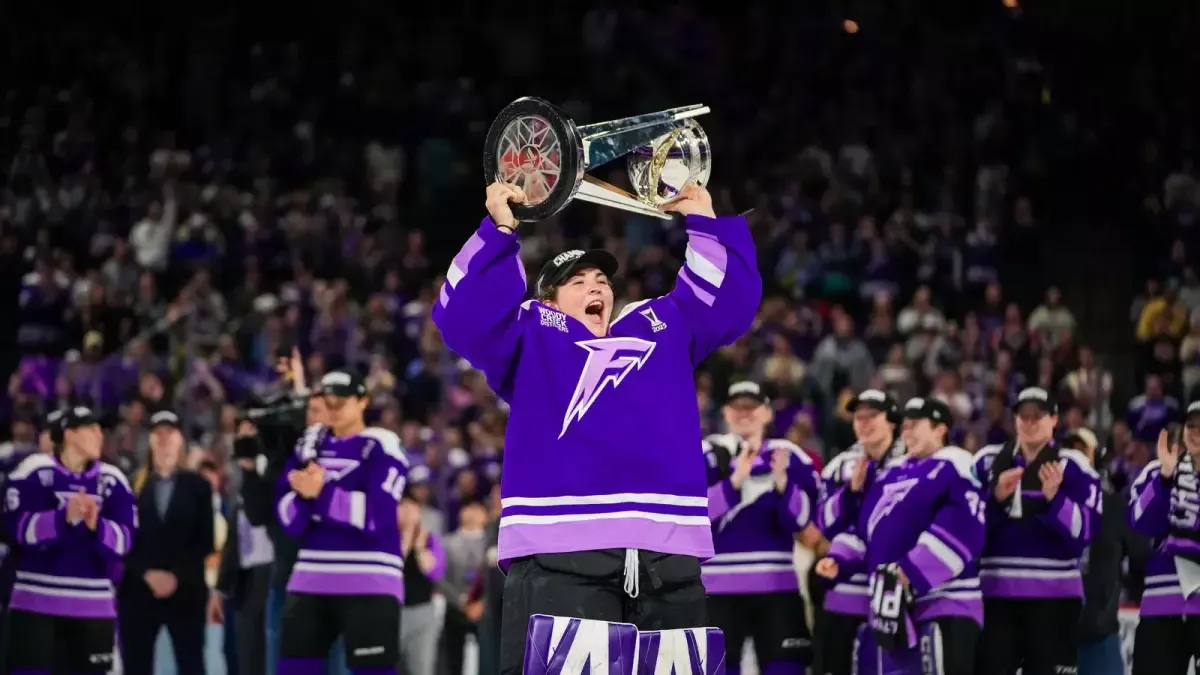
Minnesota Frost 2025-26 season outlook: Core leadership remains intact
The most significant advantage Minnesota possesses is continuity at the top. Captain Kendall Coyne Schofield and alternate Lee Stecklein were protected during expansion, ensuring the locker room maintains its foundational voices. Alternate Kelly Pannek, another foundational signing from the inaugural season, remarkably slipped through the expansion draft process, giving the Frost three essential leaders who have been through the battles together.
Head coach Ken Klee returns for his third season behind the bench, now joined by Hockey Hall of Fame inductee Brianna Decker as assistant coach. This coaching stability cannot be overstated in a league where systems and player development are still evolving. Klee’s ability to get his team peaking at the right time has become his signature—Minnesota finished fourth in the regular season both championship years before dominating the playoffs.
General manager Melissa Caruso navigated the expansion draft with precision, understanding exactly which players she could afford to lose and which core pieces simply couldn’t be replaced. The decision to protect Coyne Schofield, Stecklein, Taylor Heise, and Britta Curl-Salemme while exposing others demonstrated both confidence in the organization’s depth and a clear vision for maintaining championship DNA.
Goaltending tandem provides unmatched stability
Between the pipes, Minnesota boasts the league’s most reliable duo: Maddie Rooney and Nicole Hensley. This true 1A/1B situation gives Klee flexibility unmatched by any other PWHL team. Over the past two seasons, Rooney has started just four more games than Hensley, and their ability to push each other has created consistent excellence even when one struggles.
Last season, the pair combined for 622 saves across 29 games. The bold prediction for 2025-26? They’ll exceed 700 combined saves. This might seem modest as the league expands to eight teams, but it’s precisely this increased competition—more games against quality opponents—that will test their endurance. The Frost recently signed Rooney to a three-year extension, locking in this critical advantage through the foreseeable future.
As Klee noted, “In my mind, they’re the best goaltending group in the league. They bounce back and forth on who’s taking more of the load based on how they’re playing… They really support each other, which is a great thing.”
Veteran core adapts to new roles
The Frost retained nine players who’ve won back-to-back championships, including forwards Claire Butorac, Taylor Heise, and 2024 Rookie of the Year Grace Zumwinkle. This experience creates an intangible edge—players who understand the grind of a 30-game season and the extra gear required for playoff success.
Taylor Heise, the inaugural playoff MVP, is poised for a historic season. The bold prediction: she reaches 35 points, breaking Hilary Knight’s league record of 29. Heise notched 22 points in 29 games last season while fighting through illness, and her five points in two Rivalry Series games show her scoring touch is already engaged. A point-per-game pace in this league is rare, but Heise’s ability to elevate her linemates makes it achievable.
The defensive corps faces the biggest adjustment after losing Claire Thompson and Sophie Jaques to Vancouver in expansion. Both defenders were offensive catalysts who helped Minnesota lead all teams in defender scoring last season. Their absence creates opportunity for newcomers like Sidney Morin, a Minnesota native who scored eight points for Boston last season and was twice named SDHL Defender of the Year.
Expansion challenges test Minnesota Frost three-peat hopes
The PWHL’s first expansion era fundamentally alters the competitive landscape. Each original six franchise lost four players, forcing Minnesota to say goodbye to Thompson, Jaques, Mellissa Channell-Watkins, Michela Cava, Maggie Flaherty, Liz Schepers, and Brooke McQuigge. These weren’t role players—they were key contributors who understood Minnesota’s systems and culture.
However, Minnesota managed to get Denisa Křížová back through a trade with Vancouver, sending Anna Segedi north. This move demonstrates Caruso’s proactive approach—recognizing Křížová’s fit within the Frost’s structure and chemistry, and prioritizing her return over keeping a less-integrated player.
The expansion process was designed to make Seattle and Vancouver competitive immediately, and it worked. Seattle lured Hilary Knight from Boston, while Vancouver’s roster combines established PWHL talent with international stars. This means more teams fighting for the same four playoff spots, raising the stakes for every regular-season point.
Young talent must accelerate development
For Minnesota to three-peat, its second-year players must take significant leaps forward. Britta Curl-Salemme, who scored two crucial goals in Game 2 of last year’s finals, recently signed a two-year extension. Katy Knoll, who delivered the triple-overtime winner in Game 3, and Dominique Petrie, who opened her PWHL career with goals in three straight games, all need to increase their production.
These players benefited last season from skating alongside veterans in pressure situations. Now, they’re expected to become the veterans. Their development curve will largely determine whether Minnesota’s offense can compensate for what they lost on the blue line.
Rookie Kendall Cooper, selected sixth overall from Quinnipiac University, could contribute immediately. Klee praised her as “very cerebral, a very smart hockey player, skates well, shoots well… she does everything really well.” Cooper captained Canada’s U-18 team, suggesting her leadership qualities match her on-ice skills.
Minnesota Frost 2025-26 bold predictions for Walter Cup three-peat
Based on roster construction, coaching stability, and championship pedigree, here are the key predictions for Minnesota’s historic chase:
-
The Frost will win their third consecutive Walter Cup. Despite finishing fourth in the regular season again (a pattern that seems superstitiously important to this group), they’ll elevate their game in the postseason. The combination of goaltending, veteran leadership, and players hungry to prove they can win without Thompson and Jaques creates a perfect storm.
-
Taylor Heise sets the single-season points record with 37 points. She’ll surpass the bold prediction of 35, fueled by increased offensive responsibility after the team’s defensive losses force a more aggressive forward approach. Heise’s playmaking and finishing ability will be showcased on the top line with Coyne Schofield.
-
Maddie Rooney and Nicole Hensley combine for 725 saves and 12 shutouts. The increased workload from facing Seattle and Vancouver’s new rosters will test them, but their shared crease approach keeps both fresh for the playoffs. This tandem will steal at least five games single-handedly during the regular season.
-
Lee Stecklein wins Defender of the Year. With Thompson and Jaques gone, Stecklein’s two-way responsibilities increase dramatically. She’ll log massive minutes, quarterbacking both special teams units and leading all defenders in points while maintaining her usual defensive excellence.
Critical factors that will decide the season
Several elements will determine whether these predictions become reality:
Health management: With only four playoff spots in an eight-team league, Minnesota can’t afford injuries to Coyne Schofield, Heise, or either goaltender. The team’s depth was tested last season when Hensley missed time, and Rooney’s ability to carry the load proved critical. This season, that insurance policy becomes even more valuable.
Special teams dominance: The Frost must maintain their elite penalty kill while improving a power play that occasionally went cold last season. With fewer offensive defensemen, generating chances from the point requires creativity and perhaps more forward-heavy units.
Rapid chemistry development: As Kelly Pannek noted, “It’s not so much about repeating what we’ve done or having a threepeat. It’s really just how can we bring this new team together and keep building every single day.” The Frost need to establish their identity before the new teams find theirs.
What Minnesota Frost three-peat would mean for women’s hockey
A third consecutive Walter Cup would transcend Minnesota’s franchise success—it would validate the entire PWHL’s competitive model. The league designed expansion to create parity, and if the Frost can overcome those exact challenges, it proves that smart management and culture matter as much as raw talent accumulation.
For the players, it cements legacies. Coyne Schofield and Stecklein would become three-time champions in a three-year-old league. Klee would establish himself as the premier coach in women’s hockey. And Caruso’s blueprint for building a sustainable winner would become the standard every other franchise follows.
The broader impact matters too. In a sport still fighting for visibility and resources, dominance creates narratives that draw casual fans. The Frost pursuing history gives the PWHL a storyline that extends beyond Minnesota’s market, potentially boosting television ratings and attendance league-wide during a critical growth phase.
The competition isn’t standing still
While Minnesota chases history, their rivals have reloaded. Montreal Victoire and Toronto Sceptres, both regular-season powerhouses that stumbled in playoffs, return motivated by past failures. Ottawa Charge, after losing a heartbreaking finals in four overtime games, has rebuilt their defense-first identity. Boston Fleet, minus Hilary Knight but with new coach Kris Sparre, feels “fired up” according to forward Alina Muller.
Seattle and Vancouver enter with nothing to lose and everything to prove. Knight’s presence in Seattle immediately makes them dangerous, while Vancouver’s combination of stolen defensive talent and international signings creates unknown variables.
The Frost’s saving grace? They’ve never needed to be the regular-season juggernaut. In both championship runs, they finished fourth—barely making the playoffs—before catching fire. This pattern suggests they’re built for the marathon, not the sprint, and an expanded league with more travel and games plays into their veteran savvy.
A Walter Cup three-peat would represent more than just Minnesota Frost dominance in 2025-26—it would establish the first true dynasty in professional women’s hockey. Despite expansion losses that stripped away two of their top offensive defensemen and several role players, the Frost retain every critical ingredient for championship success: elite goaltending, veteran leadership, a clutch scorer in Taylor Heise, and a coach who knows how to peak at the perfect moment.
The road is harder than ever. Eight teams competing for four playoff spots means no nights off. New franchises in Seattle and Vancouver add talent across the league while directly targeting Minnesota’s exposed weaknesses. Yet the Frost have responded by protecting their culture, adding a Hockey Hall of Famer to their coaching staff, and developing young players ready for larger roles.
As Klee emphasized, consistency will be paramount. “Last year, we let a few games slip away where we weren’t as consistent as we had been, and obviously every point matters.” In an expanded league, those slip-ups become even more costly.
The bold prediction stands: Minnesota will hoist their third Walter Cup in June 2026, completing a three-peat that cements their place in hockey history. They’ll do it by being slightly better than fourth place in the regular season, by getting career years from Heise and Stecklein, and by watching Rooney and Hensley form the league’s best goaltending wall when it counts. The rest of the PWHL is catching up, but for one more season, the Frost will stay one step ahead.
Frequently Asked Questions

Par Mike Jonderson
Mike Jonderson is a passionate hockey analyst and expert in advanced NHL statistics. A former college player and mathematics graduate, he combines his understanding of the game with technical expertise to develop innovative predictive models and contribute to the evolution of modern hockey analytics.