







The Minnesota Wild’s return to Grand Casino Arena after a grueling five-game road trip was supposed to signal a fresh start. Instead, Saturday’s contest against the Utah Mammoth turned into a sobering 6-2 defeat that extended the team’s struggles to just three wins in their opening nine games. The Mammoth’s Logan Cooley, a former Gopher playing in his old stomping grounds, torched his home-state team with two goals and an assist, leading Utah to their sixth consecutive victory and leaving the Wild searching for answers.
The loss highlighted many of the same issues that plagued Minnesota during their 1-3-1 road swing. Despite showing flashes of the team they can be, particularly in the middle frame, the Wild couldn’t sustain consistent play over 60 minutes. Filip Gustavsson made 35 saves to keep the game from becoming even more lopsided, but early defensive breakdowns and missed opportunities on special teams proved too much to overcome. With a back-to-back against San Jose looming, the Wild need to find solutions quickly.
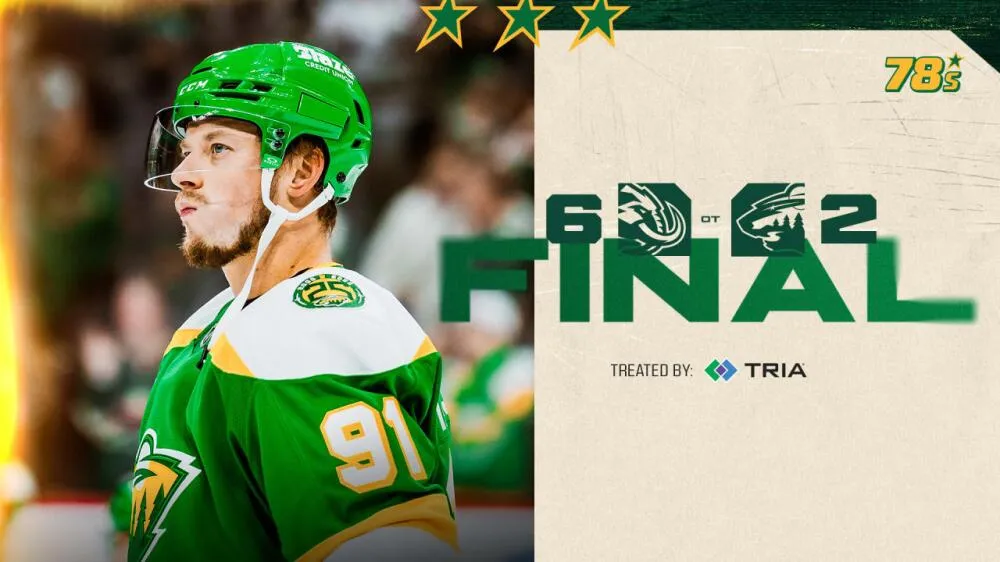
Early defensive lapses doom the Wild in Minnesota Wild 6-2 loss to Utah Mammoth takeaways
The opening minutes set the tone for Minnesota’s difficult evening. Just 56 seconds into the game, Cooley displayed remarkable hand-eye coordination to bat a puck out of midair and past Gustavsson with his back to the net. The goal stunned the home crowd and immediately put the Wild on their heels.
Things deteriorated further when Cooley struck again at the 3:29 mark during Utah’s only power play of the night. The former Gopher kept hacking away at loose pucks in the crease until one finally crossed the goal line, though it required video review to confirm. The quick 2-0 deficit was historic for the wrong reasons—Cooley’s pair marked the fastest two goals to open a game in Utah franchise history.
Nick Schmaltz added insult to injury just over six minutes into the period, tipping in a Nate Schmidt blast to make it 3-0. The Mammoth had fired six shots and buried three of them, leaving Gustavsson and his defensemen shellshocked. According to The Hockey Writers, head coach John Hynes acknowledged after the game that “some of the details around the net weren’t what they needed to be.”
The Wild’s defensive zone coverage lacked sharpness throughout the first period. Players overskated pucks, failed to communicate on assignments, and gave Utah far too much time and space in dangerous areas. Brock Faber, normally a stabilizing presence on the blue line, described the team’s start as “brutal” and took personal responsibility for the team’s inability to keep pucks out of their net.
For a team already struggling with confidence, spotting a surging opponent three goals in the opening frame created an uphill battle that would prove insurmountable. Utah’s three goals in the first period matched the fastest three tallied by a road team since Edmonton’s 3:55 explosion at Seattle on December 30, 2022.
Marcus Johansson provides spark in Minnesota Wild 6-2 loss to Utah Mammoth takeaways
If there was a silver lining to be found in the defeat, it came in the form of Marcus Johansson’s two-goal performance. The veteran forward, who has bounced between different line combinations this season, delivered when his team needed a spark most. His contributions were the primary reason the Wild clawed back to within striking distance.
Johansson’s first tally came with 4:21 remaining in the opening period and showcased the kind of quick-strike offense the Wild need more of. Kirill Kaprizov initiated the sequence with a drop pass to Zeev Buium, who immediately found Johansson for a one-timer that beat Karel Vejmelka cleanly. The goal cut Utah’s lead to 3-1 and gave the Grand Casino Arena crowd something to cheer about.
His second goal proved even more important, breaking a frustrating 0-for-11 power play drought that had plagued Minnesota throughout their road trip. At 15:43 of the second period, Johansson hammered home a Vinnie Hinostroza backhand feed to pull the Wild within one at 3-2. The veteran had drawn the penalty himself moments earlier when he was hooked on a deke attempt that Vejmelka barely denied.
Beyond the two goals, Johansson created several other quality scoring chances that didn’t find the back of the net. His speed generated separation from Utah defenders, and his willingness to attack the middle of the ice opened up opportunities for linemates. Hynes praised Johansson’s consistency in the postgame press conference, noting that “his speed’s a factor every night” and that “it just seems wherever we put him, that line seems to be able to be a factor.”
The 34-year-old forward, who is closing in on 1,000 career NHL games, demonstrated why the Wild brought him back for another season. His competitive spirit and veteran presence provide stability that Minnesota desperately needs during this challenging stretch. In a game where many players struggled to make an impact, Johansson stood out as someone who refused to be denied despite the circumstances.
Johansson himself acknowledged the team’s effort but expressed frustration with the inability to execute when it mattered most. “It’s frustrating because we’re trying so hard, I almost feel like we’re trying too hard at times where we want it so bad, and then one little mistake cost us,” he said after the game. His words captured the Wild’s season in microcosm—plenty of effort, but not enough precision or consistency.
Third period collapse highlights consistency issues in Minnesota Wild 6-2 loss to Utah Mammoth takeaways
The Wild entered the third period trailing 3-2 with genuine momentum and belief they could complete the comeback. They generated pressure early in the frame and earned two more power play opportunities to potentially tie or take the lead. Instead, the wheels came off completely as Utah scored three unanswered goals to seal the victory.
Minnesota’s power play, which had finally broken through in the second period, reverted to its struggling form. The Wild went 0-for-2 with the man advantage in the final frame, finishing the night at 1-for-4 overall. The special teams unit looked tentative, overpassing when shooting opportunities presented themselves and failing to establish the net-front presence needed against Vejmelka.
JJ Peterka delivered the dagger at 13:37 of the third period, converting a perfect feed from Cooley to restore Utah’s two-goal cushion. The goal was particularly deflating for Minnesota, coming just as they appeared ready to mount one final push. According to the Star Tribune, Johansson was caught on the play, later explaining that “it just bounced, I went to the one guy thinking he was trying to play it, and it went over his stick.”
Schmaltz added his second goal just 1:37 later on a breakaway that exposed Minnesota’s aggressive but unsuccessful attempts to generate offense. John Marino’s 142-foot empty-netter with six seconds remaining provided the final indignity, though the game had long been decided.
The collapse highlighted the Wild’s most pressing issue: their inability to maintain consistent play across a full 60 minutes. This pattern has repeated itself throughout the early season—the team either builds leads they can’t protect or mounts comebacks they can’t complete. They showed in the middle portion of the game that they possess the talent and skill to compete with quality opponents, but those glimpses aren’t enough to win hockey games.
Faber summed up the team’s predicament when he noted the difficulty of pinpointing exactly what’s preventing sustained success. “I don’t know, it’s hard to kind of put your finger on it right now, there’s been all different situations, every game’s different. It starts with keeping the puck out of our net. I’m a big part of that. I gotta be better,” he said.
Simple mistakes compound problems in Minnesota Wild 6-2 loss to Utah Mammoth takeaways
While Minnesota’s issues might seem complex, many of the mistakes that cost them against Utah were fundamentally simple errors that can be corrected. Throughout the game, Wild players overskated pucks, delivered passes to empty spaces where teammates should have been, and made decisions that suggested a lack of chemistry and communication.
The passing game, normally a strength for a skilled team like Minnesota, looked disjointed for long stretches. Line combinations that had been shuffled before puck drop may have contributed to the confusion, but professional players are expected to adapt more quickly. The Wild’s tendency to overpass rather than shoot plagued them once again, particularly on the power play where they searched for the perfect seam that rarely materialized.
Gustavsson acknowledged his role in the defeat, particularly referencing Cooley’s opening goal. “The easy goals, like the first one, it affects the whole team. We have to eliminate those,” the Swedish netminder said. While he made several spectacular saves to keep Minnesota within striking distance, the early soft goal set a negative tone.
Defensive zone exits proved problematic throughout the evening. Utah’s forechecking pressure forced turnovers and prevented clean breakouts, leading to extended shifts in Minnesota’s end. When the Wild did manage to advance the puck, they often put themselves offside with poorly timed entries that killed developing offensive chances.
The team’s attention to detail wavered at critical moments. Simple stick checks weren’t made, defensive assignments were lost in the shuffle, and gap control on the rush allowed Utah’s skilled forwards to gain the offensive zone with speed. These aren’t structural problems that require weeks to solve— they’re execution issues that championship-caliber teams handle as a matter of routine.
Hynes and his coaching staff face the challenge of getting their players to slow down and make the smart, simple play rather than forcing complicated sequences. The Wild’s desperation to end their skid seems to be causing them to press and try to do too much, which paradoxically makes success even harder to achieve.
Logan Cooley’s homecoming overshadows Wild’s struggles in Minnesota Wild 6-2 loss to Utah Mammoth takeaways
While the Wild wallowed in frustration, Cooley enjoyed a triumphant return to the Twin Cities. The Pittsburgh native spent just one season with the Gophers during the 2022-23 campaign, playing alongside Faber and reaching the Frozen Four before falling to Quinnipiac in overtime of the national championship game. His brief but memorable college career created a connection to Minnesota that made Saturday’s performance even sweeter.
Cooley arrived at Grand Casino Arena riding a hot streak that saw him score a hat trick Thursday in St. Louis. His five goals in two games announced him as one of the league’s most dangerous offensive threats during this stretch. The 21-year-old center is building on a solid 65-point rookie campaign and making a strong case for a significant pay raise when his entry-level contract expires.
“We’re on a streak right now, and I’m just fortunate to be scoring right now,” Cooley said postgame with characteristic modesty. “So, it’s a lot of fun. Just got to keep it rolling.” The young forward even attended Friday night’s Gophers game at 3M Arena at Mariucci, where he watched his former team take on Minnesota Duluth.
Cooley’s first goal against the Wild was a thing of beauty, showcasing the hockey sense and skill that made him the third overall pick in the 2022 NHL Draft. “I didn’t even see the puck really,” he explained. “It kind of just popped up and turned quick and just tried to whack it and get it on net. I didn’t know exactly where it was going, but I was lucky it went in.”
His three-point night paced a Mammoth offense that has now won six straight games to climb into a tie with New Jersey atop the league standings. Utah is clicking on all cylinders, getting contributions throughout their lineup while Cooley provides dynamic offense down the middle. The franchise that relocated from Arizona continues to build momentum in its second season with the Mammoth nickname.
For the Wild, watching a former local college star dismantle their defense added insult to injury. The contrast between Utah’s confidence and Minnesota’s uncertainty couldn’t have been starker. While Cooley celebrated and his teammates fed off his energy, the Wild trudged off the ice knowing they had let another winnable game slip away.
Looking ahead: Wild must regroup quickly
The Wild’s challenging start to the season leaves them at 3-5-1 through nine games, a far cry from the playoff contender many expected them to be. The eye test suggests they have the talent to compete, but translating potential into results requires the consistency that has eluded them thus far. With 73 games remaining, there’s plenty of time to right the ship, but the hole they’re digging could become problematic if losses continue to mount.
Sunday’s back-to-back against San Jose presents an opportunity for Minnesota to build some momentum, though fatigue will be a factor after Saturday’s draining defeat. The Sharks won their first game of the season Thursday against the New York Rangers, so they’ll arrive in St. Paul with confidence of their own. Jesper Wallstedt is expected to get the start in goal, giving the young Swedish prospect a chance to provide a spark between the pipes.
“We need two points tomorrow,” Faber emphasized. “We need them badly, and turn this thing around. That was our ninth game. We got a long way to go, and we got a lot better.” The young defenseman’s urgency reflects the understanding that while the season is still young, dangerous habits are forming that could define Minnesota’s campaign if not addressed immediately.
The Wild’s six-game homestand continues after Sunday’s, providing an extended opportunity to stabilize in front of their fans. Playing at Grand Casino Arena should provide an advantage, though Saturday’s loss demonstrated that simply being at home doesn’t guarantee success. The team needs to rediscover the identity that made them successful in previous seasons—strong defensive structure, timely goaltending, and the ability to win tight games through execution rather than flash.
Hynes must find the right combinations to maximize his roster’s potential while instilling the discipline necessary to eliminate the simple mistakes that have plagued his team. Veterans like Johansson, Kaprizov, and Matt Boldy need to lead by example, while young players like Buium and Wallstedt must continue developing without the pressure becoming overwhelming. The margin for error in today’s NHL is razor-thin, and the Wild are learning that lesson in painful fashion. How they respond to this adversity will determine whether 2025-26 becomes a season to remember or one they’d rather forget.

Par Mike Jonderson
Mike Jonderson is a passionate hockey analyst and expert in advanced NHL statistics. A former college player and mathematics graduate, he combines his understanding of the game with technical expertise to develop innovative predictive models and contribute to the evolution of modern hockey analytics.