











The Montreal Canadiens step up amid injuries has become the defining storyline of the 2025 season, transforming what could have been a catastrophic setback into a masterclass in organizational resilience. With key players like Nick Suzuki, Cole Caufield, and Kirby Dach sidelined for extended periods, the Habs have discovered an unlikely source of strength in their depth players, who have not only filled the void but elevated the team’s overall performance.
This remarkable turnaround has caught the attention of hockey analysts across the league, with many pointing to Montreal’s ability to maintain playoff positioning despite missing nearly $35 million in salary cap space due to injuries. The situation has revealed something special about this Canadiens squad – a culture of accountability and opportunity that head coach Martin St. Louis has carefully cultivated since taking over the bench.
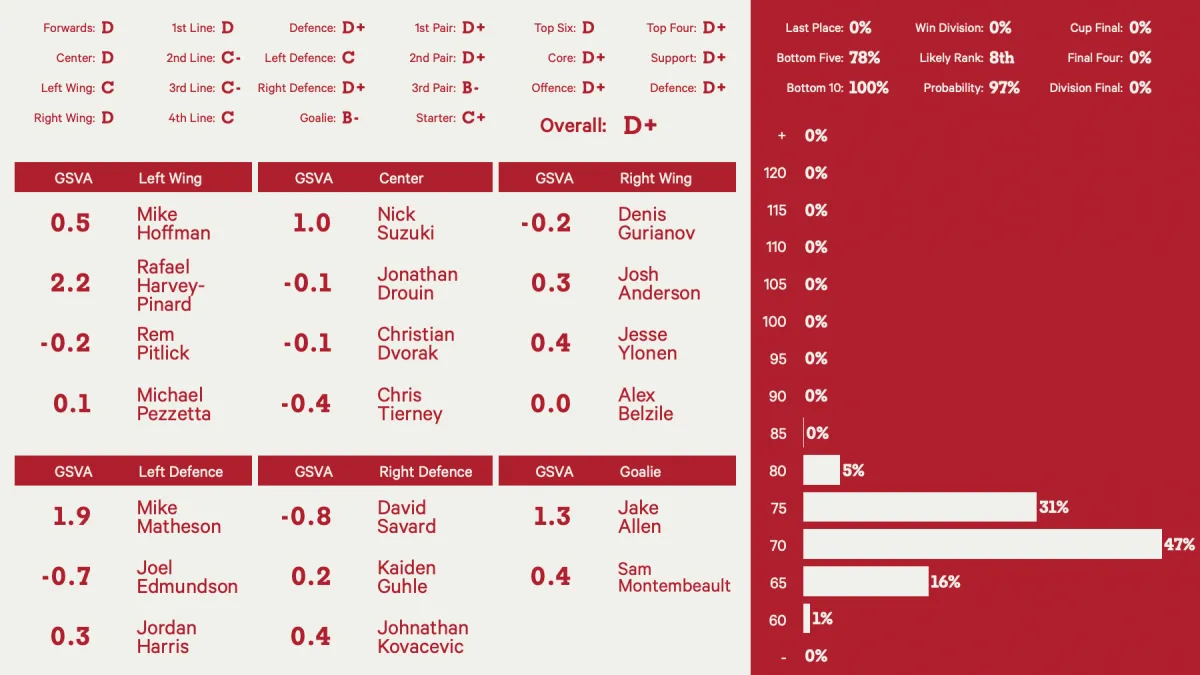
How the Montreal Canadiens step up amid injuries through strategic lineup adjustments
The injury crisis began in late October when captain Nick Suzuki suffered a lower-body injury during a game against the Toronto Maple Leafs. What followed was a domino effect that would have crippled most teams: Caufield’s shoulder injury, Dach’s concussion protocol, and defenseman Mike Matheson’s broken finger. Yet instead of folding, the Canadiens discovered hidden gems within their system.
Juraj Slafkovsky’s emergence as a legitimate first-line forward has been particularly noteworthy. The 20-year-old Slovakian, who struggled in his rookie season, has flourished with increased responsibility, posting 12 goals and 18 assists in the 25 games since being thrust into a top-six role. His chemistry with newly promoted center Alex Newhook has given Montreal a dynamic offensive pairing that opponents have struggled to contain.
“We’ve always believed in our player development system,” general manager Kent Hughes explained during a recent press conference. “These injuries, while unfortunate, have accelerated the learning curve for several young players who might not have gotten this opportunity otherwise.”
The defensive corps has similarly benefited from the shakeup. Jordan Harris and Justin Barron, previously relegated to third-pairing minutes, have stepped into top-four roles with remarkable poise. Their ability to move the puck quickly and join the rush has added a new dimension to Montreal’s transition game, something that was evident in their recent 5-2 victory over the Boston Bruins.
Montreal Canadiens step up amid injuries: unsung heroes emerge from the shadows
Perhaps no player embodies the “next man up” mentality better than Jesse Ylonen. The 25-year-old Finnish winger, who spent most of the previous two seasons shuttling between Montreal and their AHL affiliate in Laval, has become an indispensable part of the penalty kill and secondary scoring. His shorthanded goal against the Tampa Bay Lightning last week exemplified the hustle and determination that has characterized this injury-ravaged squad.
The goaltending situation has provided another compelling subplot. While starter Jake Allen has remained healthy, his backup Samuel Montembeault has seized every opportunity when called upon. In seven starts during this stretch, Montembeault boasts a .924 save percentage and 2.31 goals-against average, numbers that have not only kept the Canadiens competitive but have also created a legitimate goaltending controversy.
Special teams have surprisingly improved during this period. The power play, ranked 22nd in the league before the injuries, has climbed to 15th thanks to creative formations implemented by assistant coach Stephane Robidas. The second unit, featuring youngsters like Sean Farrell and Owen Beck, has actually outproduced the first unit in recent weeks, scoring five goals in their last 15 opportunities.
The coaching philosophy behind Montreal Canadiens stepping up amid injuries
Martin St. Louis deserves significant credit for maintaining team morale and belief during this challenging period. His approach has been refreshingly honest yet optimistic, consistently emphasizing that injuries provide opportunities for growth rather than excuses for failure. The former Hart Trophy winner has drawn upon his own experiences as a player who overcame size limitations to become a superstar.
The coaching staff has implemented several tactical adjustments to compensate for the loss of star power. They’ve shifted to a more conservative defensive structure, focusing on limiting high-danger chances rather than trying to win track meets. This has resulted in the Canadiens allowing 2.8 goals per game during the injury stretch, compared to 3.4 previously.
Line matching has become an art form for St. Louis and his assistants. Without their top centers, they’ve relied on a committee approach, using defensive zone starts for Newhook’s line while giving offensive opportunities to Slafkovsky’s unit. This strategic deployment has kept the team competitive in games they might otherwise have lost by multiple goals.
The veteran presence in the locker room cannot be understated. Brendan Gallagher, despite his own injury history, has become a de facto player-coach, working extensively with the younger forwards on positioning and net-front presence. His gritty style has rubbed off on players like Michael Pezzetta and Rafael Harvey-Pinard, who have both contributed meaningful minutes during this stretch.
What Montreal Canadiens stepping up amid injuries means for the franchise’s future
The long-term implications of this injury crisis could prove transformative for the organization. The development of young players in NHL roles, rather than being buried in the minors or playing limited minutes, has accelerated the rebuild timeline significantly. Players who might have needed another year of seasoning are now battle-tested against top competition.
The salary cap flexibility created by these injuries has also allowed management to evaluate talent without the pressure of immediate results. Several players on expiring contracts have increased their trade value, potentially giving Hughes valuable assets at the deadline. Conversely, some may have earned contract extensions based on their performance under pressure.
The culture being built during this adversity cannot be quantified but will pay dividends for years to come. Young players who have succeeded in high-pressure situations develop confidence that translates to future success. The organization’s reputation for giving opportunities to those who earn them will also help in recruiting free agents and retaining homegrown talent.
As the injured players begin to return – Suzuki is expected back within two weeks, with Caufield and Dach following shortly after – the Canadiens face a pleasant problem of abundance. The depth players who have proven themselves will not simply return to the press box, creating internal competition that should elevate everyone’s performance. This internal competition mirrors what we’ve seen across the league, as teams like the Toronto Maple Leafs have similarly benefited from unexpected contributions during injury spells.
The Montreal Canadiens step up amid injuries narrative has evolved from a temporary survival mechanism to a potential blueprint for sustainable success. While no team wishes for injuries to key players, the way this organization has responded speaks volumes about its direction. The combination of strong player development, tactical adaptability, and cultural buy-in has created something special in Montreal – a team that doesn’t just survive adversity but uses it as fuel for growth. As the playoff race intensifies and stars return to health, the Canadiens find themselves not weakened by their trials but strengthened by the character revealed within. The lessons learned during this stretch will serve them well, whether they make the postseason or use this experience as a springboard for next year’s ambitions.
Frequently Asked Questions

Par Mike Jonderson
Mike Jonderson is a passionate hockey analyst and expert in advanced NHL statistics. A former college player and mathematics graduate, he combines his understanding of the game with technical expertise to develop innovative predictive models and contribute to the evolution of modern hockey analytics.