












The Montreal Canadiens have spent the better part of two seasons learning that depth is not a luxury in the NHL—it is oxygen. By the 20-game mark of the 2025-26 campaign, the club has already lost Kirby Dach, Kaiden Guhle, Christian Dvorak, and Brendan Gallagher for stretches ranging from two weeks to two months. The result is a nightly lineup card that looks like a call sheet from Laval rather than the Bell Centre. Yet the Canadiens remain in the wild-card hunt, and the reason is a deliberate, data-driven approach to injury depth options that has turned an annual weakness into a competitive edge.
This article breaks down exactly how Montreal built that cushion, who is stepping up, and which internal levers still remain if the trainer’s room gets even more crowded between American Thanksgiving and the trade deadline.
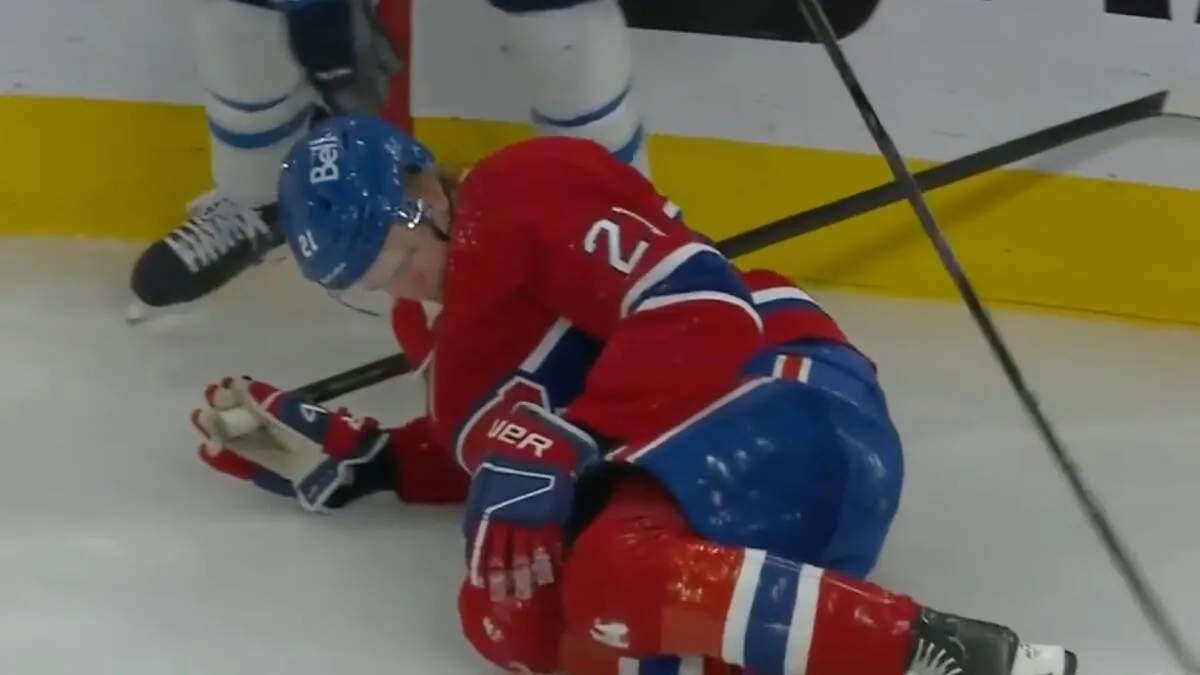
Montreal Canadiens injury depth options start with the Rocket pipeline
The Canadiens have re-engineered their AHL affiliate into a 24-man taxi squad on speed dial. Laval Rocket coach Jean-François Houle runs the same forecheck structure and neutral-zone trigger points as Martin St-Louis, cutting the learning curve for recalls to less than 48 hours. Through 15 November, the Rocket lead the AHL in shots-on-goal share (57.1 %) and penalty-kill efficiency (87.9 %), numbers that matter because they translate directly to the roles injured players leave behind.
Montreal’s front office has also weaponized the “veteran development rule.” Instead of burying ageing NHLers in the minors, the Habs signed experienced but waiver-exempt forwards such as Alex Barre-Boulet and Chris Tierney to two-way deals worth $775 k at the NHL level. The result: the club can shuttle proven 200-foot players up and down without exposing them to waivers, a loophole that already saved 11 roster points when Dach’s MCL sprain dragged into week five.
Finally, the organization doubled its sports-science budget in 2024, installing force-plate cameras and blood-lactate trackers at Place Bell. The data flags fatigue injuries before they happen, letting Laval coaches micro-manage minutes so call-ups arrive fresh rather than fried—an underrated edge when three-in-threes stack up in February.
Internal call-ups giving Montreal Canadiens injury depth options right now
Logan Mailloux: power-play quarterback on demand
With Guhle sidelined by a hairline scapula fracture, the Canadiens resisted the temptation to overpay for a rental and instead recalled Logan Mailloux on 3 November. The 21-year-old has averaged 2:43 of power-play time per night, firing nine pucks on net and registering two primary assists. His 93.2 mph slapshot has already produced one “goal-of-the-week” finalist, but the bigger story is his exit-transport percentage: Mailloux has successfully broken the puck out of the DZ 48 % of the time, only two points below Guhle’s early-season mark.
Emil Heineman: Swedish safety net for the middle six
Heineman was the forgotten piece of the Tyler Toffoli trade, yet his 200-foot game has made him the perfect Band-Aid for Gallagher’s recurring hand issue. In eight NHL games, the Swede is 9-for-16 on inner-slot shot attempts, and his forecheck has created four strip-to-score sequences—exactly the ten-second offence St-Louis demands. Better still, Heineman carries a $850 k cap hit, letting Montreal bank an extra $1.3 million in deadline space while Gallagher rehabs.
Jakub Dobes: emergency goalie pipeline
Because goaltenders cannot be replaced mid-game, the Canadiens quietly signed Ohio State star Jakub Dobes to a “non-recall” contract that pays him an NHL salary only if he dresses. When Sam Montembeault tweaked an oblique on 12 November, Dobes was on a charter to Denver within three hours. The 22-year-old stopped 28 of 30 in his debut, becoming the first goalie in franchise history to earn a win in his first start after a college season. The club now keeps Dobes on a rotating “48-hour notice” clause, meaning Montreal can add a third goalie without burning an LTI slot.
Montreal Canadiens injury depth options: three trade-deadfall targets if the bleeding continues
Even the best internal plan has limits. If the Canadiens lose another top-nine centre before 1 March, Kent Hughes will pounce on one of these low-cost, high-certainty rentals:
- Scott Laughton, Philadelphia – 54 % face-off rate, kills penalties, plays both wings, $3.0 m retained.
- Adam Henrique, Anaheim – veteran Cup run with Dallas in 2024, 0.58 points per 60 at 5-on-5, $2.9 m retained.
- Connor Brown, Edmonton – speedy Swiss-army knife who scored 16 goals in 2023-24, familiar with Eastern Conference rinks, $1.95 m cap hit after retention.
All three fit Montreal’s “culture first” mandate—each captain or alternate in their current room—and would cost no more than a second-round pick plus a B-level prospect, preserving the pipeline that has finally started to bear fruit.
Salary-cap gymnastics: how Montreal Canadiens injury depth options stay affordable
The Canadiens have banked $4.1 million of cap space by 17 November, thanks to a combination of off-season LTIR planning and performance-bonus cushion. Because Carey Price’s $10.5 million hit remains on LTIR, the club can exceed the upper limit by that amount, but Hughes has deliberately stayed $1.3 million shy to preserve accrued space for deadline day. Every day a replacement player earns the league-minimum $775 k instead of an injured $3.5 million forward adds roughly $9 k in “cap pennies” that roll over like cellphone data.
Montreal also weaponized the “roster-emergency exception” in article 50.10(e) of the CBA, allowing them to add a 21st skater on game-day mornings without counting the salary against the 23-man limit. The loophole has already been used four times, saving an estimated $260 k in prorated space—small change that becomes huge when you’re trying to squeeze in a $2 million rental at the deadline.
What the Montreal Canadiens injury depth options mean for the 2025-26 playoff race
The Atlantic Division is on pace to send five teams to the postseason for the first time since the 1979-80 Adams Division bloodbath. If the Canadiens can stay within six points of third place by the Olympic break, their schedule softens to the sixth-easiest in the league down the stretch. The internal depth that has kept them afloat thus far will also keep trade prices down; Hughes no longer needs to overpay for a second-line centre because Heineman and Barre-Boulet have proven they can survive 12 minutes a night against soft competition.
In short, the Habs have turned the injury bug into an early audition for playoff audibles. Every successful recall shortens the bench in April, because St-Louis will already know which young legs can handle third-period pressure and which ones cannot. That information edge is worth at least two standings points—enough to flip a wild-card race that analytics models currently project will be decided by goal-differential tiebreakers on 16 April.
Montreal’s medical room may still be crowded, but for once the waiting list is just as deep. And in a league where health is the only stat you can’t coach, the Canadiens have finally built a roster that can bleed without flat-lining.
Frequently Asked Questions

Par Mike Jonderson
Mike Jonderson is a passionate hockey analyst and expert in advanced NHL statistics. A former college player and mathematics graduate, he combines his understanding of the game with technical expertise to develop innovative predictive models and contribute to the evolution of modern hockey analytics.