











The controversial truths about the Montreal Canadiens’ recent success have become impossible to ignore. While losing a player of Patrik Laine’s caliber would typically send alarm bells through an organization, the Canadiens have discovered something unexpected: they might actually be a more cohesive, effective team without him in the lineup. With a 6-2-0 record through the early portion of the 2025-26 season and visible improvements in pace, structure, and team chemistry, Montreal’s identity has crystallized precisely when their highest-paid player has been watching from the press box.
This isn’t a slight against Laine’s undeniable talent—his shot remains one of the most dangerous weapons in hockey. But sometimes, talent alone doesn’t translate to team success, especially when that talent doesn’t align with the system a coach is building. The Canadiens under Martin St. Louis have become a team defined by speed, relentless forechecking, and collective defensive commitment. And in Laine’s absence, those qualities have never been more apparent.
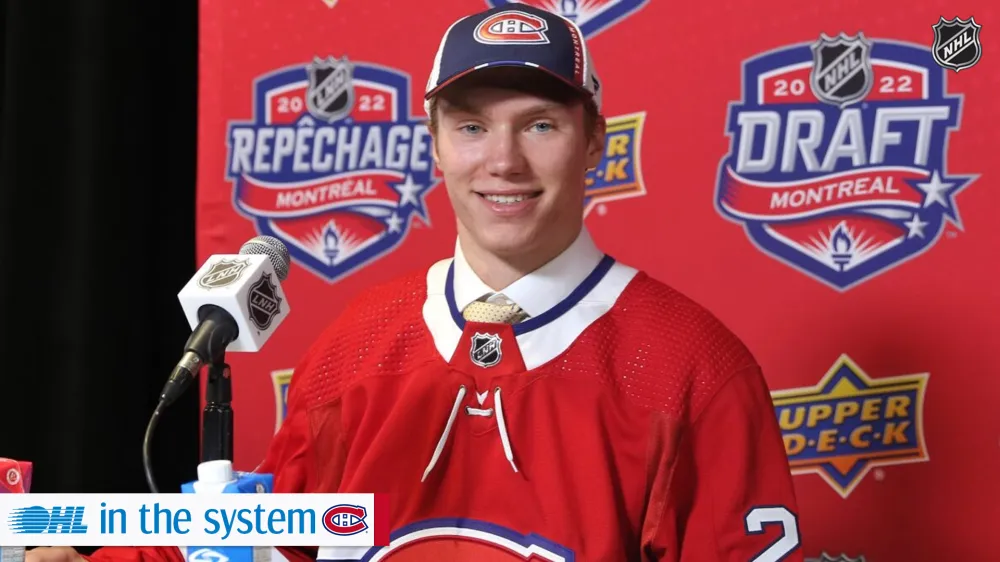
Why the Montreal Canadiens’ system works better without Patrik Laine
The Martin St. Louis era in Montreal has been built on a specific philosophy: every player buys into a high-pressure, fast-paced system that demands constant puck pursuit and defensive accountability. From Nick Suzuki on the top line to the fourth-line grinders, the expectation is clear—skate hard, win battles, and transition quickly. This approach has transformed the Canadiens from lottery contenders to legitimate playoff threats.
Laine’s game, however, operates on a different frequency. Throughout his career with the Winnipeg Jets and Columbus Blue Jackets, he thrived as a positional shooter who capitalized on opportunities created by playmaking centers. His elite release and shooting accuracy made him a constant threat, but his game never revolved around retrieving pucks, winning board battles, or backchecking with intensity. In systems that catered to his strengths, this worked beautifully. In Montreal’s structure-first approach, it creates friction.
When Laine has been in the lineup this season, the adjustments have been noticeable. According to analysis from The Hockey Writers, only Joe Veleno, Owen Beck, and Joshua Roy have played fewer minutes per game among forwards, and none of those players were even in the opening night lineup. Laine has been relegated to limited even-strength minutes, often skating on the fourth line with Jake Evans and Josh Anderson, while earning only second power-play unit time.
The ice time tells the story that statistics sometimes obscure: Laine hasn’t earned the trust of the coaching staff. And when a player carrying an $8.7 million cap hit can’t crack consistent top-six minutes, something fundamental isn’t working. The Canadiens have responded by leaning harder into their identity, and the results speak for themselves.
The Montreal Canadiens’ offensive surge proves depth matters more than star power
Perhaps the most striking aspect of Montreal’s success has been the emergence of their young offensive core. Cole Caufield has been nothing short of spectacular, tying franchise legends Howie Morenz and Max Pacioretty with his 10th career overtime goal during a clutch performance against Nashville. In five games early in the season, Caufield recorded five goals, two assists, and seven points, showcasing the kind of dynamic scoring that has made him the team’s most dangerous weapon.
Nick Suzuki has continued to prove why he wears the captain’s ‘C’, distributing the puck with precision and elevating the play of everyone around him. The chemistry between Suzuki and Caufield has become the backbone of Montreal’s offensive attack, with perfectly timed feeds and intuitive positioning creating scoring chances at even strength and on the power play. This natural connection has flourished in a system that emphasizes puck movement and positional flexibility.
Juraj Slafkovsky’s development has also accelerated, with the young Slovak forward displaying the combination of size, skill, and hockey sense that made him the first overall pick. His ability to protect pucks along the boards and create space for his linemates fits perfectly within St. Louis’s structure, and his growing confidence has made the top line a matchup nightmare for opposing defenses.
The depth scoring has been equally impressive. The Canadiens extended their winning streak to four games in mid-October, demonstrating balanced scoring throughout the lineup. When teams shut down one line, another steps up. This depth-driven approach has proven far more sustainable than relying on a single sniper to solve offensive problems.
The power play, often cited as Laine’s primary value proposition, has actually thrived with increased puck movement and deception rather than loading up for one-timer attempts. Montreal’s man advantage has become more unpredictable, with multiple shooting threats and quick puck rotation keeping penalty killers off balance. The unit’s success without relying heavily on Laine’s shot suggests the team has found a formula that maximizes their collective talents.
Patrik Laine’s contract creates a difficult situation for the Montreal Canadiens
The financial reality of Laine’s situation cannot be ignored. At $8.7 million annually, he is the Canadiens’ highest-paid player, carrying expectations that simply haven’t been met. When a player commands that salary, organizations expect more than occasional flashes of brilliance on the power play. They need consistent impact, defensive responsibility, and leadership—areas where Laine has struggled throughout his tenure in Montreal.
According to Yahoo Sports, Laine becomes eligible for a contract extension this July, but his fit with the organization remains “anything but perfect.” His injury-plagued 2024-25 season, which saw him record 20 goals and 33 points in 52 games before dealing with a lower-body injury that has lingered into the current season, has only complicated matters further.
For general manager Kent Hughes, the path forward presents limited appealing options. Trading Laine without retaining salary or attaching draft picks seems virtually impossible given his contract and injury history. Teams around the league have watched his struggles in Montreal’s system, and few would be willing to absorb that cap hit without significant incentives.
A buyout remains a possibility, but the financial implications are hardly ideal. According to salary cap projections, Montreal would face a $3.97 million cap hit in 2025-26 and $2.37 million in 2026-27. For a team that needs to allocate resources toward extending young stars like Lane Hutson and Ivan Demidov, eating dead cap space represents a painful but potentially necessary option.
The alternative is riding out the remainder of Laine’s contract and hoping for either a dramatic turnaround or a trade market that develops at next season’s deadline. If the Canadiens continue to succeed without significant contributions from their highest-paid forward, that decision becomes easier to justify, even if it means ultimately losing him for nothing in free agency.
What this means for the Montreal Canadiens moving forward
The Canadiens’ unexpected success without Patrik Laine has revealed something important about their identity and future direction. This is a team built on collective effort, systematic discipline, and developmental progression rather than individual star power. While Laine’s elite shooting ability remains valuable in theory, the practical reality is that Montreal’s system demands more well-rounded contributions from every player.
This doesn’t mean Laine is finished as an NHL player or that he couldn’t find success elsewhere. In the right system with the right supporting cast—perhaps alongside a dominant playmaking center on a team with more offensive freedom—his talents could still shine. The issue isn’t Laine’s skill set in isolation; it’s the mismatch between what he does best and what Montreal needs from that roster spot and salary allocation.
The young core of Caufield, Suzuki, Slafkovsky, and emerging talents like Ivan Demidov represents the future of this franchise. These players have embraced St. Louis’s vision, buying into a style of play that maximizes their strengths while maintaining defensive integrity. The chemistry they’ve developed has created something special—a team identity that feels sustainable and scalable as the organization continues its progression toward legitimate contention.
As the season continues and Laine works his way back from injury, he’ll face a crucial decision point. Can he adapt his game to fit Montreal’s requirements, accepting a potentially diminished role while providing maximum effort in all three zones? Or will the fundamental disconnect between his style and the team’s system prove insurmountable? The answer to that question will determine whether his time in Montreal ends with a whimper or whether he can carve out a meaningful, if different, role than originally envisioned.
For now, the evidence suggests that the Montreal Canadiens have found their formula for success, and it doesn’t necessarily include significant contributions from their highest-paid player. That’s an uncomfortable truth for everyone involved, but in professional sports, results matter more than projections. And right now, the results are telling a clear story: Montreal is better positioned for sustained success by leaning into the identity they’ve built rather than trying to accommodate a piece that doesn’t quite fit. Whether that reality leads to a trade, a buyout, or an eventual amicable parting, the Canadiens have proven they’re ready to move forward with or without Patrik Laine in the lineup.

Par Mike Jonderson
Mike Jonderson is a passionate hockey analyst and expert in advanced NHL statistics. A former college player and mathematics graduate, he combines his understanding of the game with technical expertise to develop innovative predictive models and contribute to the evolution of modern hockey analytics.