


NHL general managers and executives are voicing strong frustration over the league’s decision to expedite key salary cap rules from the new collective bargaining agreement (CBA) for the 2025-26 season. Announced in July but only briefed to GMs in September, these changes have upended trade plans just days before Friday’s 3 p.m. ET deadline. Source
The rules target long-standing loopholes, particularly around long-term injured reserve (LTIR) and playoff rosters, but the late notice has left teams scrambling. “Teams made plans and then, in September, the league changes the rules. It’s bush league,” one executive told ESPN. Source
Late Briefing Disrupts Season-Long Strategies
The new CBA officially begins September 16, but several provisions were fast-tracked to this season. GMs were caught off guard after building their approaches around prior rules.
One player agent highlighted the timing issue: “Everybody would’ve preferred the new rules to kick in on July 1 if they were going to be applied to this season. Instead, they were announced right before the start of the regular season and it blindsided a lot of people.” Source
This lack of consultation has forced constant adjustments throughout the year. A general manager noted, “I wish there was a little more consultation on how the playoff salary cap might work. It’s like, these playoff rules are an issue that we didn’t even know about, and now we’ve got to worry about this all year.” Source
Boston Bruins GM Don Sweeney echoed the sentiment, saying the CBA changes are “still unfolding as we go along… We’ll know at the deadline whether or not teams were handcuffed a bit.” Source
The frustration stems from real impacts on roster building and trades, with no responses from the NHL or NHLPA to inquiries.
Introducing the Playoff Salary Cap
For the first time, teams must comply with the salary cap during the Stanley Cup playoffs. Each game requires submitting a 20-player lineup—18 skaters and two goalies—whose total cap hit stays under the regular-season upper limit. Source Source
Lineups are due by 3 p.m. local time or five hours before puck drop, with the “averaged club salary” calculated to ensure compliance. Scratches and injured players don’t count, but dead cap hits like buyouts and retentions do. Source
This closes the LTIR loophole where teams parked high-salary players and reloaded, then reactivated them for playoffs over the cap. Now, postseason rosters face repercussions for regular-season maneuvers. Source
NHL deputy commissioner Bill Daly confirmed the move: “There will be a playoff cap this year… There was no reason not to move forward with something that we thought could be addressed immediately.” Source
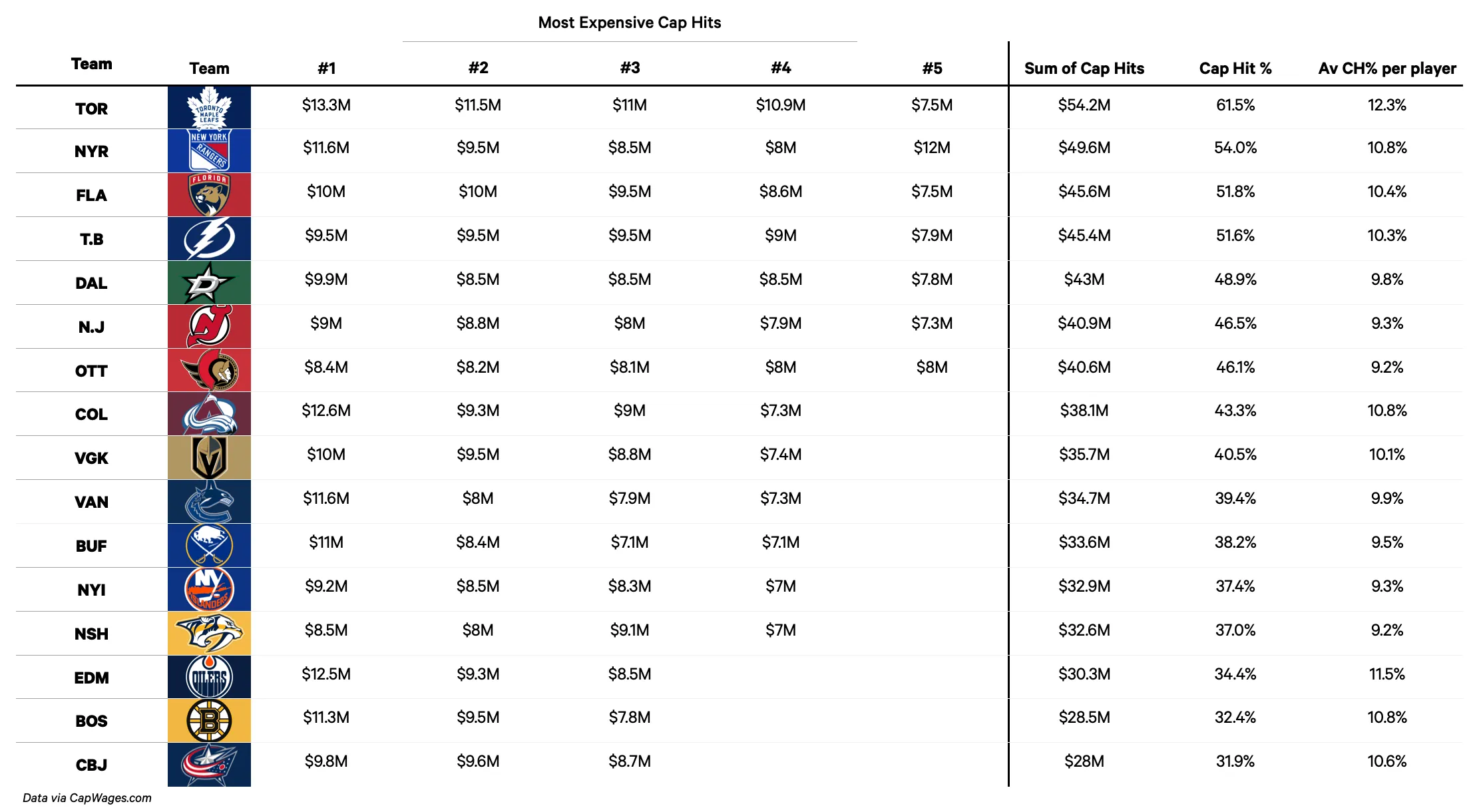
Teams near the $95.5 million cap this season must plan meticulously, as the projected $104 million ceiling next year offers relief but not now.
Contenders like the Dallas Stars have adapted by declaring forward Tyler Seguin out for the entire postseason after his ACL injury, unlocking his full $9.85 million cap hit instead of the partial relief. Source
LTIR and Double Retention Restrictions
LTIR relief is now capped at the prior season’s average league salary unless the player is ruled out for playoffs too. This limits quick replacements for stars. Source
Double retention trades—where two teams shed salary to land a player on a third—are hobbled by a 75-day wait between retentions. Deadline deals require acquisition by December 2, 2025. Source
Here’s a quick breakdown of the major changes:
- Playoff cap: 20-player lineup must fit under regular-season limit per game. Source
- LTIR: Partial relief only; full requires full-season absence declaration. Source
- Double retention: 75 regular-season days between trades. Source
One GM predicted, “There will be 2-3 trades that won’t happen because double-retention isn’t an option,” but added it evens playoff fields. Source
These tweaks promote fairness but cramp creative deadline wheeling.
Trade Deadline Outlook Amid Uncertainty
The $95.5 million cap, up from $88 million last year, lets more teams retain free agents rather than sell. Minnesota Wild GM Bill Guerin observed, “It’s not like this humongous group of teams are just selling off… teams can keep their players.” Source
Views differ on activity. One GM called it “dead out there,” with cap space preserving rosters. An agent countered, expecting “a lot of deals involving players that make $1.5 million or less, on expiring contracts.” Source
For more on playoff cap mechanics, check PuckPedia’s breakdown. The NHL’s official announcement details lineup submissions here.
Fewer blockbusters seem likely, shifting focus to depth moves.
As the deadline nears, these rules mark a new era of cap discipline. While GMs gripe about the rollout, the changes aim to level playoffs long-term. We’ll see if handcuffed contenders falter or adapt, setting precedents for years ahead. Source
Frequently Asked Questions

Par Mike Jonderson
Mike Jonderson is a passionate hockey analyst and expert in advanced NHL statistics. A former college player and mathematics graduate, he combines his understanding of the game with technical expertise to develop innovative predictive models and contribute to the evolution of modern hockey analytics.