





The NHL introduced a significant safety mandate before the 2023-24 season that continues to create confusion among teams and fans. Rule 9.6 requires helmet use during pre-game warmups for a specific subset of players—those who entered the league during or after the 2019-20 season. While seasoned veterans remain exempt, recent incidents involving the New Jersey Devils, San Jose Sharks, and Ottawa Senators have brought renewed attention to this regulation and its uneven application across the league.
What is rule 9.6 and who does it affect
Rule 9.6 represents the NHL’s attempt to standardize safety practices while grandfathering in established players. The rule states: “It is mandatory for all players who entered the NHL beginning with the 2019-2020 season or later to wear their helmet during pre-game warm-up. To be clear, all players who entered the League prior to the 2019-2020 season and who are currently playing are exempt from this mandate.”
This creates a two-tiered system where a 35-year-old veteran with 12 years of experience can skate helmetless, while a 23-year-old sophomore must keep his bucket strapped on. The policy applies retroactively to anyone whose first NHL game occurred in October 2019 or later, regardless of their current age or experience level.
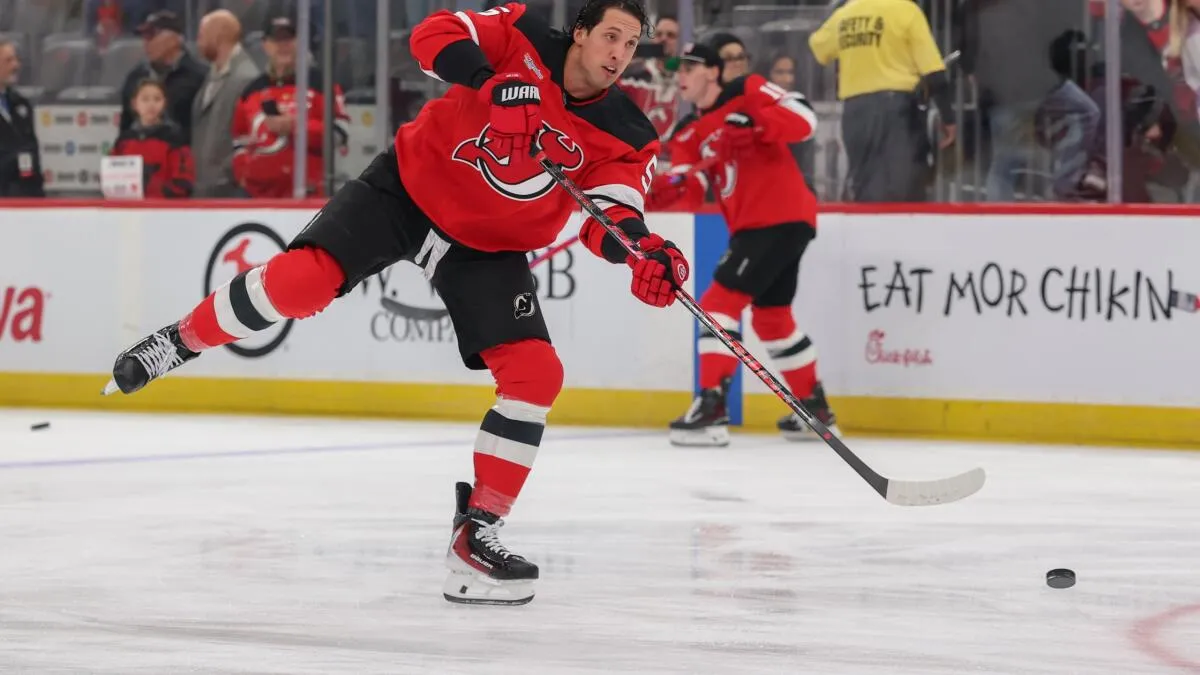
Six New Jersey Devils players fall under this mandate: Dawson Mercer, Paul Cotter, Arseny Gritsyuk, Cody Glass, Luke Hughes, and Simon Nemec. When the entire team ditched their helmets before a December 2025 game against Columbus, these six technically violated the rule.
The NHL Rule Book categorizes this under Section 9 – Uniforms, making it enforceable by officials and subject to potential discipline from the league office. However, the rule’s implementation has been notably lenient, focusing on education rather than punishment.
Why the rule exists and its safety rationale
Player safety stands as the primary motivation behind Rule 9.6. Pre-game warmups present unique risks, with 40-plus players skating at high speeds while focused on their individual routines rather than their surroundings. Pucks fly in multiple directions, skates carve sharp turn patterns, and collisions can occur when least expected.
The NHL’s safety committee identified warmups as an under-regulated period where preventable head injuries could occur. By requiring helmets for newer players, the league aims to instill lifelong safety habits while protecting its most recent investments.
The 2019-20 cutoff date wasn’t arbitrary. It represents a compromise between the NHL and NHL Players’ Association, balancing player autonomy with progressive safety standards. Veterans who spent their entire careers warming up without head protection maintained their freedom of choice, while incoming generations faced the new requirement.
The grandfather clause acknowledges the difficulty of changing long-established routines for veteran players. However, it also creates the current confusing situation where teammates on the same ice have different equipment requirements.
Recent violations and league response
Several teams have tested the boundaries of Rule 9.6 in recent weeks, creating headlines and forcing the league to clarify its stance. The New Jersey Devils’ tribute to Brenden Dillon’s 1,000th game featured the entire team wearing commemorative hats instead of helmets during warmups, immediately raising questions about compliance.
Devils head coach communicated directly with NHL deputy commissioner Bill Daly following the incident. Daly’s response emphasized education over enforcement: “We intend to send a memo to the Clubs reminding them as to applicable rules mandating helmet use in warm-up.”
The San Jose Sharks made a similar decision for a Saturday night game in Las Vegas, with players enjoying the old-school look of flowing hair and bare heads. Forward Will Smith explained the reasoning: “It was a team decision. It was Saturday night in Vegas, so all the guys were pretty easy (to sell on it).”
Goalie Alex Nedeljkovic added: “Just to have a little bit of fun. It’s a fun city. Everyone wants to have a good time. Maybe play with a little bit of swagger. Everybody feels good with the hair flowing and all of that.”
The Ottawa Senators joined the Sharks in helmetless warmups for their Vegas matchup, creating a scene that felt straight out of the 1980s but technically violated league policy for newer players.
How teams navigate the confusion
Coaches and equipment managers now face the challenge of tracking which players must wear helmets during warmups. This requires maintaining detailed records of debut dates and identifying which players fall under the mandate.
For the Devils, the six affected players represent a significant portion of their lineup. Equipment staff must ensure these players have properly fitted helmets for warmups, even as veterans around them go without.
The confusion extends to game broadcasts and social media, where fans notice the discrepancy but don’t understand its cause. Broadcasters rarely explain the rule, leaving viewers to wonder why some players wear helmets while others don’t.
Teams have responded with different strategies:
- Creating warmup rosters that separate exempt and non-exempt players
- Issuing reminders to young players about their obligations
- Seeking clarification from the league office before special events
The NHL has maintained a consistent position: reminders rather than fines. “I don’t anticipate that San Jose will be singled out or disciplined,” Daly wrote after the Sharks incident.
The future of warmup safety protocols
The NHL’s measured response suggests Rule 9.6 may serve as a transitional measure toward universal helmet requirements in warmups. As more players enter the league under the mandate and veteran players retire, the percentage of helmetless skaters will naturally decline.
Within five years, the majority of NHL players will have entered the league in 2019-20 or later, making the grandfather clause less relevant. The league could then amend the rule to require helmets for all players without facing significant resistance.
Player acceptance appears mixed. Veterans appreciate their continued freedom, while younger players have generally accepted the requirement as part of modern hockey culture. Several players subject to the rule have expressed understanding, recognizing the safety benefits even if they prefer the traditional look.
The NHL may eventually need to address other warmup safety concerns, such as mandatory facial protection or standardized puck retrieval procedures. For now, Rule 9.6 serves as the primary regulatory mechanism for this often-overlooked period of game day activity.
Key takeaways for fans and players
Understanding Rule 9.6 helps explain why your favorite team might have players with different warmup attire. The rule represents a compromise between tradition and safety, grandfathering veterans while protecting newer players.
For fans attending games, watching warmups now includes an element of detective work. Can you spot which players wear helmets and which don’t? The pattern reveals information about a player’s NHL debut season.
For younger players dreaming of NHL careers, the message is clear: helmets will remain part of your pre-game routine throughout your professional career. This small requirement reflects hockey’s broader evolution toward prioritizing player safety.
The league’s enforcement approach demonstrates flexibility, allowing teams to celebrate milestones while gently reminding them of their obligations. However, the NHL’s patience may wane if violations become more frequent or egregious.
Frequently Asked Questions

Par Mike Jonderson
Mike Jonderson is a passionate hockey analyst and expert in advanced NHL statistics. A former college player and mathematics graduate, he combines his understanding of the game with technical expertise to develop innovative predictive models and contribute to the evolution of modern hockey analytics.