



















NHL trend-o-meter 2025-26 teams analysis: Division-by-division breakdown
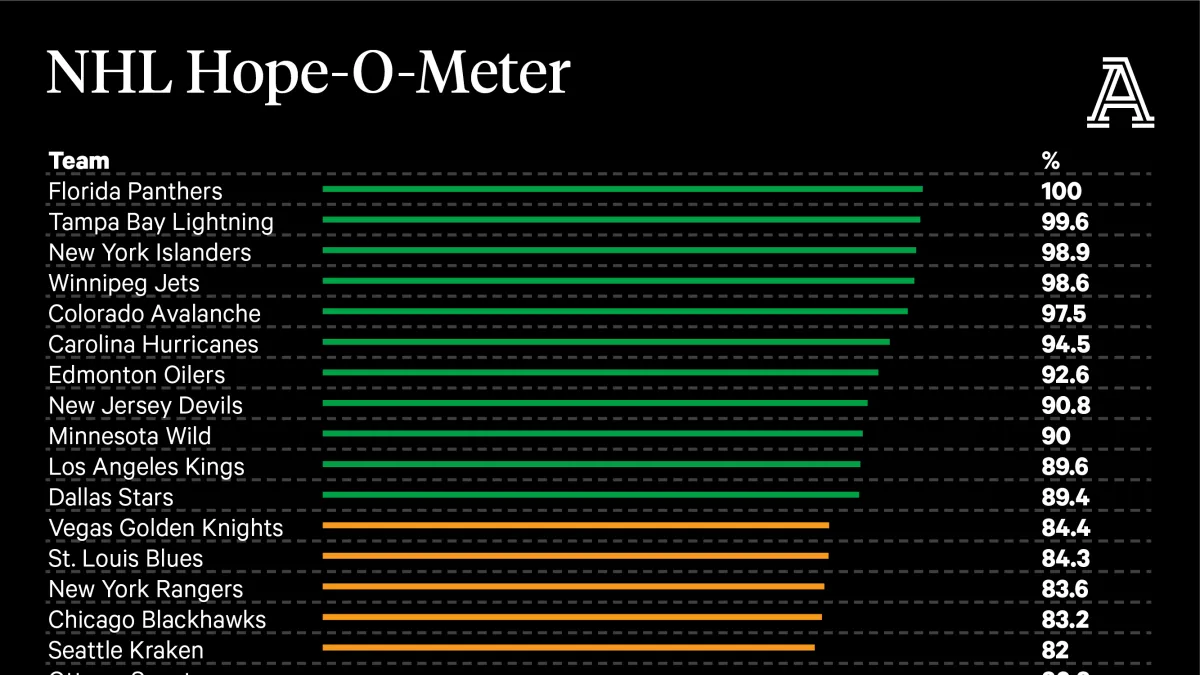
The 2025-26 NHL season has unveiled a fascinating landscape of emerging contenders, fading dynasties, and teams riding the razor’s edge between promise and disappointment. As advanced analytics continue to reshape how we evaluate performance, this NHL trend-o-meter 2025-26 teams analysis leverages cutting-edge metrics like expected goals, high-danger scoring chances, and possession data to identify which franchises are trending upward and which face regression. With the Colorado Avalanche emerging as Stanley Cup favorites and former powerhouses like the Boston Bruins facing uncertain futures, the analytical lens has never been more critical for understanding hockey’s evolving competitive balance.
Atlantic division trends in the 2025-26 season
The Atlantic Division represents perhaps the most dramatic power shift in our NHL trend-o-meter 2025-26 teams analysis. According to ESPN’s comprehensive predictions, the division features a clear hierarchy with some surprising upward mobility candidates.
Tampa Bay Lightning: The analytics-backed favorite
The Lightning haven’t topped the Atlantic since 2018-19, yet our trend-o-meter heavily favors them in 2025-26. Why? The advanced metrics tell a compelling story. Their forward trio of Kucherov, Point, and Guentzel averaged over four goals per 60 minutes at 5-on-5—a figure that dominates possession-based models. The underlying numbers support their candidacy: they controlled 59.5% of 5-on-5 shot attempts and boasted the NHL’s best offensive zone time percentage at 45.9%. These aren’t just traditional stats; they represent the territorial dominance that analytics experts identify as championship indicators.
Ottawa Senators: Advanced metrics darling
Few teams exemplify the trend-o-meter’s upward trajectory like Ottawa. The Senators’ ascent isn’t based on star power alone—it’s rooted in systematic improvement. Jake Sanderson’s emergence as an elite top-pairing defenseman transformed their expected goals profile, while Thomas Chabot thrived in a reduced role. The analytics community projects Ottawa for over 90 points, with some models reaching 99 points. Their 5-on-5 expected goals percentage jumped into the top half of the league, signaling sustainable improvement rather than luck-driven results.
Toronto Maple Leafs: Regression warning signals
Our NHL trend-o-meter 2025-26 teams analysis flashes caution for Toronto. Losing Mitch Marner means sacrificing a player who contributed 2.8 wins above replacement last season—analytics gold. While Matthew Knies shows promise after a 29-goal campaign, the underlying metrics suggest trouble. Toronto’s expected goals share without Marner on the ice drops significantly, and their power-play structure loses its primary play driver. The trend-o-meter sees them as a playoff team, but one with diminished ceiling.
Florida Panthers: Dynasty disruption data
The two-time defending champions face the stiffest analytics headwinds. With Matthew Tkachuk sidelined until December and Aleksander Barkov out until April, possession metrics paint a grim picture. Florida generated 0.75 fewer goals per 60 minutes with Sam Reinhart on the ice without Barkov—a massive drop in expected goals for. Their PDO (shooting percentage plus save percentage) will inevitably regress from championship levels. The trend-o-meter suggests they might barely qualify for the playoffs, a stunning decline for a team chasing dynasty status.
Metropolitan division analytics breakdown
The Metropolitan Division reveals a stark analytical divide: four legitimate contenders and four teams competing for lottery position. This bifurcation makes for compelling trend-o-meter analysis.
Carolina Hurricanes: The possession juggernaut
Carolina leads our NHL trend-o-meter 2025-26 teams analysis in several key categories. Their 5-on-5 shot attempts percentage (59.5%) and offensive zone time (45.9%) both rank first in the NHL. These possession metrics translate to elite expected goals differentials. The addition of Nikolaj Ehlers from Winnipeg addresses their primary weakness: finishing ability. With Alexander Nikishin anchoring a deep defense corps, the Hurricanes’ underlying numbers suggest they’re finally ready to convert regular-season dominance into postseason breakthrough.
New Jersey Devils: Hughes-dependent metrics
The Devils’ trend-o-meter direction hinges entirely on health. With Jack Hughes in the lineup, New Jersey posted a 0.656 points percentage and generated elite-level expected goals. Without him, their 5-on-5 shot generation cratered to 30th in the league. Hughes’ 3.2 points per 60 minutes over four seasons represent the kind of individual dominance that drives team-level analytics. His brother Luke Hughes’ $63 million extension signals long-term stability, but the immediate trend depends on keeping Jack on the ice.
Washington Capitals: The Ovechkin effect
At 40 years old, Alex Ovechkin’s impact extends beyond chasing Wayne Gretzky’s goal record. The Capitals’ analytics profile improved dramatically last season through smart acquisitions like Pierre-Luc Dubois and Jakob Chychrun. Their expected goals percentage jumped into the top ten, driven by improved defensive structure. However, the trend-o-meter questions sustainability. Ovechkin’s individual shot generation metrics remain elite, but his defensive impact creates systematic challenges. At his age, regression is inevitable—the question is when.
Rangers, Blue Jackets, and the middle tier
The Rangers’ trend-o-meter shows modest improvement under Mike Sullivan. Their expected goals share should improve with better structure in front of Igor Shesterkin, but the underlying roster talent remains questionable. Meanwhile, Columbus presents fascinating analytics potential. Adam Fantilli and Kent Johnson drive strong 5-on-5 shot differentials, and their expected goals profiles suggest a team ready to surprise. The trend-o-meter views them as a sneaky wild-card candidate despite public perception lagging behind the numbers.
Central division trend analysis
The Central Division showcases the NHL’s best team by advanced metrics and several intriguing analytics puzzles. Our NHL trend-o-meter 2025-26 teams analysis reveals why this division projects five playoff teams again.
Colorado Avalanche: The analytics gold standard
Colorado sits atop our trend-o-meter for good reason. Nathan MacKinnon and Cale Makar aren’t just superstars—they generate individual expected goals numbers that rival entire lines. The Avalanche’s team expected goals percentage consistently exceeds 55%, indicating territorial dominance. Their power-play structure generates high-danger chances at rates that rival historical greats. The trend-o-meter sees them as Stanley Cup favorites because their underlying metrics support elite performance across all situations.
Dallas Stars: Systemic sustainability questions
Dallas presents a fascinating trend-o-meter case study. Their three straight conference finals appearances correlate with strong possession metrics, but questions linger. The Stars finished 20th in 5-on-5 scoring chances last season despite their success—a red flag for sustainability. New coach Glen Gulutzan inherits a team whose expected goals differential barely stayed positive. The trend-o-meter suggests regression unless younger players like Wyatt Johnston and Thomas Harley drive significant improvement in shot quality metrics.
Utah Mammoth: The emerging analytics story
Utah’s trend-o-meter direction is decidedly upward. Clayton Keller, Dylan Guenther, and Logan Cooley form a trio with exceptional underlying numbers. Their individual expected goals rates suggest breakout potential, particularly Cooley’s Jack Hughes-adjacent profile. The team’s zone entry metrics improved dramatically after acquiring JJ Peterka, and their defensive structure—anchored by Sean Durzi and John Marino—shows promise in shot suppression data. The trend-o-meter projects their first playoff appearance.
Winnipeg Jets: Hellebuyck-dependent reality
No team illustrates the gap between traditional and advanced stats like Winnipeg. Connor Hellebuyck’s Hart Trophy season masked underlying weaknesses—Jets were 20th in 5-on-5 scoring chances and 13th in expected goals. Their trend-o-meter direction depends entirely on goaltending regression. With Nikolaj Ehlers departing, their expected goals for will decline. Hellebuyck’s goals saved above expected (21.6) single-handedly elevated their standings. The trend-o-meter warns: elite goaltending is notoriously volatile.
Pacific division 2025-26 trends
The Pacific Division showcases both the NHL’s most explosive offense and several teams whose analytics profiles suggest dramatic movement in our NHL trend-o-meter 2025-26 teams analysis.
Edmonton Oilers: McDavid’s sustainable dominance
Edmonton’s trend-o-meter stability rests on Connor McDavid’s unprecedented performance. His individual expected goals creation exceeds entire teams, and his contract extension signals short-term window clarity. The Oilers’ 5-on-5 expected goals percentage improved under Kris Knoblauch, reaching elite levels. However, concern lingers around goaltending metrics—Stuart Skinner’s expected save percentage trails league average, and depth scoring remains problematic. The trend-o-meter sees them as contenders, but with narrower margins than their star power suggests.
Vegas Golden Knights: Marner’s transformative impact
Vegas’s trend-o-meter direction points sharply upward after signing Mitch Marner. His individual expected goals for rate (3.2 per 60 minutes) and two-way impact should elevate Jack Eichel’s efficiency significantly. The Knights’ underlying metrics were already strong—top-four in expected goals share last season. With Marner replacing underperforming wingers, their trend-o-meter projects a return to Stanley Cup contention, despite Alex Pietrangelo’s absence.
Los Angeles Kings: Kopitar’s farewell analytics
The Kings present a sentimental trend-o-meter case. Anze Kopitar’s two-way excellence still drives positive expected goals differentials, but aging curves are unforgiving. Los Angeles finished 10th in expected goals for at 5-on-5, yet their power-play efficiency (27th) and depth scoring concerns create systemic issues. The trend-o-meter suggests a playoff team, but one with limited upside unless Quinton Byfield and Adrian Kempe drive significant improvement in high-danger chance generation.
Vancouver Canucks: The regression candidate
Vancouver’s trend-o-meter flashes major warning signs. Last season’s success relied on unsustainable shooting percentages and PDO bloat. With Elias Pettersson’s individual expected goals rate declining, the Canucks’ team metrics suggest a 10-12 point regression. Their 5-on-5 expected goals percentage ranked in the bottom third of playoff teams. The trend-o-meter sees them as a bubble team whose underlying numbers don’t support continued success.
Advanced analytics evolution in 2025-26
The NHL trend-o-meter 2025-26 teams analysis wouldn’t be complete without examining how analytics themselves are evolving. Teams increasingly integrate machine learning to predict player development and optimize line combinations. Real-time analytics now inform in-game adjustments, with coaching staffs receiving live expected goals updates and matchup data.
Machine learning and predictive modeling
Front offices now employ sophisticated models that forecast player aging curves more accurately than traditional methods. These systems identified Morgan Geekie’s breakout potential before his 103 mph shot attempt led the league. Similarly, machine learning flagged Brandon Bussi’s high-danger save percentage (.886) as sustainable, prompting Carolina’s three-goalie rotation strategy.
The next frontier: off-puck analytics
As discussed in our NHL 2025-2026 advanced analytics trends analysis, the next revolution involves off-puck player tracking. Metrics measuring defensive zone coverage efficiency, pressure application rates, and breakup success are becoming standard evaluation tools. Teams like Carolina and New Jersey already use these to identify undervalued defensive forwards whose impact traditional stats miss.
Key takeaways from our trend-o-meter analysis
Our NHL trend-o-meter 2025-26 teams analysis reveals several critical insights for understanding the modern game:
-
Possession metrics remain fundamental: Teams like Carolina and Colorado dominate expected goals differentials through territorial control. Their 55%+ shot attempt percentages correlate strongly with playoff success.
-
Goaltending volatility creates unpredictability: Winnipeg’s Hellebuyck-dependent model and Florida’s aging Sergei Bobrovsky represent high-risk profiles. Conversely, Carolina’s three-goalie system demonstrates analytics-driven risk management.
-
Youth movement drives upward trends: Ottawa, Utah, and Columbus show how cohorts of young players with strong underlying metrics can rapidly shift team trajectories. Their individual expected goals rates suggest sustainable improvement.
-
Injury impact quantification: Advanced metrics now precisely measure how injuries affect team performance. Florida’s 0.75 expected goals per 60 minutes drop without Barkov illustrates this analytical precision.
Colorado’s combination of elite individual talent (MacKinnon, Makar), strong possession metrics, and superior depth makes them our analytics-backed Stanley Cup favorite. However, the NHL trend-o-meter 2025-26 teams analysis warns that goaltending variance and injury luck often override even the strongest underlying numbers. As the season progresses, tracking these advanced metrics will separate legitimate contenders from pretenders, providing fans and analysts with unprecedented insight into hockey’s evolving competitive landscape.
Frequently Asked Questions

Par Mike Jonderson
Mike Jonderson is a passionate hockey analyst and expert in advanced NHL statistics. A former college player and mathematics graduate, he combines his understanding of the game with technical expertise to develop innovative predictive models and contribute to the evolution of modern hockey analytics.