The NHL and NHL Players’ Association have set the stage for unprecedented player earnings. The upper salary cap limit for the 2026-27 season is now $104 million, pushing the maximum allowed salary for an individual player above $20 million for the first time.[1][2] This milestone reflects steady growth in league revenues and comes after numbers were locked in back in January 2025.
Sportsnet’s Elliotte Friedman first reported the details, noting the max salary at $20.8 million, or 20 percent of the cap.[2] Teams now have clearer planning horizons as the league continues to expand financially.
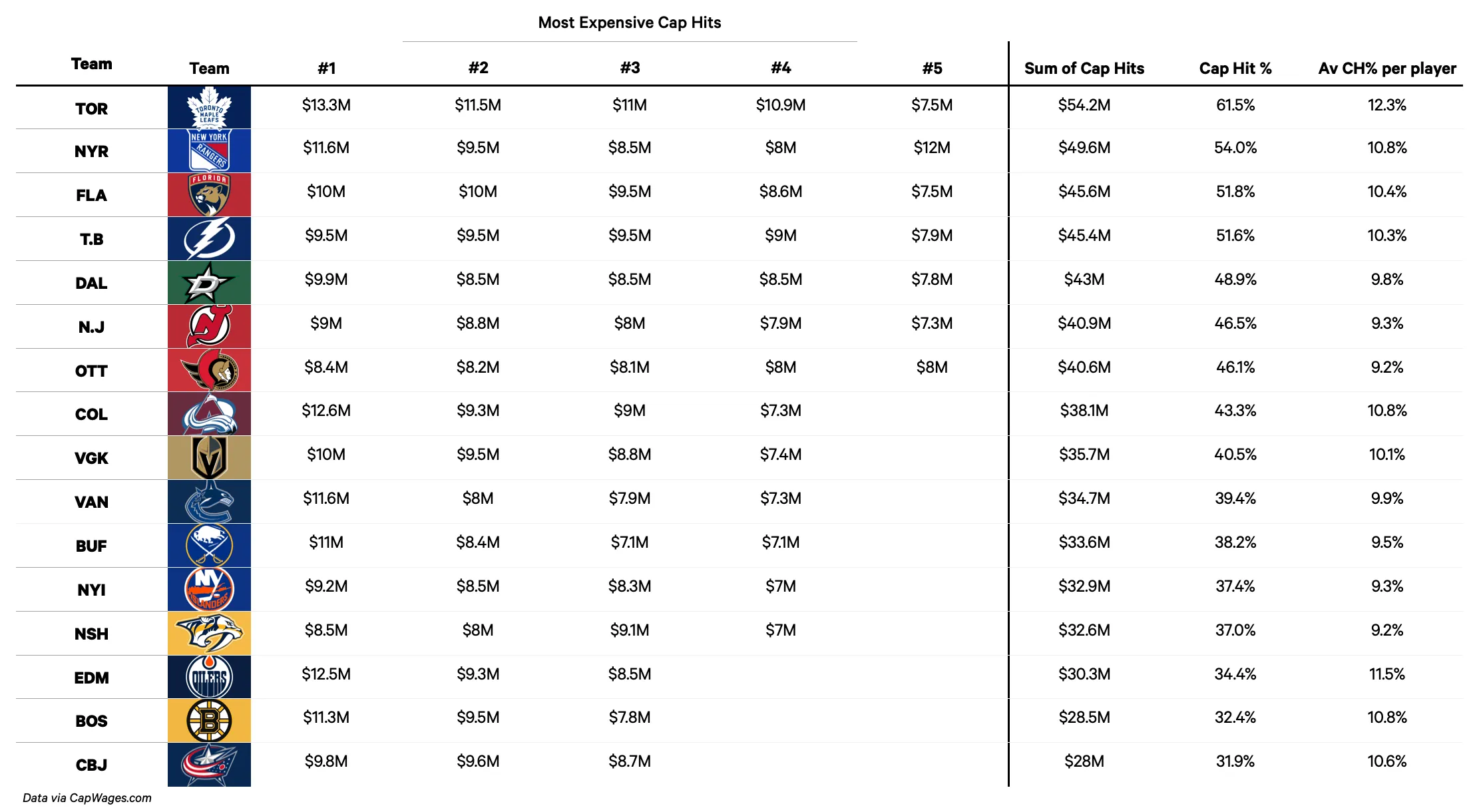
Salary cap breakdown for 2026-27
The upper limit rises $8.5 million from the 2025-26 figure, landing at $104 million. The lower limit, or floor, increases by $6.3 million to $76.9 million. Midpoint sits at $90.4 million, giving teams a balanced target for roster construction.
This structure ensures competitive parity across the league. Here’s a quick comparison:
| Metric | 2025-26 | 2026-27 | Change |
|---|---|---|---|
| Upper limit | $95.5M | $104M | +$8.5M |
| Lower limit | $70.6M | $76.9M | +$6.3M |
| Midpoint | $83M | $90.4M | +$7.4M |
| Max player salary | $19.1M | $20.8M | +$1.7M |
Predictability from the early agreement has fueled big signings already. General managers can project cap space years ahead, avoiding last-minute scrambles.
The floor hike pressures low-spending teams to invest more. Mid-market clubs benefit most from the midpoint guidance.
Recent blockbuster contracts reshaping the landscape
Kirill Kaprizov of the Minnesota Wild inked the richest deal in NHL history on September 30, 2025—a $136 million extension over eight years with a $17 million AAV. This positions him atop cap hits entering next season.[4]
Vegas Golden Knights center Jack Eichel followed with an eight-year, $108 million pact on October 8, 2025, averaging $13.5 million annually. It ranks third-highest projected for 2026-27, behind Kaprizov and Edmonton’s Leon Draisaitl at $14 million.[5]
These deals highlight the cap’s upward trajectory. Kaprizov’s contract came amid owner focus on long-term commitment, as noted in league reports.
Draisaitl’s extension, signed earlier, set a benchmark at $112 million over eight years. Oilers now eye retaining other core pieces under the rising ceiling.
Such investments signal owner confidence in revenue growth. Yet, no one has touched the max salary historically—2024-25’s was $17.6 million.
Stars approaching contract eligibility
Several elite talents gear up for extensions. Tampa Bay’s Nikita Kucherov, Colorado’s Cale Makar, and Vancouver’s Quinn Hughes—all pending UFAs after 2026-27—become extension-eligible July 1, 2026.
Restricted free agents like Dallas Stars’ Jason Robertson and Chicago Blackhawks’ Connor Bedard hit the market this offseason. San Jose Sharks’ Macklin Celebrini can extend in July despite one year left on his ELC.
For more on Robertson’s potential deal, check The Hockey News analysis. These youngsters could test near-max values if production holds.
Kucherov, a perennial scoring machine, might push boundaries. Makar and Hughes anchor defenses, commanding premium rates.
Teams weigh risk versus reward. The NHLPA announcement provides the framework.[6]
Will teams pay the maximum?
Historically, GMs shy from max deals, even for superstars. Connor McDavid’s $12.5 million AAV, once elite, now lags behind newcomers like Kaprizov.
The $20.8 million ceiling tempts for faces of franchises. Friedman’s report sparked buzz: “Maximum salary: $20.8M.”[2]
Fan forums debate viability. Reddit threads highlight cap floor pressures forcing balanced rosters.[7]
Secondary markets like San Jose or Chicago might chase max for Celebrini or Bedard to build. Contenders prioritize depth.
Analytics suggest max hits limit flexibility during injuries. LTIR rules evolve too.
Still, revenue sharing grows, easing burdens. Expect at least one megadeal soon.
This cap surge promises exciting negotiations ahead. As 2026-27 nears, watch RFAs and UFAs— the $20.8 million mark could redefine NHL economics, boosting parity and star power across the league.
Frequently Asked Questions

Par Mike Jonderson
Mike Jonderson is a passionate hockey analyst and expert in advanced NHL statistics. A former college player and mathematics graduate, he combines his understanding of the game with technical expertise to develop innovative predictive models and contribute to the evolution of modern hockey analytics.