

The NHL Winter Classic Miami snow plans represent one of the most ambitious outdoor hockey productions ever attempted. The league is literally manufacturing winter in the tropics, promising an unprecedented spectacle where Florida’s signature sunshine collides with hockey’s most iconic outdoor tradition. For the first time in history, the NHL will stage its signature New Year’s Day showcase in a subtropical climate, and the logistics behind creating authentic winter conditions in South Florida reveal fascinating engineering and theatrical ambition.
The Florida Panthers and New York Rangers will square off at loanDepot Park on Friday night, marking the first outdoor NHL game in Florida history and the southernmost venue ever for a Winter Classic. The matchup itself carries significant weight—both teams are playoff contenders, and as NHL events president Steve Mayer noted, “when we’re in April, this could be a game that determines whether a team makes the playoffs or not.” But beyond the on-ice product, the league is orchestrating an immersive environmental experience that defies nature itself.
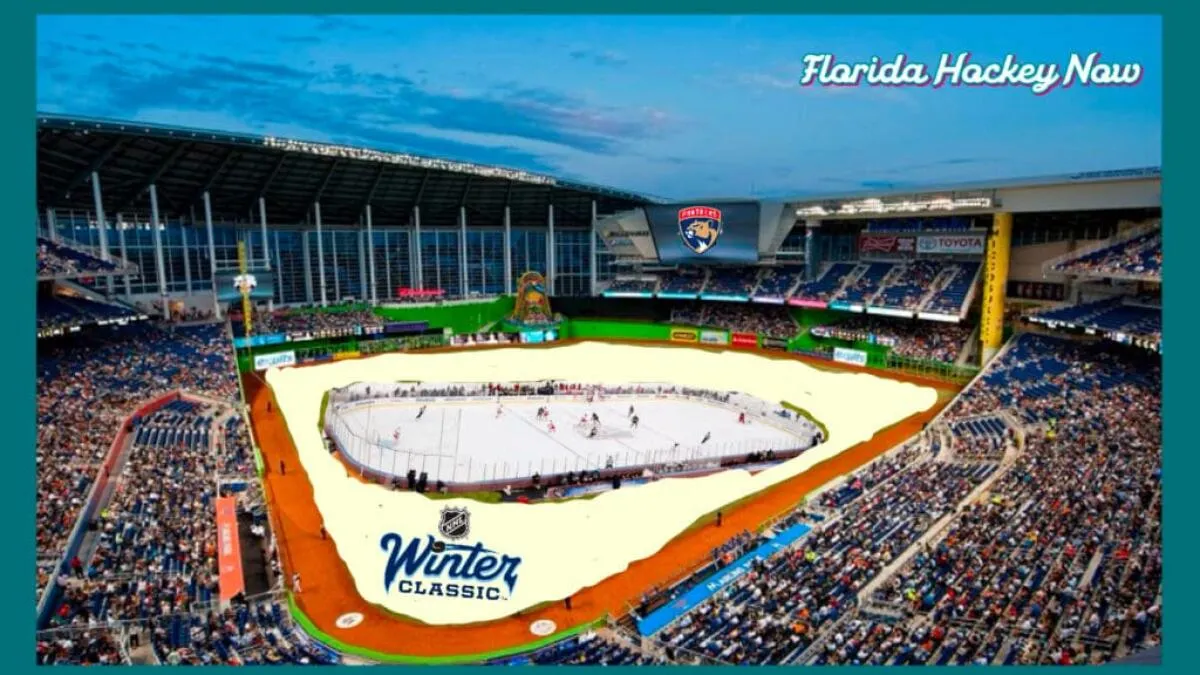
How the NHL plans to manufacture snow in Miami
The centerpiece of the production involves creating actual snowfall inside the ballpark. The last recorded snow in Miami fell in 1977, making this manufactured winter weather a historic event nearly 50 years in the making. The technical approach relies on professional-grade artificial snow machines that pump specialized water-based fluid through high-pressure nozzles, mixing it with compressed air to create lightweight flakes.
These machines work by atomizing water into microscopic droplets and rapidly cooling them through expansion, forming ice crystals that float down like natural snow. The process requires precise control of water pressure, air flow, and environmental conditions. While outdoor temperatures in the upper 50s might seem warm for hockey, they actually work perfectly for artificial snow production. The key factor is the wet-bulb temperature—a combination of air temperature and humidity—which allows snowmaking even when thermometers read slightly above freezing.
The NHL has remained somewhat secretive about the exact specifications, but Mayer confirmed that “some fans are going to get at least a few flakes headed their way.” The system will target specific sections of the crowd, creating localized snow showers that evaporate cleanly without leaving residue or moisture behind—a crucial consideration for both fan comfort and playing surface integrity.
The duality of summer meets winter: thematics and design
The visual design concept embraces Florida’s climate paradox rather than fighting it. Mayer described the aesthetic as “summer meets winter” or “fire, ice, hot, cold, all of the thematics you would think.” The field will be literally split down the middle:
- One half transforms into a Miami beach complete with lifeguard stands, umbrellas, cabanas, and palm trees
- The opposite side depicts a massive snowstorm that has hit Miami, complete with winter thematics
- Cast members will alternate between parkas and winter gear on one side, and bikinis and speedos on the other
- Beach chairs will share space with snow-covered scenery, creating a deliberate visual dissonance
This creative approach acknowledges the absurdity of outdoor hockey in Florida while celebrating it as a unique spectacle. The league is leaning into the novelty, creating what Mayer calls “an interactive experience from the time you walk into the building to the time you leave.”
Engineering challenges for ice making in tropical conditions
Creating and maintaining a playable ice surface in South Florida’s humidity presents monumental challenges. The NHL’s solution involves a sophisticated refrigeration system installed beneath the rink panels. Crews have been building the ice with the stadium’s retractable roof closed and industrial air conditioning units blasting, maintaining conditions similar to a traditional indoor arena.
The ice installation process began with laying down lines and logos on Monday, followed by building additional ice layers to seal them into place. The boards, glass, and netting are all in place, with crews continuously monitoring surface conditions. The decision to schedule the game for 8 p.m. ET represents a strategic choice to avoid the sun’s damaging effects, which plagued the Lake Tahoe outdoor games in 2021.
Weather forecasts predict temperatures in the low 60s or high 50s for game time—ideal conditions for maintaining ice quality while remaining comfortable for the 30,000+ expected fans. The evening start time eliminates solar radiation concerns, allowing the roof to open for the full outdoor experience without compromising playing conditions.
Fan experience at the Miami Winter Classic
The NHL is positioning this event as more than just a hockey game. Mayer emphasized that fans should arrive early to experience the Enterprise NHL PreGame Outdoor Fan Festival, featuring interactive activities and a concert by Role Model. The league has transformed West Lot 3 and the West Plaza into a hockey-themed carnival designed to entertain attendees for hours before puck drop.
Inside the stadium, the entertainment continues with performers decked out in the split-theme costumes, creating photo opportunities and interactive moments throughout the concourses. The snow effect itself will be timed to maximize impact, likely during key moments of the pre-game ceremony or intermissions when it won’t distract from the on-ice action.
For fans fortunate enough to be in the snow zones, the experience will be unprecedented—watching NHL hockey while snow falls from the Miami sky. The league has designed the effect to be safe and clean, using professional-grade equipment that produces evaporative snowflakes that won’t soak clothing or create slippery surfaces.
What makes this Winter Classic historic
This event breaks numerous precedents in NHL outdoor game history:
- First outdoor NHL game played in Florida
- Southernmost latitude for any NHL outdoor game
- First manufactured snow at an NHL outdoor event
- First Winter Classic to embrace rather than resist local climate characteristics
- First time a retractable roof stadium will open mid-game for weather effect
The Panthers enter as two-time defending Stanley Cup champions, adding championship pedigree to the historic nature of the event. Facing the Rangers, one of the league’s marquee franchises with outdoor game experience, ensures the hockey product will match the spectacular setting.
Environmental considerations and sustainability
Modern artificial snow technology has evolved significantly from the foam machines of decades past. The NHL’s system uses non-toxic, biodegradable fluid that evaporates without environmental impact. Water consumption is minimal compared to traditional snowmaking at ski resorts, and energy usage is comparable to other professional entertainment equipment.
The evaporative nature of the artificial snow means it returns to the water cycle naturally, while the equipment’s efficiency keeps resource consumption reasonable for a one-night spectacle. This approach reflects the league’s awareness of sustainability concerns while delivering the desired dramatic effect.
Final thoughts on Miami’s winter transformation
The NHL Winter Classic Miami snow plans represent a bold evolution in outdoor hockey production. By manufacturing winter conditions in the tropics, the league isn’t just staging a game—it’s creating immersive theater that redefines what’s possible for outdoor sporting events. The technical achievement of producing clean, safe snow in 50-degree weather while maintaining NHL-caliber ice demonstrates engineering sophistication.
More importantly, the thematic embrace of Florida’s climate creates a unique spectacle that could only happen in Miami. As fans experience their first Florida snowfall since 1977 while watching championship-caliber hockey, the event will transcend sports to become a cultural moment.
For hockey purists concerned about tradition, the essential elements remain intact: two elite teams competing in a meaningful game on a legitimate outdoor rink. The snow and thematics simply enhance the experience, creating memories that will last far beyond the final horn. When the manufactured snow falls on loanDepot Park, it won’t just be a special effect—it will be a statement about the NHL’s ambition to grow the game by any means necessary, even if it means bringing winter to the tropics.
Frequently Asked Questions

Par Mike Jonderson
Mike Jonderson is a passionate hockey analyst and expert in advanced NHL statistics. A former college player and mathematics graduate, he combines his understanding of the game with technical expertise to develop innovative predictive models and contribute to the evolution of modern hockey analytics.