










The Ottawa Senators announced Sunday that goaltender Linus Ullmark is stepping away from the team for personal reasons, leaving a significant void in their crease during a critical stretch of the season. General manager Steve Staios delivered the news in a brief statement, emphasizing that the organization stands firmly behind the 32-year-old netminder. The timing comes just a day after Ullmark was pulled from Saturday’s 7-5 loss to the Toronto Maple Leafs, where he allowed four goals on 14 shots before being replaced by backup Leevi Merilainen. Ullmark’s departure triggers immediate questions about Ottawa’s goaltending depth and playoff positioning, while also highlighting the growing recognition of personal wellbeing in professional hockey.
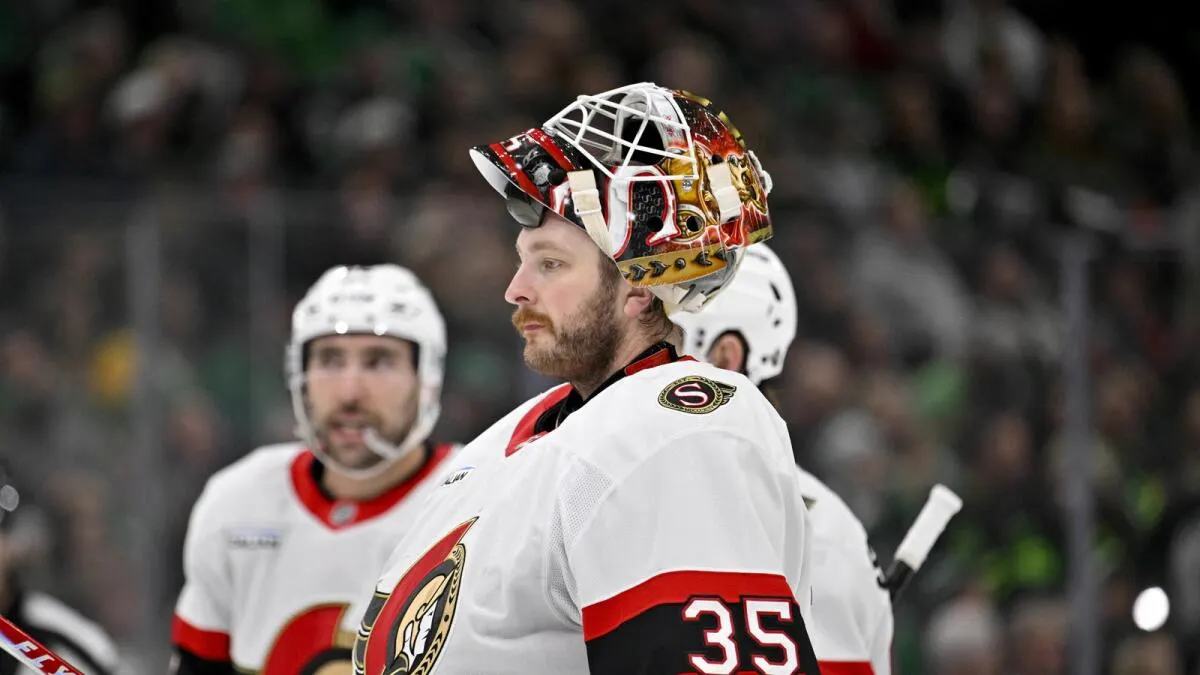
Ullmark’s recent performance showed signs of improvement before personal leave of absence
Ullmark’s season has been a study in resilience and adaptation. Through 27 appearances this season, the Swedish goaltender compiled a respectable 14-8-5 record, posting a 2.95 goals-against average and .881 save percentage. While those numbers might not jump off the page, they tell only part of the story. Since November 1, Ullmark had found a stronger rhythm, recording an above-.900 save percentage in seven of twelve games played. This marked turnaround came after early-season criticism from fans and analysts questioning whether the Senators had made the right investment in the former Vezina Trophy winner.
The game log reveals a mixed bag of results that reflect both Ullmark’s potential and the team’s defensive inconsistencies. His last complete game before the Leafs contest was a stellar 4-0 shutout of the Pittsburgh Penguins on December 18, where he turned aside all 25 shots he faced. That performance demonstrated the elite capability that convinced Ottawa to trade for him from the Boston Bruins in June 2024 and subsequently sign him to a four-year, $33 million contract extension this past October. However, the December 27 game against Toronto saw him struggle, surrendering four goals in just over 27 minutes of ice time before coach Travis Green made the change.
The Senators acquired Ullmark with the expectation that he would stabilize their crease for years to come. His Vezina Trophy pedigree from the 2022-23 season with Boston suggested he could be the franchise goaltender Ottawa had lacked. The personal leave of absence creates uncertainty about when that vision will be fully realized, though the team has been careful to prioritize Ullmark’s privacy and wellbeing over any on-ice concerns.
Senators leadership prioritizes support after announcing personal leave of absence
General manager Steve Staios struck a measured and supportive tone in his Sunday statement, making clear that Ullmark’s health takes precedence over hockey considerations. “Linus has the full support of our organization during this time,” Staios said. “We will have no further comment out of respect to Linus.” This approach reflects a broader shift across professional sports leagues toward recognizing that athletes face personal challenges that extend beyond their on-ice performance.
The decision to withhold additional details demonstrates organizational maturity. Rather than speculating about timelines or the nature of Ullmark’s situation, the Senators are allowing their goaltender the space and privacy he needs. This stands in contrast to how teams might have handled similar situations a decade ago, when player availability was often treated as the only consideration. The modern NHL has evolved, with mental health resources and player wellness programs becoming standard across the league.
Backup goaltender Leevi Merilainen now finds himself thrust into the spotlight. The 23-year-old Finnish netminder has appeared in 10 games this season, posting a .874 save percentage and 3.43 goals-against average. While those numbers lag behind Ullmark’s production, Merilainen’s development has been closely monitored by the organization. He filled in admirably during Ullmark’s previous absences and has shown flashes of the potential that made him a fourth-round pick in 2020. The Ottawa Senators veteran goaltender targets to back up Linus Ullmark reveals the front office has been actively exploring additional depth options, a prescient move given the current circumstances.
Goaltending depth faces ultimate test during Ullmark’s personal leave of absence
The Senators’ goaltending pipeline will be under immediate scrutiny as they navigate an uncertain timeline. Merilainen becomes the de facto starter, with the team potentially needing to recall additional netminders from their AHL affiliate in Belleville. Ottawa’s organizational depth includes several candidates who could step up, though none match Ullmark’s experience or proven NHL success.
Merilainen’s recent performances offer a glimpse into both his potential and areas needing improvement. His last appearance against Toronto saw him stop 19 of 22 shots in relief, showing composure in a high-pressure situation. The young goaltender’s development has been a priority for Ottawa, with the organization betting on his long-term upside. As detailed in analysis of Linus Ullmark silencing his critics with his improved play for the Ottawa Senators, the team’s goaltending conversation has centered on the dynamic between veteran stability and youthful promise.
Beyond Merilainen, Ottawa has been linked to veteran goaltenders who could provide insurance. Names like Hunter Shepard and the organization’s continued faith in prospects such as Mads Sogaard suggest the front office recognized the need for additional options even before Ullmark’s leave. The AHL’s Belleville Senators feature several netminders who have rotated through the system, giving coach Travis Green familiar faces to call upon if needed. The immediate challenge becomes clear: maintain playoff positioning without their established starter against a schedule that includes division rivals and Western Conference powerhouses.
Impact on Ottawa Senators’ playoff positioning
The timing intensifies the challenge for a Senators team holding onto playoff aspirations in the competitive Atlantic Division. Ottawa next plays Monday at home against the Columbus Blue Jackets, a game that suddenly carries increased importance. Each point becomes critical when a team loses its number one goaltender, especially during a stretch that features back-to-back games and travel demands that test organizational depth.
Ullmark’s absence affects more than just the statistics in the crease. His veteran presence and communication skills helped organize a defensive corps that has shown improvement throughout the season. The goaltender’s ability to handle the puck and initiate breakouts became an integral part of Ottawa’s system. Merilainen possesses similar puck-handling abilities but lacks Ullmark’s experience directing NHL defenses through traffic and pressure situations.
The contract situation adds another layer to the organization’s calculations. With Ullmark signed through the 2028-29 season at an $8.25 million annual cap hit, the Senators have significant resources tied to his success. This long-term commitment makes his wellbeing even more critical; rushing him back would serve neither the player nor the franchise. The team’s approach must balance short-term competitive needs against the importance of ensuring Ullmark returns only when ready, both physically and mentally.
Merilainen’s moment arrives amid personal leave of absence
The Finnish goaltender now inherits starter’s responsibilities and the scrutiny that accompanies them. Merilainen’s AHL performance suggests he’s capable of handling increased workload, though his .874 save percentage in limited NHL action reveals the adjustment challenges young goaltenders face at hockey’s highest level. His 3.43 goals-against average reflects both his learning curve and the defensive breakdowns that occasionally plague young netminders.
What Merilainen lacks in experience he compensates for with athleticism and a technical foundation that coaches admire. His positioning has improved markedly since his early-season appearances, and his rebound control shows professional poise. The challenge ahead involves managing the mental load of being “the guy” rather than a spot starter. Starting goaltenders face different pressures, from pre-game preparation to in-game adjustments between periods. How Merilainen navigates this transition could determine whether Ottawa remains in the playoff hunt or fades down the stretch.
Organizational options beyond the current roster
The Senators have spent recent months evaluating veteran goaltenders who could provide stability in exactly this scenario. The search for experienced backups took on new urgency after Ullmark’s early-season struggles, with the front office recognizing that Merilainen’s development might require a more gradual NHL integration. Potential targets include journeymen with playoff experience who understand the demands of supporting a young team while being ready to play suddenly and consistently.
Management must now decide whether to accelerate those discussions or trust internal options. The AHL’s Belleville Senators feature goaltenders familiar with the organization’s systems and defensive schemes. This familiarity provides a comfort level that external acquisitions lack, though it doesn’t replace proven NHL experience. Salary cap considerations also factor into any decision; Ottawa has limited flexibility to add significant contracts without corresponding moves.
NHL’s evolving approach to player wellness
Ullmark’s situation reflects broader changes in how hockey organizations handle personal matters. The days of “play through anything” mentality are fading as teams recognize that supporting players through challenges ultimately benefits everyone. Mental health resources, counseling services, and flexible personal leave policies have become standard across the league, representing a cultural shift that prioritizes long-term human wellbeing over short-term on-ice needs.
Other NHL teams have navigated similar situations in recent seasons, with star players stepping away for personal reasons and returning successfully after receiving proper support. These precedents offer hope that Ullmark’s absence will be temporary and that he’ll return refreshed and ready to contribute. The Senators’ respectful handling of the announcement and their commitment to privacy set a tone that other organizations should emulate.
The goaltender position carries unique mental demands. A starting netminder faces constant scrutiny, with every mistake potentially deciding games and seasons. This pressure compounds when adjusting to a new team, city, and defensive system after a trade. Ullmark’s journey from Boston to Ottawa required adapting to different expectations, fan bases, and teammates while living up to a substantial contract extension. Organizations increasingly recognize that such transitions require patience and support systems.
Looking ahead: Roadmap for Ullmark’s return
No timeline accompanies the announcement, and appropriately so. Personal matters follow their own schedules, and pressuring Ullmark for specifics would undermine the organization’s supportive stance. The Senators have established a protocol: provide resources, maintain communication, and welcome him back when he’s ready. This approach mirrors best practices across professional sports, where player wellness programs emphasize individualized care rather than arbitrary return dates.
In the meantime, the team must prepare as if Merilainen will handle starter’s duties indefinitely while hoping for Ullmark’s swift return. This means tailoring practice sessions around Merilainen’s development needs, perhaps adjusting defensive systems to provide clearer sightlines and reduce high-danger chances against. The coaching staff might also emphasize different breakout patterns that play to Merilainen’s strengths, creating a supportive environment for their young goaltender.
Trade deadline considerations loom in the background. If Ullmark’s absence extends beyond a few weeks, Ottawa’s front office may need to reconsider their approach to acquiring goaltending depth. The market for veteran backups typically heats up as teams fall out of playoff contention, creating opportunities for the Senators to add experienced insurance. Cap space limitations complicate these calculations, but the organization cannot afford to let goaltending become a liability that derails a promising season.
The coming weeks will test Ottawa’s organizational depth, coaching adaptability, and team chemistry. How they navigate this challenge while supporting their star goaltender will define not only their season but their culture. Success means balancing competitive needs with compassionate leadership, a delicate equilibrium that the Senators appear committed to maintaining as they await Ullmark’s eventual return to the crease.
Frequently Asked Questions

Par Mike Jonderson
Mike Jonderson is a passionate hockey analyst and expert in advanced NHL statistics. A former college player and mathematics graduate, he combines his understanding of the game with technical expertise to develop innovative predictive models and contribute to the evolution of modern hockey analytics.