







Owen Tippett’s blazing start to the 2025-26 campaign has given Philadelphia Flyers fans a glimpse of what the organization envisioned when they locked him into an eight-year contract extension. After years of frustrating inconsistency and poorly timed cold stretches, the 26-year-old right winger has emerged as one of the team’s most dangerous offensive weapons through the opening weeks. With five goals in six games, including a two-goal performance against the Seattle Kraken, Tippett is finally delivering on the promise that made him a first-round pick of the Florida Panthers back in 2017.
This hot start carries particular significance for both player and franchise. Coming off a disappointing 2024-25 season that saw him struggle to justify his $6.2 million annual cap hit, Tippett needed to prove he could be more than just a streaky scorer. Under new head coach Rick Tocchet’s system, he’s not only finding the back of the net with regularity but also playing a more complete, physical brand of hockey that has earned praise from his coaching staff and kept him on the ice for over 75 minutes at 5-on-5 without a goal against.
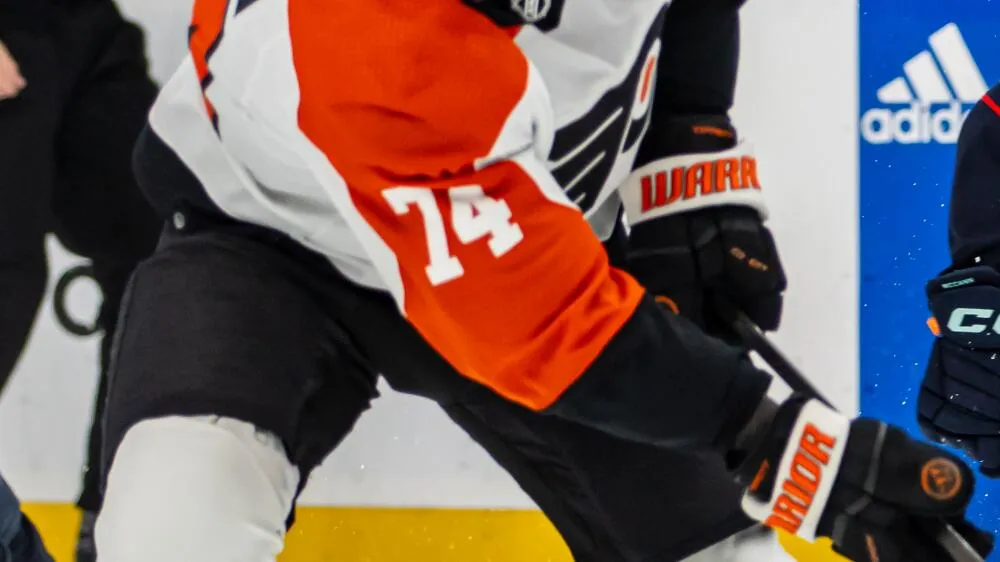
How Owen Tippett’s strong start with the 2025-26 Philadelphia Flyers is breaking old patterns
For the first time in his Flyers career, Tippett has overcome his October curse. Before this season, he had managed just four goals in 22 October games wearing the Orange and Black. The slow starts became a predictable pattern that hampered his ability to build momentum throughout the campaign. Whether it was an injury in the 2022 season-opener that sidelined him for two weeks or simply cold hands to begin 2023-24, October had become Tippett’s problem month.
This year tells a different story. After being held off the scoresheet in the season-opening matchup against his former team, the Florida Panthers, Tippett has scored in five consecutive games. His two-goal performance against Seattle showcased both his elite skating speed and his dangerous shot, two attributes that have always made him tantalizing but were too often wasted in previous seasons.
The statistical improvement is equally impressive. Through the early going, Tippett is posting a 60.88% expected goals for percentage at 5-on-5, over six points higher than any previous season in his career. The Flyers have yet to surrender a goal with him on the ice in even-strength situations, placing him among an elite group of players including Cale Makar and Kirill Marchenko who have maintained similar defensive excellence in the early season.
Perhaps most encouraging is his shot accuracy. After seeing his attempts on goal percentage plummet to a career-low 44.3% last season, Tippett has rebounded to 55.9% this year—an 11.6% improvement that represents the largest year-over-year jump of his career. He’s not just shooting more; he’s shooting smarter.
The physical edge driving Owen Tippett’s strong start for the 2025-26 Philadelphia Flyers
New head coach Rick Tocchet has unlocked something in Tippett that previous coaches couldn’t quite access: a willingness to use his 6-foot-1, 207-pound frame to his advantage. While Tippett has never been mistaken for a power forward, his increased physicality has become a defining characteristic of his early-season success.
“We’ve talked about it,” Tocchet said following a recent practice. “He doesn’t have to run around and hit people, but there’s times where, he had some body checks, last couple of games, where he went through people. He’s a big guy. When you do that, you’re gonna get room.”
That extra room has been crucial for a player whose greatest assets are his speed and shot. Tocchet specifically praised Tippett’s “elite speed” for a player of his size, noting that his ability to drive through the neutral zone creates opportunities that simply didn’t exist when he played a more perimeter-based game. The body checks aren’t about becoming an enforcer—they’re about earning respect from opponents and creating the space necessary for his offensive skills to flourish.
The physical play has also translated to defensive responsibility. Tippett has been more engaged in board battles and backchecking situations, contributing to his remarkable plus-4 rating through six games. This two-way commitment matters in Tocchet’s system, where players who don’t defend don’t play, regardless of their offensive talent. By buying into the complete game philosophy, Tippett has secured ice time and trust that allows him to be on the ice in crucial situations.
It’s not just about hitting harder or blocking more shots. The physicality represents a maturation in Tippett’s game, a recognition that his skill set alone wasn’t enough to justify his contract or his place in the lineup. By adding this dimension, he’s become more difficult to play against while simultaneously creating more offensive opportunities for himself and his linemates.
Why consistency remains the question mark for Owen Tippett’s 2025-26 Philadelphia Flyers season
Despite the encouraging start, a healthy dose of skepticism is warranted. Tippett has teased Flyers fans with hot streaks before, only to disappear for extended stretches. He scored six goals and 11 points in 13 games last December. When the team collapsed in March 2024, he recorded six goals and 13 points in 15 games. Those spurts looked impressive in the moment but didn’t translate to sustained excellence.
The underlying numbers suggest some regression may be inevitable. Tippett is currently shooting 26.3%, well above his 9.9% career average. While improved shot selection can certainly boost shooting percentage, maintaining anything close to his current rate over an 82-game season would be unprecedented for a player of his profile. Only three players in the salary cap era have reached 70 points without recording at least 25 assists, and two of them—Zach Hyman and Chris Kreider—have been wildly inconsistent goal scorers outside of their 50-goal campaigns.
The lack of assists is particularly concerning. Through six games, Tippett has yet to record a single helper, raising questions about his playmaking ability and hockey IQ. Without improved vision and passing, his ceiling likely tops out around 65 points—valuable but not elite production for a player earning over six million dollars annually.
Furthermore, several of his goals have come with significant assistance from good fortune. His power-play tally in the second game benefited from a bizarre rebound off the glass. His goal against Minnesota banked off the goaltender’s skate. Both Seattle goals resulted from goaltender Joey Daccord’s mistakes rather than spectacular plays by Tippett. Remove even two of those lucky bounces, and the narrative shifts considerably.
The real test will come during the inevitable cold stretch. Every scorer faces adversity throughout an 82-game season. Whether Tippett can maintain his confidence, physical engagement, and shot volume when the puck stops finding the net will determine if this is truly a breakout season or just another chapter in his frustrating story of un fulfilled potential.
How line combinations could define Owen Tippett’s strong start trajectory with the 2025-26 Philadelphia Flyers
One of the most intriguing developments has been Tippett’s chemistry with Sean Couturier and Travis Konecny. After starting the season on the third line, his two-goal performance against Seattle alongside those established veterans has opened the door for increased responsibility and ice time.
“I think Tip[pett] helps [Couturier and Konecny] helps those guys a lot. But yeah, I thought that was a good line for us. They’re connected, right? I think if you watch, they’re always kind of in the same area, and that’s what usually good lines do,” Tocchet explained after Monday’s victory.
The connection between the three forwards goes beyond simple chemistry. Couturier’s defensive responsibility and faceoff prowess provides stability, while Konecny’s creativity and playmaking open up shooting lanes for Tippett’s wicked wrist shot. When the line clicks, it forces opposing defenses to respect multiple threats, preventing them from keying solely on Tippett’s shot.
However, deployment will be crucial to Tippett’s continued success. There’s a legitimate argument that his skill set might be better suited for a third-line role where he faces softer competition. Yet if he continues producing at this rate, Tocchet should prioritize getting him minutes regardless of which line he officially occupies. The key is finding the right balance between challenging him with top-six responsibilities and protecting him from defensive matchups he may not be equipped to handle.
The power play represents another potential catalyst or stumbling block. Philadelphia’s man-advantage unit has struggled to a 15.8% success rate, near the bottom of the league despite Tippett’s lone power-play goal. Two seasons ago, he posted 39 points at 5-on-5, matching Sebastian Aho and Matthew Tkachuk while trailing Cale Makar by just one. Obviously, there’s far more separating Tippett from those elite players than special teams performance, but a functional power play would certainly help close the gap and boost his overall production.
According to ESPN statistics, Tippett has already matched his power-play point total from the first month of last season in just six games. If the Flyers can unlock their special teams potential, Tippett’s hot start could translate to career-high production across the board.
What Owen Tippett’s strong start means for the 2025-26 Philadelphia Flyers’ playoff hopes
The significance of Tippett’s emergence extends far beyond individual statistics. The Flyers are a team desperately trying to return to playoff contention after missing the postseason, and they need secondary scoring beyond their established stars. If Tippett can sustain even a fraction of this production throughout the season, Philadelphia suddenly possesses the kind of depth scoring that separates playoff teams from lottery participants.
His performance also validates the controversial contract extension signed in January 2024. At the time, the eight-year, $49.6 million deal raised eyebrows throughout the hockey world. Tippett had shown flashes of brilliance but never sustained excellence over a full season. The organization bet on potential rather than proven performance, and the disastrous 2024-25 campaign made that gamble look misguided. A strong 2025-26 season wouldn’t erase those concerns entirely, but it would provide evidence that the Flyers accurately identified a late-blooming talent.
The mental aspect cannot be overlooked either. For a player who has battled confidence issues and consistency problems throughout his career, nothing builds belief like seeing pucks cross the goal line. Tippett acknowledged as much after his two-goal performance against Seattle: “It makes it easier for that confidence to kind of stick around. But at the same point, you’ll still got to work on our goal here.”
That quote reveals both maturity and understanding. Tippett recognizes the danger of riding an emotional high or becoming overly reliant on results rather than process. If he can maintain that mindset through the inevitable adversity, he has a legitimate chance to post career numbers and establish himself as a core piece of Philadelphia’s future.
The next few weeks will reveal whether Owen Tippett’s blazing start represents a true evolution or simply another chapter in his frustrating story of unfulfilled potential. The tools have always been present—the elite skating, the powerful shot, the decent size. The question has always been whether he could put it all together consistently. Early returns suggest that under Rick Tocchet’s guidance and with increased maturity, Tippett may finally be ready to become the player the Flyers always believed he could be. If this continues, the 2025-26 season could be remembered as the year Owen Tippett finally arrived.

Par Mike Jonderson
Mike Jonderson is a passionate hockey analyst and expert in advanced NHL statistics. A former college player and mathematics graduate, he combines his understanding of the game with technical expertise to develop innovative predictive models and contribute to the evolution of modern hockey analytics.