




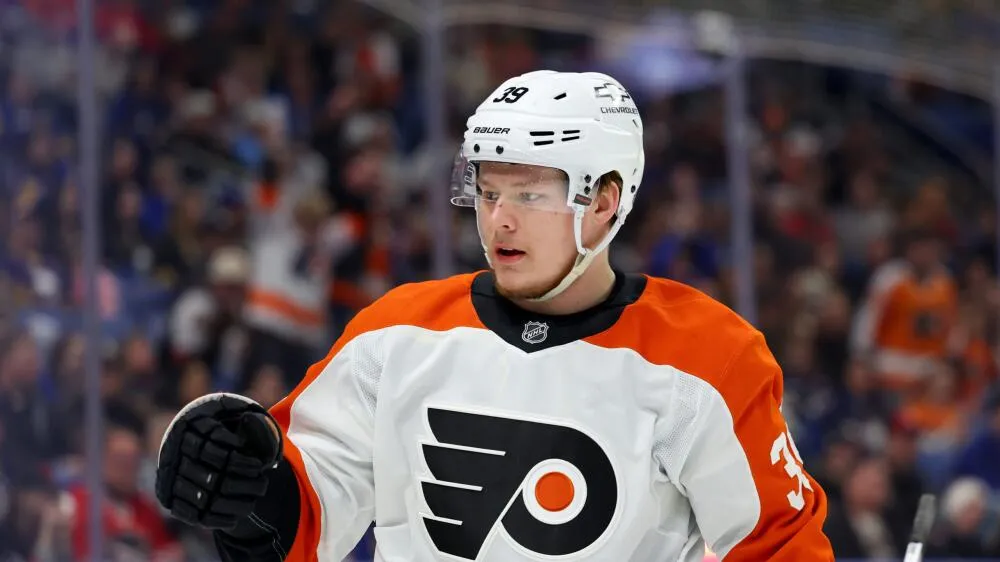
The question of whether the Philadelphia Flyers should trade Matvei Michkov to maximize fan morale has become one of the most contentious debates in recent Flyers history. The 20-year-old Russian winger, once heralded as the franchise’s savior and future face, finds himself at the center of a philosophical divide that’s splitting the fanbase down the middle. With the team sitting at 8-5-1 early in the 2025-26 season and head coach Rick Tocchet implementing a system-first approach, this controversial proposition has sparked intense discussion about what truly serves the team’s long-term interests and keeps the fanbase united.
The situation has escalated beyond typical rookie growing pains. Michkov’s limited ice time—often under 15 minutes per game—combined with multiple healthy scratches has created two distinct factions within the Flyers faithful. One side believes in Tocchet’s disciplined, defensive-minded approach and trusts the process. The other sees a generational talent being mishandled and wasted. Rather than continue this civil war, some analysts have suggested a radical solution: trading Michkov to appease both camps simultaneously.
Understanding the divide among Philadelphia Flyers fans regarding Matvei Michkov
The split in the Flyers fanbase reflects a fundamental disagreement about team-building philosophy. This isn’t simply about one player or one coach—it’s about competing visions for what the franchise should represent moving forward.
The system-first faction has fully bought into Tocchet’s vision. Drawing parallels to Paul Maurice’s championship-winning approach with the Florida Panthers, these fans prioritize team structure, defensive responsibility, and accountability over individual brilliance. They view the team’s 8-5-1 start as validation of this philosophy, especially after years of mediocrity. For this group, any player—regardless of draft pedigree or talent—must fit the system or move on.
These fans point to the team’s competitive standing as evidence that the approach works. After missing the playoffs from 2020-21 through last season, Philadelphia currently occupies a wildcard spot. They see a young, cohesive group that plays hard-nosed, responsible hockey. The fact that goaltender Dan Vladař has been exceptional doesn’t diminish their enthusiasm; it’s part of a complete team effort.
Conversely, the offense-first faction believes Michkov represents a rare talent being squandered. They watched him explode at the end of last season under interim coach Brad Shaw, producing 12 points in nine games while receiving first-line minutes. Extrapolated over a full campaign, that pace would put him near Connor Bedard and Macklin Celebrini—the only two players with 22-plus points this season—both of whom were drafted first overall.
This group questions the apparent double standard in player treatment. When veteran Travis Konecny struggled early while maintaining top-line usage, it highlighted what they perceive as inconsistency in Tocchet’s accountability measures. They argue that young offensive stars require development opportunities, not constant punishment for perceived defensive lapses.
The entertainment value of Flyers hockey has also become a flashpoint. Tocchet’s system produces low-event, defensively responsible games that can feel tedious compared to Shaw’s more freewheeling approach late last season. For fans who’ve endured a half-century without a Stanley Cup, watching elite talent get benched feels like another missed opportunity in a long line of organizational failures.
The tension reached its peak when Michkov was healthy scratched against Tampa Bay in November 2024, then later had a heated shouting match with then-coach John Tortorella in January 2025 that resulted in a mid-game benching. These incidents crystallized the divide: one side saw necessary coaching discipline; the other saw mismanagement of a franchise cornerstone.
Why trading Matvei Michkov could satisfy the system-first faction
For fans who prioritize winning now through structured, team-first hockey, a Michkov trade wouldn’t be devastating—it might even be liberating. This group doesn’t necessarily want to see him traded, but they wouldn’t lose sleep over it if it meant strengthening Tocchet’s system.
The practical benefits are significant. Trading a player of Michkov’s caliber and potential would bring back a substantial haul of assets. The Flyers possess an already impressive prospect pool, including 2025 sixth-overall pick Porter Martone. Adding to that foundation while acquiring pieces specifically tailored to Tocchet’s defensive-minded system could accelerate the team’s return to playoff relevance.
From this perspective, Michkov currently functions as a third-line player who occasionally finds himself in the coach’s dog’s house. His defensive inconsistencies and occasional clashes with coaching authority make him a disruptive presence rather than a foundational piece. While the team might “lose” the trade on paper in terms of pure talent, they could acquire multiple assets that collectively improve the roster’s fit and competitiveness.
The accountability narrative resonates strongly with this faction. Tocchet signed a five-year contract in May, cementing his position as the long-term architect of the franchise. If a player—even one as talented as Michkov—cannot or will not conform to the coach’s requirements, then moving on makes sense. This isn’t personal; it’s business. No player should be bigger than the system.
Historical precedent supports this approach. Championship teams typically feature complete players who excel in all three zones. While offensive fireworks grab headlines, the Panthers won their Stanley Cup through structured, responsible play that Maurice demanded from everyone, stars included. The system-first faction believes Philadelphia can follow the same blueprint.
Moreover, this group sees the current success as sustainable rather than goalie-dependent. Yes, Vladař has been excellent, but the team defense in front of him has improved dramatically. The young core—minus Michkov’s occasional defensive breakdowns—has bought in completely. Trading away a player who hasn’t fully embraced that mentality could actually strengthen team cohesion.
The forward-looking perspective matters too. Even if Michkov develops into an offensive star elsewhere, these fans would feel vindicated if the Flyers simultaneously build a winning culture without him. They’d rather watch a cohesive, playoff-bound team than wait years hoping an offensive wizard learns to play defense.
How dealing Matvei Michkov would please the offense-first supporters
Paradoxically, the fans most devastated by Michkov’s treatment might find peace in seeing him traded to an organization that values his unique skill set. This faction believes he deserves better than Philadelphia can currently offer under Tocchet’s regime, and a fresh start could benefit everyone involved.
The fundamental issue for this group centers on opportunity. Michkov finished his 2024-25 rookie season with 26 goals and 63 points in 80 games—impressive numbers despite limited ice time and multiple benchings. Yet Connor Bedard and Macklin Celebrini have flourished with 20-plus minutes nightly and first-line deployment. When Michkov received similar treatment under Brad Shaw, he produced at an elite pace. The offense-first faction sees wasted potential that could blossom elsewhere.
Trading Michkov to a team that embraces offensive creativity would allow these fans to maintain their Flyers loyalty while also following his development. They could root for Philadelphia’s system-driven success while simultaneously tracking Michkov’s progress with a franchise that builds around his strengths rather than fixating on his weaknesses. According to reports analyzing the situation, this dual allegiance might actually reduce fan frustration.
The perceived hypocrisy in player treatment particularly galls this faction. When Konecny struggled while maintaining top-six minutes, or when veterans received patience that Michkov never enjoyed, it undermined the entire accountability narrative. These fans question whether the issue is truly Michkov’s play or something deeper—possibly related to Tocchet’s well-documented struggles with Russian players throughout his coaching career.
There’s also the entertainment factor. Tocchet’s low-event, defense-first approach produces winning records but lacks excitement. One Twitter user asked fellow fans whether they were having more or less fun watching Flyers hockey compared to the Brad Shaw era—a question that resonated widely. For fans investing time and money into following the team, entertainment value matters alongside wins and losses.
The coaching stability issue compounds their concerns. With Tocchet signed through 2030, this isn’t a situation where waiting out the coach makes sense. His history suggests this relationship may never improve. Rick Tocchet’s previous stops have seen skilled forwards stagnate or decline under his watch. If the Michkov-Tocchet pairing is fundamentally incompatible, forcing it for five more years serves no one.
By trading Michkov to a team that will showcase his offensive brilliance, the Flyers would essentially be doing right by a player who’s given his best effort despite challenging circumstances. The offense-first faction could take solace knowing he landed somewhere that appreciates his gifts, even if it means abandoning the dream of watching him star in orange and black.
The practical challenges of trading Matvei Michkov to maximize fan morale
While the theoretical case for trading Michkov to appease both factions exists, practical realities make such a move extraordinarily complicated. The gap between satisfying philosophical differences and executing a beneficial trade presents numerous obstacles.
First, there’s the matter of Michkov’s contract and control. Young players on entry-level deals represent tremendous value precisely because they’re cost-controlled. Trading that asset requires receiving comparable value in return, yet any team acquiring Michkov would be betting on unlocking his potential—a gamble that affects their offer. The Flyers would need to receive multiple high-quality assets to justify moving a player who posted 26 goals as a rookie.
Market dynamics complicate matters further. Teams interested in Michkov would likely be those building around young offensive talent—precisely the organizations already loaded with prospects and picks. Contending teams with the established players Philadelphia might want probably wouldn’t mortgage their competitive window for a talented but defensively raw 20-year-old. Finding the right trade partner becomes exceptionally difficult.
There’s also the public relations nightmare to consider. General Manager Danny Brière spent considerable effort bringing Michkov over from Russia a year early, generating enormous fan excitement and season ticket momentum. Trading him after just one-plus seasons would represent organizational whiplash that damages credibility regardless of the return. Future free agents might question Philadelphia’s commitment to their drafted stars.
The hockey operations perspective matters too. Even fans frustrated with Michkov’s usage recognize his offensive ceiling. Trading him before he reaches his prime—possibly at age 23-25—creates the nightmare scenario where he becomes a perennial All-Star elsewhere while the assets acquired fail to materialize. Understanding player development timelines remains crucial to avoiding catastrophic mistakes.
Furthermore, the fanbase divide might not actually heal through a trade. System-first fans could feel vindicated initially, but if the return disappoints or if the team struggles, they’d face endless “what if” questions. Offense-first supporters might appreciate Michkov finding success elsewhere, yet still resent the organization for failing to build properly around elite talent. The trade could simply shift the civil war rather than end it.
There’s also the possibility that time resolves the tension naturally. Michkov is 20 years old, still learning NHL pace and defensive requirements. Many elite offensive players struggled defensively early in their careers before developing into complete players. Trading him now might mean selling at his lowest value point rather than allowing his game to mature.
What this debate reveals about modern NHL team building philosophy
The Matvei Michkov situation transcends one player or one team—it represents a fundamental tension in modern NHL team building between star-driven offense and system-driven structure. This philosophical divide shapes how organizations approach development, coaching hires, and long-term planning.
The system-first approach has gained credibility through recent championship winners. The Panthers, Golden Knights, and Avalanche all featured high-end talent but won through complete team games rather than offensive dominance alone. These teams demanded defensive responsibility from every player, creating predictable structures that maximized collective effectiveness. The appeal is obvious: if you can’t attract or draft generational superstars, you can still compete through superior coaching and systems.
However, the star-driven model hasn’t disappeared. Connor McDavid, Auston Matthews, and Nathan MacKinnon lead their teams through sheer offensive brilliance. While these players have improved defensively, their organizations built around their offensive gifts rather than forcing them into defensive roles first. The betting is that elite offense creates enough scoring to overcome defensive imperfections, especially when paired with quality goaltending and supporting players.
The Flyers find themselves caught between these philosophies. They possess potential star talent in Michkov but hired a coach committed to structure over individual creativity. This misalignment creates the current tension. Neither approach is inherently wrong, but combining incompatible philosophies within one organization creates confusion and conflict.
Player development philosophy factors significantly too. Some organizations believe in sheltering young stars, gradually increasing responsibility as they prove themselves capable. Others throw them into deep water immediately, accepting mistakes as learning opportunities while maximizing offensive deployment. Brad Shaw’s approach with Michkov late last season followed the latter model; Tocchet’s approach follows the former.
The challenge intensifies when considering competitive timelines. Philadelphia’s prospect pool and young roster suggest a team still 2-3 years from genuine contention. Yet the early-season success tempts a win-now mentality. These competing timelines create pressure to make immediate decisions about players like Michkov rather than allowing natural development curves to play out.
Media and fan dynamics add another layer. In the social media age, every benchings gets scrutinized, every quote analyzed for subtext, every deployment decision debated endlessly. Coaches and management face pressure to explain their philosophies constantly, while players navigate unprecedented public attention. The Michkov situation became magnified partly because it perfectly encapsulated these broader tensions.
Looking forward, the Flyers must eventually commit to one philosophical direction. They can build around Michkov’s offensive talents, hiring coaches and acquiring players that complement his style. Or they can fully embrace Tocchet’s system, moving on from players who don’t fit regardless of talent. The current ambiguity satisfies no one and maximizes tension. Clarity—through trade or through philosophical alignment—would serve everyone better than the status quo.
The debate over whether the Philadelphia Flyers should trade Matvei Michkov to maximize fan morale ultimately misses the point. The real issue isn’t about one player or one trade; it’s about organizational identity and philosophical coherence. While trading Michkov might temporarily reduce factional tension by giving each side their preferred outcome, it wouldn’t resolve the underlying question of what type of team Philadelphia wants to become. The franchise faces a choice between doubling down on Tocchet’s demanding, structure-first approach or pivoting toward a more offense-driven model that maximizes their young star’s considerable talents. Half-measures satisfy no one. Whatever decision the Flyers make, committing fully and building coherently around that vision represents the only path to genuine success and lasting fan satisfaction.

Par Mike Jonderson
Mike Jonderson is a passionate hockey analyst and expert in advanced NHL statistics. A former college player and mathematics graduate, he combines his understanding of the game with technical expertise to develop innovative predictive models and contribute to the evolution of modern hockey analytics.