The Philadelphia Flyers travel to Enterprise Center on November 14, 2025, to take on the St. Louis Blues in a Friday night matchup that features two teams heading in different directions. The Flyers arrive with an 8-5-3 record but are coming off consecutive overtime defeats, while the Blues at 6-8-3 are looking to build momentum following a recent victory over Calgary. Both squads are expected to deploy intriguing lineup configurations as they seek crucial points in what remains a competitive early-season race.
The game will also mark a significant milestone for St. Louis, as defenseman Hunter Skinner is set to make his NHL debut. The Michigan native will slot into the Blues’ third defensive pairing alongside fellow Michigander Matthew Kessel, adding another layer of intrigue to this Eastern Conference versus Western Conference clash. With the puck drop scheduled for 8:00 PM EST, both teams will ice rosters that blend experienced veterans with emerging young talent.
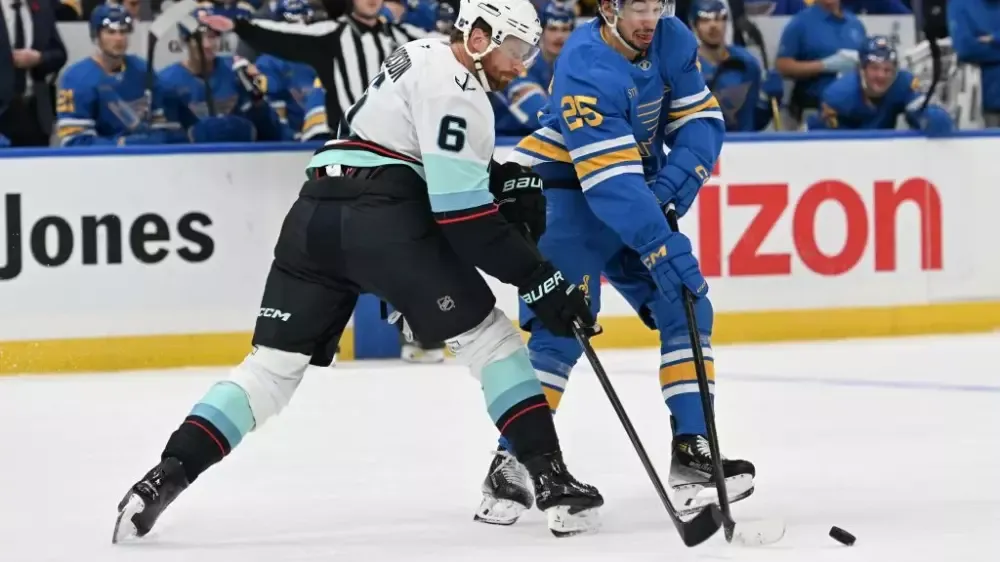
Philadelphia Flyers vs St. Louis Blues projected lineup November 14, 2025: Forward combinations
The Flyers’ forward group for this matchup showcases the team’s depth and strategic flexibility. The top line features the dynamic combination of Trevor Zegras centering Matvei Michkov and Sean Couturier, though some projections have Zegras between Couturier and Michkov. This configuration aims to maximize Michkov’s offensive potential while leveraging Zegras’s playmaking abilities and Couturier’s two-way reliability.
Zegras leads Philadelphia with 12 assists and 16 points through the early portion of the season, establishing himself as a critical distributor in the Flyers’ offensive system. His chemistry with Michkov will be essential as Philadelphia looks to solve a Blues defense that has allowed 3.76 goals per game over their last five contests. The line’s ability to generate sustained zone time could prove decisive in a game where special teams and puck possession may determine the outcome.
The second line brings together Tyson Foerster, Noah Cates, and Bobby Brink, a trio that provides secondary scoring punch and responsible defensive play. This balanced unit has been effective at shutting down opposing top lines while contributing offensively when opportunities arise. Foerster’s shooting ability combined with Cates’ faceoff prowess creates a complementary skill set that Philadelphia can deploy in various situations.
Travis Konecny anchors the third line alongside Owen Tippett and Christian Dvorak, presenting significant depth scoring that most opponents struggle to contain. Konecny brings particular motivation to this contest, having recorded 4 goals and 7 assists in 14 career games against St. Louis. His familiarity with the Blues’ defensive schemes could provide Philadelphia with an advantage in creating high-danger scoring chances throughout the evening.
The fourth line features Nicolas Deslauriers, Rodrigo Abols, and Garnet Hathaway, providing the physicality and energy that Head Coach John Tortorella values in bottom-six contributions. This trio will be tasked with setting the tone physically while limiting mistakes in their own zone. Their ability to win puck battles and create momentum shifts through physical play could influence the game’s overall complexion.
Philadelphia Flyers vs St. Louis Blues projected lineup November 14, 2025: Defensive pairings and goaltending
Philadelphia’s blue line configuration reflects a blend of offensive capability and defensive responsibility. The top pairing of Cam York and Travis Sanheim has been the Flyers’ most reliable defensive tandem, logging heavy minutes against opposing top lines while contributing to the transition game. Their ability to move the puck efficiently out of the defensive zone will be critical against a Blues forecheck that has shown improvement recently.
The second pairing features Nick Seeler alongside Jamie Drysdale, combining Seeler’s physical presence with Drysdale’s skating ability and puck-moving skills. This partnership provides balance and allows the Flyers to adjust their defensive approach based on matchups. Drysdale’s offensive instincts from the back end could create additional opportunities for Philadelphia to transition quickly into attack mode.
Emil Andrae and Rasmus Ristolainen round out the defensive corps on the third pairing, though Ristolainen’s IR status means Mikko Juulsen will likely fill that role for this contest. The injuries to both Ristolainen and prospect Oliver Bonk have forced Philadelphia to rely on organizational depth, and Juulsen’s experience will be valuable in stabilizing the bottom pairing against St. Louis’s depth forwards.
Between the pipes, Sam Ersson gets the start for Philadelphia in what represents a critical opportunity to build consistency. The 26-year-old Swedish netminder has handled the majority of the Flyers’ starts this season and will face a Blues offense that has averaged 2.76 goals per game over their last five outings. Ersson’s positioning and rebound control will be tested by St. Louis’s talented forward group, particularly the top line featuring Pavel Buchnevich, Robert Thomas, and Jimmy Snuggerud.
Dan Vladar serves as the backup, providing experienced insurance should Ersson encounter difficulties. The goaltending tandem has been serviceable for Philadelphia, though the team’s recent overtime losses suggest opportunities for improvement in high-leverage situations. Ersson’s ability to make crucial saves during momentum swings could determine whether the Flyers snap their losing streak.
Philadelphia Flyers vs St. Louis Blues projected lineup November 14, 2025: Blues forward lines and special considerations
The Blues’ offensive attack features significant depth, with the top line of Pavel Buchnevich, Robert Thomas, and Jimmy Snuggerud leading the charge. This trio combines Buchnevich’s finishing ability with Thomas’s exceptional vision and Snuggerud’s emerging NHL talent. Thomas’s playmaking serves as the engine driving this line’s production, and his ability to find seams in Philadelphia’s defensive structure will challenge the Flyers’ penalty kill and even-strength coverage.
Dylan Holloway, Dalibor Dvorsky, and Jordan Kyrou comprise a second line with explosive offensive potential. Kyrou’s speed and skill make him a constant threat in transition, while Dvorsky brings a two-way game that has impressed Blues management. Holloway’s forechecking tenacity adds a physical dimension that complements the line’s skill elements. This unit will likely see significant ice time as Head Coach Jim Montgomery seeks offensive production from multiple sources.
The third line features Brayden Schenn between Pius Suter and Mathieu Joseph, though Joseph’s day-to-day status may require lineup adjustments. Suter leads the Blues with 10 points, recording five goals and five assists, making him an underrated contributor who can exploit defensive lapses. Schenn’s veteran leadership and power-forward style provide this line with a different identity than the skill-based top two lines.
Oskar Sundqvist has earned promotion to the fourth line center position following his two-assist performance against Calgary, skating between Nathan Walker and Alexey Toropchenko. This trio has demonstrated impressive chemistry in limited ice time, with their physical play and defensive responsibility earning Montgomery’s trust. Sundqvist’s seven assists on the season highlight his improved offensive awareness, and his faceoff abilities provide St. Louis with depth down the middle that few teams can match.
Notable extras include Noel Bjugstad and Pierre-Olivier Joseph, giving Montgomery options should he choose to adjust his lineup mid-game. With Jake Neighbours on injured reserve, the Blues have been forced to reconfigure their forward group, but recent results suggest they’ve found combinations that work effectively together.
Philadelphia Flyers vs St. Louis Blues projected lineup November 14, 2025: Blues defense and Hunter Skinner’s debut
The Blues’ defensive structure undergoes a notable change with Hunter Skinner’s NHL debut on the third pairing. Montgomery praised Skinner’s combination of poise with the puck and physical play, noting that his emotional intensity could provide a spark for a team that has struggled defensively at times this season. Skinner’s family will be in attendance at Enterprise Center, adding sentimental significance to an already meaningful milestone in the young defenseman’s career.
Skinner will partner with Matthew Kessel, creating an all-Michigan third pairing that has previously skated together in Springfield. This familiarity should ease Skinner’s transition to NHL speed and competition, as the two defensemen already understand each other’s tendencies and communication styles. Montgomery’s decision to debut Skinner reflects confidence in the prospect’s readiness and possibly a desire to inject fresh energy into a defensive corps that has shown vulnerability.
The top pairing of Philip Broberg and Colton Parayko remains St. Louis’s most dependable defensive tandem. Parayko’s size and reach make him effective at disrupting passing lanes, while Broberg’s skating ability allows the pair to transition quickly from defense to offense. Their ability to limit Philadelphia’s top offensive threats while contributing to breakouts will be essential in establishing territorial control throughout the contest.
Cam Fowler and Justin Faulk form the second pairing, bringing substantial NHL experience and offensive capabilities from the blue line. Fowler’s addition to the Blues organization has provided veteran stability, and his partnership with Faulk creates one of the more balanced second pairings in the league. Their decision-making under pressure and ability to quarterback power-play opportunities make them valuable assets in all situations.
Between the pipes, Jordan Binnington is expected to start for St. Louis. The veteran netminder carries significant responsibility in stabilizing a Blues team that has struggled defensively for stretches this season. Binnington’s experience in high-pressure situations and his ability to make timely saves could prove crucial against a Flyers team that has shown offensive capabilities despite recent losses. Joel Hofer provides capable backup support, ensuring the Blues have goaltending depth should circumstances require a change.
Philadelphia Flyers vs St. Louis Blues projected lineup November 14, 2025: Key matchups and tactical considerations
The battle between Philadelphia’s defensive structure and St. Louis’s offensive weapons creates several compelling individual matchups. Travis Konecny’s historical success against the Blues places extra pressure on St. Louis’s defensive pairings to limit his time and space in dangerous areas. Similarly, the Flyers will need to account for the offensive threats posed by the Blues’ balanced attack, particularly the speed of Jordan Kyrou and the playmaking of Robert Thomas.
Special teams could play a decisive role in determining the outcome. Both teams have shown vulnerabilities in their penalty kill units, creating opportunities for power-play specialists to make significant impacts. Philadelphia’s first power-play unit, likely featuring Michkov, Konecny, and Zegras, possesses the skill to exploit any defensive breakdowns. Conversely, the Blues’ power play, anchored by Thomas and featuring multiple shooting threats, presents challenges for a Flyers penalty kill that must remain disciplined throughout the evening.
Faceoff battles will be particularly important, especially during special teams situations and late-game scenarios. Sean Couturier’s faceoff prowess for Philadelphia contrasts with the collective strength St. Louis possesses down the middle. Winning draws in the defensive zone could prove crucial in limiting sustained pressure, while offensive-zone victories create immediate scoring opportunities off the ensuing possession.
The physical dimension of this game cannot be overlooked. Philadelphia’s fourth line brings significant sandpaper, while the Blues counter with their own physical elements throughout the lineup. How officials call the game will influence whether skill or physicality becomes the dominant factor. Both coaching staffs will need to adjust their deployment strategies based on how the game flows and whether physical play escalates or remains within manageable parameters.
Coaching strategies will also feature prominently, as Montgomery and Tortorella represent two distinct philosophies. Montgomery’s system emphasizes puck possession and offensive creativity, while Tortorella’s approach prioritizes defensive responsibility and structured play. The contrast between these styles creates fascinating tactical chess matches that often determine tight contests.
Philadelphia Flyers vs St. Louis Blues projected lineup November 14, 2025: Season context and implications
This matchup arrives at an important juncture for both organizations. Philadelphia’s recent overtime losses have prevented the team from building significant separation in the standings, and securing two points on the road would help establish positive momentum heading into the season’s next phase. The Flyers have shown they can compete with quality opponents but need to convert close games into victories rather than overtime defeats.
For St. Louis, building upon their victory over Calgary represents the immediate priority. The Blues’ 6-8-3 record through 17 games suggests a team still searching for consistent identity, though recent performances indicate improvement. Establishing home-ice dominance at Enterprise Center could serve as a foundation for a sustained run that moves St. Louis back into playoff contention within the competitive Central Division.
The Flyers’ 2-1-2 record over their last five games reflects a team that remains competitive but struggles to secure victories when games extend beyond regulation. Their ability to generate 2.67 goals per game while allowing 2.56 demonstrates defensive stability, though offensive production could increase with better puck luck and more consistent finishing. Philadelphia’s depth throughout the lineup provides multiple avenues to generate offense, but converting those opportunities remains paramount.
St. Louis’s defensive struggles, allowing 3.76 goals per game over their last five contests, represent an area requiring immediate attention. While offensive production has been adequate at 2.76 goals per game, the Blues need defensive improvements to compete consistently. Skinner’s debut and the adjustments made to defensive pairings suggest Montgomery is actively seeking solutions to shore up this crucial aspect of team play.
Both teams enter this contest with playoff aspirations, making every point valuable in the extended chase for postseason positioning. Philadelphia seeks to maintain their position among Eastern Conference contenders, while St. Louis aims to climb the Central Division standings. The psychological impact of winning this game extends beyond the immediate two points, potentially serving as a catalyst for extended success.
The November 14th meeting between the Flyers and Blues presents an intriguing test of contrasting styles and roster constructions. Philadelphia’s blend of skill and structure meets St. Louis’s speed and emerging talent in a contest that should provide compelling hockey. With Skinner making his debut, both teams deploying interesting lineup combinations, and playoff positioning implications at stake, this Friday night matchup at Enterprise Center promises to deliver entertainment and significance in equal measure. The team that executes most effectively in key situations while limiting defensive breakdowns will likely emerge victorious, taking home two crucial points in an already competitive season.
Frequently Asked Questions

Par Mike Jonderson
Mike Jonderson is a passionate hockey analyst and expert in advanced NHL statistics. A former college player and mathematics graduate, he combines his understanding of the game with technical expertise to develop innovative predictive models and contribute to the evolution of modern hockey analytics.