




The Detroit Red Wings’ season came to a crushing end on Saturday, April 11, 2026, with a 5-3 defeat to the New Jersey Devils at Little Caesars Arena. The loss eliminated Detroit from postseason contention, extending the franchise’s playoff drought to 10 straight years—the longest active in the NHL.[1][2] Players sat in stunned silence on the bench as the final buzzer sounded, while the few remaining fans voiced their frustration with resounding boos.
This defeat was particularly painful as it mirrored the team’s season-long struggles. Detroit blew three separate leads against an out-of-contention Devils squad, encapsulating a campaign filled with promise that ultimately unraveled.
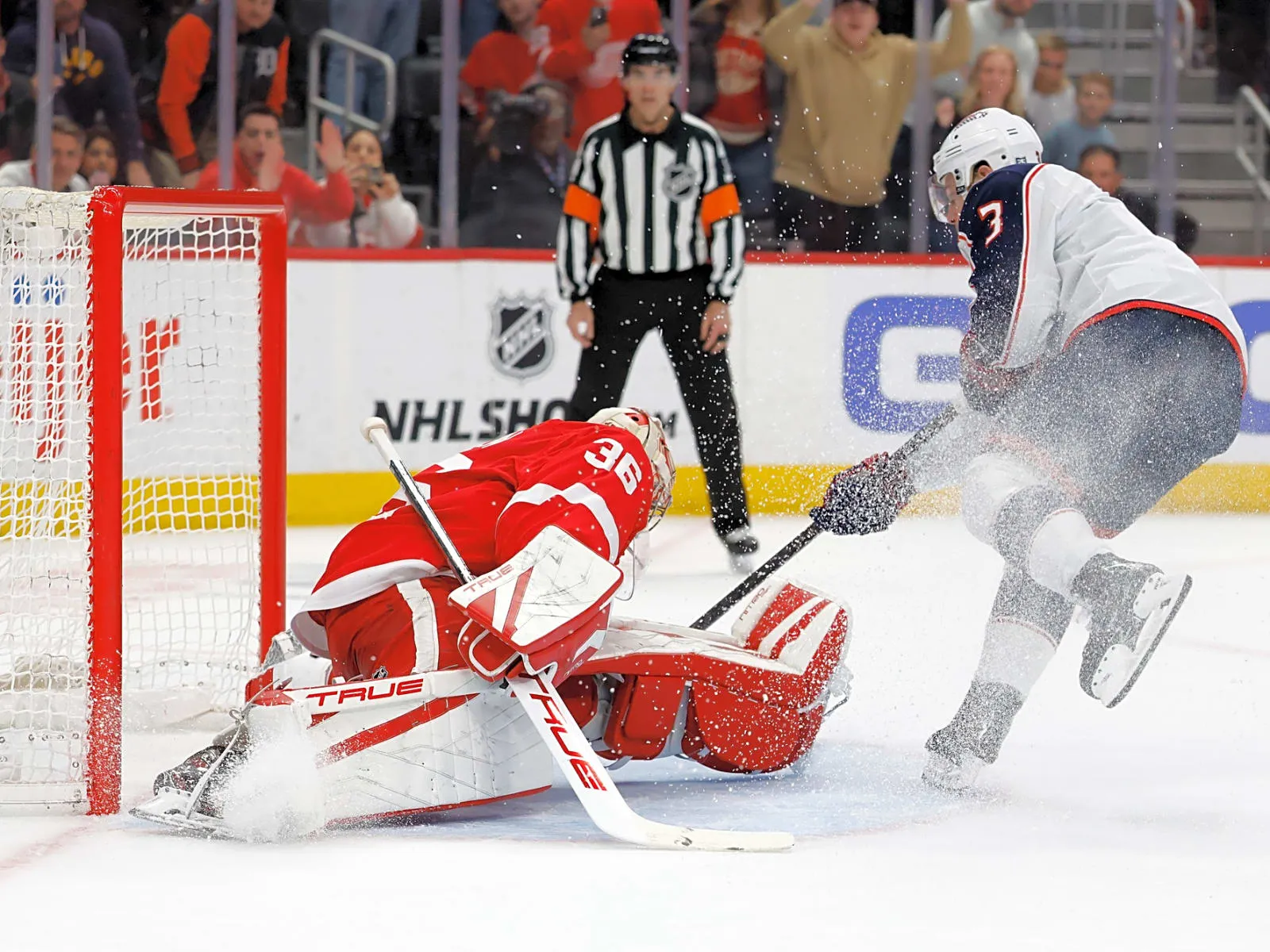
The final home game meltdown
Detroit jumped out to an early 1-0 lead in the first period but couldn’t hold it. New Jersey tied the game before the Red Wings regained the edge in the second, only for the Devils to answer back once more.
The third period brought more heartbreak. Detroit went ahead 3-2 late, but Jesper Bratt scored the go-ahead goal on an odd-man rush, assisted by Jack Hughes, beating goaltender John Gibson.[3] Bratt’s second of the night came from the left circle, flustering the Wings’ defense.
Captain Dylan Larkin took responsibility for the game-winning tally. “The fourth (goal) is on me,” he said softly in the dressing room. “It’s my responsibility to stay back and cover for the D.”
Coach Todd McLellan called the game a “microcosm of a disappointing season.” He noted the team’s failure to manage leads, a recurring issue that doomed their playoff hopes.
Fans who stayed until the end made their displeasure clear. The boos echoed through the arena, a stark contrast to the high expectations at the season’s start.
A season that teased playoffs but delivered despair
The Red Wings held a playoff spot for nearly 80% of the season, totaling 148 days according to Sportradar.[2] They led the Atlantic Division in late January and remained in wild-card contention as late as March 21.
Coming out of the Olympic break, Detroit sat in a strong position. Yet, a late-season slide saw them falter, becoming just the second team in NHL history to earn at least 69 points in their first 53 games and still miss the playoffs—the first being the 1969-70 Canadiens.
Winger Lucas Raymond reflected on the collapse. “We put ourselves in a really good position coming out of the Olympic break, and we let it slip away from us,” he said. “You look back in a lot of games where you lost late leads or came up flat, and you just can’t afford that at this time of the year.”
McLellan aimed to make the team physically tougher and better at game management in his first full season. “I thought we were making gains in those areas, but since the Olympic break, we didn’t have much of that and that cost us,” he admitted. “That starts with me.”
The Wings entered the final five games with slim hopes, needing to win out while getting help. Recent losses to the Rangers and Wild eroded morale further.[1]
Locker room reflections amid the pain
Larkin captured the mood post-game. “To hear that [boos] is very difficult. We’re down. I’m as down as I could be right now.”
McLellan was blunt about the outcome. “That’s what we earned,” he said of the fans’ reaction and the playoff miss.
Raymond urged accountability. “It’s been too many years in a row, we’ve been right there just haven’t been able to get it done. We got to figure it out and we got to figure it out fast, and take the next step.”
The dressing room, lined with photos of franchise greats, served as a reminder of better days. Players vowed to improve.
This marks the second straight year of late fades for Detroit. In prior seasons, similar March slumps dropped them from contention.
The drought in historical context
Detroit’s absence now stands at 10 seasons, surpassing Buffalo’s recently ended streak to claim the NHL’s longest active drought.[4][5] Their last playoffs came in 2015-16, ending a 25-year streak.
- Longest active NHL droughts (post-2026 season):
- Detroit Red Wings: 10 seasons (last: 2015-16)
- Anaheim Ducks: 8 seasons
- San Jose Sharks: 7 seasons
The franchise, once a powerhouse, has struggled since Steve Yzerman returned as GM in 2019. Despite young talent like Larkin and Raymond, consistency eludes them.
For more on Buffalo’s breakthrough, check Sabres clinch playoff spot and end NHL’s longest drought.[5]
Preseason projections had Detroit in the mix. See earlier analysis in projecting the Detroit Red Wings’ chances in the 2026 NHL playoffs.
Questions mount for Yzerman’s rebuild
Yzerman’s patient approach has yielded prospects but no playoffs. The 2026 miss raises doubts about the timeline.
Detroit invested in coaching with McLellan and pushed for physicality. Yet, mental resilience faltered down the stretch.
Offseason moves loom large. Free agency and the draft offer chances to bolster the roster.
Fans demand progress. Another summer without playoffs tests patience in hockey-mad Michigan.
The full game recap is available on NHL.com.[6]
As Raymond said, “We got to look ourselves in the mirror, everyone here in this building, and we got to be better than this.” The pressure builds for 2026-27. Detroit must find a way to end the drought or risk deeper fan alienation. What changes will spark the turnaround remains the offseason’s biggest question.
Frequently Asked Questions

Par Mike Jonderson
Mike Jonderson is a passionate hockey analyst and expert in advanced NHL statistics. A former college player and mathematics graduate, he combines his understanding of the game with technical expertise to develop innovative predictive models and contribute to the evolution of modern hockey analytics.