




The Tampa Bay Lightning visit Capital One Arena on November 22, 2025, for a pivotal early-season Metropolitan Division clash against the Washington Capitals. Both teams enter this matchup with identical 11-7-2 and 11-8-2 records respectively, separated by mere percentage points in the standings. This encounter represents the second meeting in less than two weeks between these Eastern Conference contenders, following Tampa Bay’s 3-2 victory on November 8. With playoff implications already taking shape, the projected lineups reveal fascinating strategic adjustments from both coaching staffs as they navigate injuries and seek optimal chemistry.
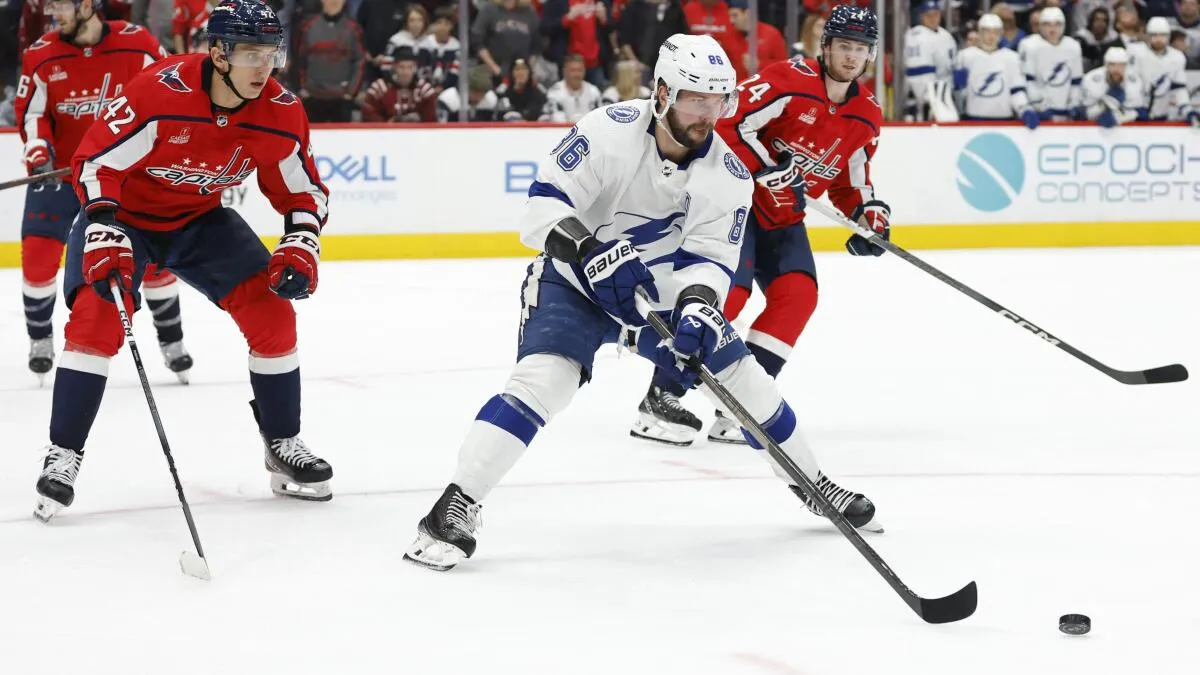
Tampa Bay Lightning projected lineup November 22 2025
Forward lines and offensive chemistry
Head coach Jon Cooper continues to rely on his proven top-six formula, with the electric trio of Brandon Hagel, Anthony Cirelli, and Nikita Kucherov leading the charge. This combination has generated consistent scoring chances through their puck possession dominance and high hockey IQ. Kucherov’s playmaking ability, paired with Hagel’s speed and Cirelli’s two-way reliability, creates matchup nightmares for opposing defenses.
The second line features Jake Guentzel and Brayden Point flanking Nick Paul, providing a balanced scoring threat with defensive responsibility. Guentzel’s sniper instincts complement Point’s elite transition game, while Paul’s physical presence creates space along the boards. This line has contributed six goals in the past four games, demonstrating its growing cohesion.
The bottom six showcases Tampa Bay’s depth with Oliver Bjorkstrand, Dominic James, and Gage Goncalves forming a defensively sound third unit. James, a rookie center, has impressed with his faceoff percentage and positioning. The fourth line of Curtis Douglas, Yanni Gourde, and Zemgus Girgensons delivers energy, physicality, and penalty-killing expertise, often facing opponents’ top lines in defensive zone starts.
Defensive pairings and blue line strategy
The Lightning’s defensive corps faces significant challenges with multiple injuries to key veterans. J.J. Moser and Darren Raddysh have emerged as the de facto top pair, logging heavy minutes in all situations. Moser’s mobility and Raddysh’s steady puck-moving ability have helped offset the absence of Ryan McDonagh and Victor Hedman.
The second pairing features Charle-Edouard D’Astous alongside Erik Cernak, providing a mix of offensive upside and physical shutdown capability. Cernak’s return from injury stabilizes this unit, though he remains on day-to-day status. This pairing will likely draw the assignment against Alex Ovechkin’s line.
The third pair of Declan Carlile and Emil Lilleberg offers youth and athleticism, with both players contributing to the penalty kill. Their ability to limit high-danger chances has been crucial during the team’s recent stretch of playing without several top defenders.
Goaltending and crease confidence
Andrei Vasilevskiy gets the nod between the pipes, bringing his usual blend of technical excellence and mental fortitude. Despite facing more rubber than usual due to the defensive corps’ injuries, Vasilevskiy maintains a .916 save percentage and 2.68 goals-against average. His performance in high-danger situations ranks among the league’s best, making him the ultimate equalizer.
Jonas Johansson serves as the backup, providing reliable relief minutes when called upon. The Lightning’s goaltending tandem has been a bright spot during their recent 7-3-1 stretch, giving the team a chance to win nightly despite missing several regulars.
Special teams units
The first power-play unit features Guentzel, Point, Kucherov, Bjorkstrand, and Raddysh, operating at a 23.4% efficiency rate. This group combines elite passing, shooting, and net-front presence. The second unit, led by Cirelli and Paul, provides a different look with more directness and physicality.
The penalty kill, anchored by Cirelli, Hagel, Moser, and Lilleberg, has been exceptional at 86.2% effectiveness. Their structured approach and aggressive pressure force opponents into perimeter shots, with Vasilevskiy cleaning up any rebounds.
Washington Capitals projected lineup November 22 2025
Forward lines and offensive weapons
The Capitals’ top line remains unchanged, with Alex Ovechkin centering Dylan Strome and Anthony Beauvillier. Ovechkin continues his march up the all-time scoring charts, having recently passed Joe Sakic for tenth place. Strome’s playmaking vision perfectly complements Ovechkin’s shot, while Beauvillier provides speed and defensive support. This trio has combined for 14 goals in the past ten games.
The second line features Aliaksei Protas between Justin Sourdif and Tom Wilson. Wilson’s MVP-caliber season continues with his blend of physical dominance and offensive production. Protas has emerged as a reliable two-way pivot, winning key faceoffs and creating space for his linemates. This line’s size and strength make it difficult to play against in the offensive zone.
The third line of Brandon Duhaime, Connor McMichael, and Ryan Leonard adds youth and energy. Leonard, the 2024 first-round pick, has exceeded expectations with his hockey sense and competitiveness. McMichael’s versatility allows coach Spencer Carbery to deploy this line in various situations.
The fourth unit of Sonny Milano, Hendrix Lapierre, and Ethen Frank provides defensive responsibility and occasional offense. Lapierre’s development as a bottom-six center has been crucial, especially with Nic Dowd sidelined by injury.
Defensive structure and pairings
Martin Fehervary and John Carlson form the top defensive pair, with Carlson continuing his Norris Trophy-caliber season. His ability to transition the puck and quarterback the power play remains elite at age 35. Fehervary’s physical, stay-at-home style balances Carlson’s offensive instincts perfectly.
The second pairing of Jakob Chychrun and Matt Roy brings size, skating ability, and shot-blocking prowess. Chychrun’s addition has transformed Washington’s defensive depth, allowing more balanced ice time across pairings. Roy’s steady positioning complements Chychrun’s active stick in the neutral zone.
The third pair features Rasmus Sandin alongside Trevor van Riemsdyk, providing puck-moving ability and experience. This pairing often starts in the offensive zone and contributes to the second power-play unit. Sandin’s offensive instincts from the blue line add another dimension to the Capitals’ attack.
Goaltending rotation and performance
Logan Thompson receives the starting assignment after a strong outing against Montreal on November 20. Thompson’s .910 save percentage and 2.75 goals-against average reflect his consistent play. His ability to track pucks through traffic and control rebounds has given the Capitals stability in net.
Charlie Lindgren provides excellent backup support, with his athleticism and competitive nature making him one of the league’s better second-string options. The Capitals’ goaltending duo has combined for a .907 team save percentage, ranking in the NHL’s top ten.
Special teams execution
Washington’s power play operates at 16.1% efficiency, with the first unit featuring Ovechkin, Wilson, Strome, Carlson, and Chychrun. Their strategy focuses on setting up Ovechkin’s one-timer from the left circle while using Wilson’s net-front presence for screens and deflections. The second unit incorporates youth with Leonard and McMichael gaining valuable experience.
The penalty kill has struggled recently at 72.1% effectiveness, ranking near the bottom of the league. The first unit of Protas, Duhaime, Fehervary, and Dylan McIlrath focuses on aggressive pressure and blocking shooting lanes. Improvement in this area remains a priority for Carbery’s coaching staff.
Key matchups and storylines for Tampa Bay Lightning vs Washington Capitals November 22 2025
Star player battles and individual matchups
The head-to-head between Nikita Kucherov and Alex Ovechkin showcases two of the game’s premier offensive talents. Kucherov’s playmaking wizardry against Ovechkin’s historic goal-scoring ability creates must-watch television. In their previous meeting on November 8, Hagel’s line contained Ovechkin effectively, limiting him to just two shots at even strength.
The battle of the top centers—Anthony Cirelli versus Dylan Strome—will determine possession and territorial advantage. Cirelli’s defensive excellence against Strome’s offensive creativity represents a classic two-way matchup. Their faceoff success rate will be crucial in establishing puck control.
Injury impact and roster management
Tampa Bay’s injury list significantly impacts their defensive depth. Missing Ryan McDonagh, Victor Hedman, and Pontus Holmberg forces younger players into expanded roles. This vulnerability has shown in recent games where the Lightning have allowed 32.4 shots per game, up from their season average of 28.1. Cooper’s ability to shelter his third pairing could determine the outcome.
Washington’s injuries to Nic Dowd and Pierre-Luc Dubois test their forward depth. Dowd’s absence particularly hurts the penalty kill and defensive zone faceoffs. Lapierre’s emergence has helped, but the Capitals miss Dowd’s experience and physicality against Tampa Bay’s skilled forwards.
Recent performance trends and momentum
The Lightning enter this contest having won seven of their last ten games, including a dramatic 2-1 overtime victory against Edmonton on November 20. Vasilevskiy’s heroics and Hagel’s clutch scoring have defined this stretch. Their ability to win without a fully healthy roster demonstrates the organization’s depth and resilience.
Washington has been more inconsistent, posting a 5-5-0 record over their last ten games. However, their 7-4 victory over Edmonton on November 19 showcased their offensive potential when clicking. Ovechkin’s pursuit of Wayne Gretzky’s goal record adds motivation, while Wilson’s career-best start provides secondary scoring.
Strategic implications and what to watch
Coaching adjustments and tactical battles
Jon Cooper’s matchup strategy will likely focus on getting Cirelli’s line out against Ovechkin whenever possible, using last change on the road through timely icings and offensive zone faceoffs. Cooper’s experience and Stanley Cup pedigree give Tampa Bay an edge in high-leverage situations.
Spencer Carbery must find ways to exploit Tampa Bay’s depleted defense, particularly targeting the third pairing with Ovechkin’s line. The Capitals’ forecheck needs to be aggressive, forcing turnovers and creating sustained offensive zone pressure. Carbery’s willingness to trust young players like Leonard and Lapierre in key moments reflects his progressive coaching approach.
Special teams battle and margin for error
The special teams matchup presents a clear advantage for Tampa Bay. Their 86.2% penalty kill against Washington’s 16.1% power play suggests the Lightning can afford to play a more physical game without fear of repercussion. Conversely, Washington must stay disciplined, as Tampa Bay’s power play converts at 16.9% and features multiple elite shooters.
The faceoff circle represents another critical battleground. With Dowd injured, Washington’s faceoff percentage drops to 48.7%, while Tampa Bay’s Cirelli and Point combine for 54.2% success. Winning draws leads to puck possession, which is crucial when playing from behind or protecting a lead.
X-factors and game-deciding elements
Tom Wilson’s impact extends beyond his impressive statistics. His physical presence can change game momentum through clean, heavy hits that wear down opponents. Tampa Bay’s younger defensemen must be prepared for his forechecking pressure and net-front presence.
The health of Erik Cernak remains a question mark for Tampa Bay. If he’s unable to go, Steven Santini or Jack Finley would draw into the lineup, further depleting an already thin defensive group. Cooper may need to rely on his forwards for additional defensive support, potentially limiting their offensive push.
Tampa Bay Lightning vs Washington Capitals November 22 2025: What it means moving forward
This matchup carries significant weight for both teams’ playoff positioning in the competitive Metropolitan Division. A Tampa Bay victory would extend their winning streak and provide confidence they can compete despite a lengthy injury list. For Washington, defending home ice against a quality opponent would validate their status as legitimate contenders, especially with Ovechkin’s chase for history ongoing.
The game also serves as a measuring stick for both organizations’ depth development. Tampa Bay’s ability to integrate young players like Dominic James and Gage Goncalves into meaningful roles demonstrates their scouting and development success. Washington’s reliance on rookies Ryan Leonard and Hendrix Lapierre shows similar faith in youth.
For fans seeking additional context on these teams’ recent performances, our Washington Capitals vs Tampa Bay Lightning projected lineup and preview for 11/8/2025 provides insights into their previous meeting. Additionally, analyzing Tampa Bay’s approach in other recent games, such as our breakdown of the Tampa Bay Lightning vs Utah Mammoth projected lineup – November 2, 2025, reveals consistent patterns in Cooper’s lineup management.
The outcome will likely hinge on which team better executes its special teams and whether Tampa Bay’s depleted defense can withstand Washington’s offensive pressure. With both teams separated by slim margins in the standings, every point matters as the season approaches its quarter mark. This game promises high-level skill, physical play, and the kind of playoff intensity that defines quality regular-season hockey in late November.
Frequently Asked Questions

Par Mike Jonderson
Mike Jonderson is a passionate hockey analyst and expert in advanced NHL statistics. A former college player and mathematics graduate, he combines his understanding of the game with technical expertise to develop innovative predictive models and contribute to the evolution of modern hockey analytics.