



































Thanksgiving arrives with statistical certainty in the NHL. For over two decades, teams perched in playoff positions during the fourth Thursday of November have enjoyed a 77 percent probability of still being there when spring arrives. This isn’t folklore—it’s a cold, hard fact backed by two decades of data since the salary cap era began. With most teams having played around 20 games, the sample size becomes significant enough to separate genuine contenders from early-season mirages.
Yet the 2025 season might challenge this tradition. The Eastern Conference has compressed like never before, with a mere nine points separating first place from last. In a typical year, that gap averages over 20 points. This unprecedented parity means more fan bases should feel anxious about their playoff prospects, even if their teams currently hold wildcard spots.
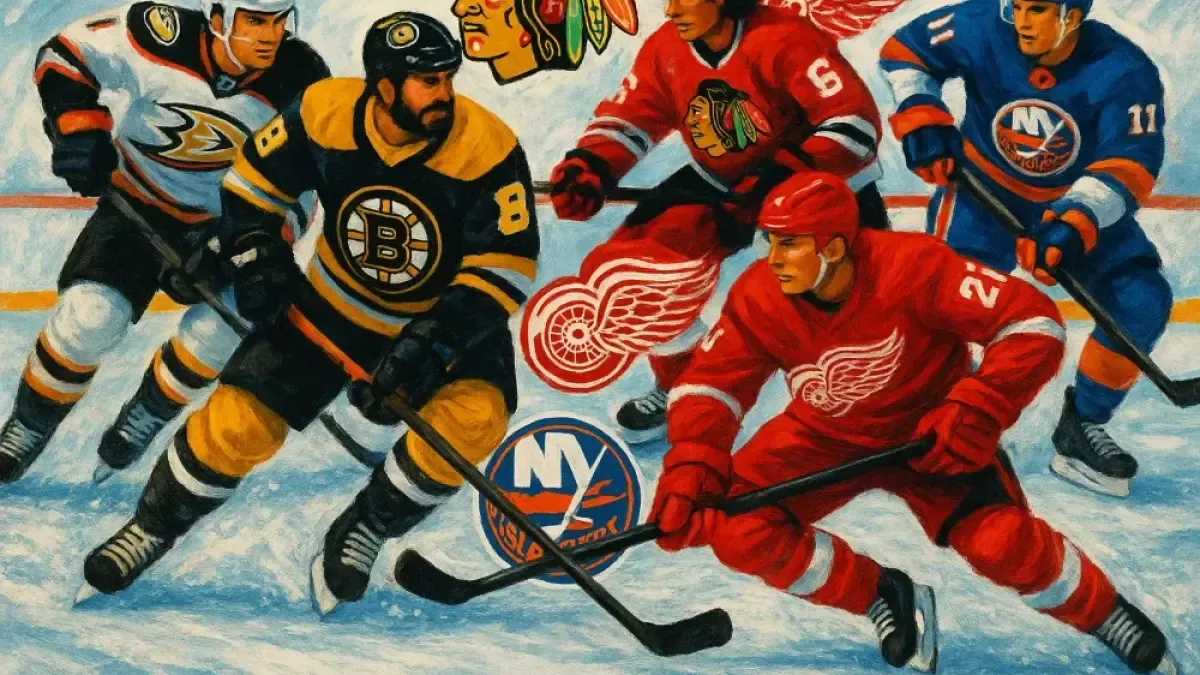
The Thanksgiving Playoff Rule: Why It Matters
The rule is simple: since 2005-06, 77.1% of teams in playoff positions on American Thanksgiving qualify for the postseason. In seasons using the current wild-card format, that number holds remarkably steady. Last year proved perfect—exactly six of eight teams in each conference maintained their positions through April.
The logic behind the benchmark makes intuitive sense. By late November, teams have played enough games to establish patterns but not so many that a rough stretch can’t be overcome. Coaches know the milestone well. “It’s not every team that ends up that way,” one veteran bench boss noted recently, “but for the most part, up to 80 percent of the playoff picture is set.”
Historical data shows just how reliable this indicator has become. In half of the non-COVID seasons since 2013-14, 13 of 16 Thanksgiving playoff teams survived. Never fewer than 11 teams kept their spots. Teams outside the picture averaged just 2.8 points back—close enough to inspire hope but far enough to require exceptional second-half surges.
Complete Nirvana: The Untouchables
Colorado has transcended mere playoff positioning. The Avalanche entered Thanksgiving week with one regulation loss in 22 games, a .841 points percentage and statistical models giving them a 99-plus percent playoff probability. What makes them truly special isn’t just star power from Nathan MacKinnon and Cale Makar—it’s that Colorado dominates even when those superstars rest.
The Hurricanes, Lightning and Stars occupy the next tier of comfort. Carolina’s plus-12 goal differential reflects typical Rod Brind’Amour structure, while Tampa Bay has weathered injuries to Victor Hedman, Brayden Point and others to sit atop the Atlantic Division. Dallas found consistency through Jason Robertson’s scoring tear and Miro Heiskanen’s two-way brilliance.
These teams aren’t just in playoff spots—they’re building foundations for deep playoff runs. Their panic levels register at zero because their challenges feel temporary and their strengths sustainable.
Panicked But Pleased: The Optimistic Contenders
A large cluster of teams enters the holiday with manageable anxiety. The Flyers discovered competent goaltending from Dan Vladar behind a Rick Tocchet system that’s seventh in expected goals against at 5-on-5. The Islanders rode rookie defenseman Matthew Schaefer’s dynamic play and Ilya Sorokin’s dominant netminding to a top-three Metro spot.
The Capitals remain competitive thanks to Logan Thompson’s 12.6 goals saved above expected and Tom Wilson’s offensive explosion. Utah sits exactly where it hoped—holding a playoff position while young stars like Logan Cooley blossom. The Penguins have shocked everyone with MVP-caliber performances from Sidney Crosby and Evgeni Malkin, while Minnesota’s heater coincided with Kirill Kaprizov’s healthy dominance and Jesper Wallstedt’s emphatic arrival in net.
These teams share a common thread: they’ve found something genuine to build around, whether it’s goaltending, star performances or system play. Their playoff odds sit between 40-60 percent, making them the season’s true bubble teams.
Health Panic: Waiting for Stars to Return
Seven teams struggle primarily because their best players wear suits instead of skates. Florida has somehow stayed afloat without Matthew Tkachuk and Aleksander Barkov, though Sergei Bobrovsky’s subpar play hasn’t helped. New Jersey lost Jack Hughes to a bizarre broken glass accident at a team dinner, forcing them to repeat last year’s formula of surviving without their franchise center.
Winnipeg faces a month without Connor Hellebuyck after corrective knee surgery. Boston and Los Angeles miss elite defensemen Charlie McAvoy and Drew Doughty respectively. The Golden Knights have navigated a maze of injuries while the Senators anticipate Brady Tkachuk’s return from a thumb injury that cost him all but three games.
The panic here is specific and temporary. Every team knows their trajectory changes dramatically when health returns. The question is whether they can stay within striking distance until then.
Goaltending Panic: The Crease Crisis
For five franchises, the problem is between the pipes and nowhere else. Edmonton has the league’s second-worst save percentage despite employing Connor McDavid and Leon Draisaitl. Stuart Skinner and Calvin Pickard alternate between respectable and atrocious, with Skinner’s four-goals-on-eight-shots disaster against Dallas highlighting the crisis.
St. Louis watched Jordan Binnington and Joel Hofer combine for minus-15.37 goals saved above expected, sinking what should be a competitive team. Montreal’s rookie Jakub Dobes regressed dramatically after a brilliant October, while Sam Montembeault’s disaster season (.852 save percentage) continues.
Detroit’s imbalance shows the challenge: Cam Talbot plays above expected, but acquisition John Gibson has been disastrous. Only Columbus shows a path forward—Jet Greaves seized the starter’s job with a .904 save percentage, though Elvis Merzlikins’ recent struggles have dragged the team save percentage down to 16th overall.
Regression Panic: Waiting for the Wheel to Turn
PDO, the hockey metric combining shooting and save percentages, identifies four teams riding unsustainable waves. Chicago’s 1.029 PDO at 5-on-5 ranks third, built on Spencer Knight’s league-leading goals saved above expected and a 12.6% shooting percentage that will likely cool.
Seattle’s goaltending trio of Matt Murray, Philipp Grubauer and Joey Daccord has posted a .938 save percentage at even strength—completely unsustainable for a team that began the season with 12% playoff odds. San Jose’s 1.022 PDO stems from Macklin Celebrini’s 20.9% shooting and Yaroslav Askarov’s brilliance, but youth and depth concerns remain.
Anaheim’s situation feels most precarious. Lukas Dostal’s Vezina-worthy play papers over the second-worst expected goals against in the league, while the offense averages 3.59 goals per game. If the goaltending wavers, the Ducks could plummet.
The 2025 Twist: When Parity Breaks the Rule
This year’s Eastern Conference throws the entire Thanksgiving premise into question. With only nine points separating top from bottom—the smallest gap in a decade—conventional wisdom might fail. Last season’s 14-point gap was already historically tight, yet six of eight Thanksgiving teams survived.
The current compression suggests more volatility ahead. As one analyst argued this week, “We could be in store for a healthy amount of absolute pandemonium and more juggling around than at a circus.” Some even propose moving the benchmark to early December, giving teams 1-3 more games to establish true patterns.
The Athletic’s data shows the Metropolitan Division particularly scrambled, with traditional powers like Toronto and the Rangers struggling while retooling teams like Boston and New York exceed expectations. This chaos could mean the 77% rule finally breaks, with more than the usual 2-3 teams per conference overcoming Thanksgiving deficits.
Beyond panicked: rebuilds beginning
Two franchises have already conceded the season. Vancouver president Jim Rutherford confirmed what many suspected: “It’s time to trade” and get younger. Pending free agents like Evander Kane will likely move as the Canucks embrace what Rutherford called “somewhat of a rebuild, not a full blown rebuild, but a rebuild-retool.”
Nashville stands at the precipice. GM Barry Trotz gave his team a seven-game ultimatum to determine their approach. With a .364 points percentage and other GMs calling about veteran players, the Predators seem destined to join Vancouver in sell mode. The question isn’t if, but when.
What Teams on the Outside Should Do
History offers hope, but not much. Last year’s Canadiens, Senators, Blues and Oilers all climbed from outside the playoff picture after Thanksgiving. Each faced deficits of just 1-5 points, however. Teams further back face nearly impossible odds.
The blueprint requires near-perfect execution. Ottawa stayed competitive without Brady Tkachuk, using strong systems play and goaltending. St. Louis and Edmonton benefited from weak competition for wildcard spots, while Montreal’s youth movement gained experience that paid dividends late.
For this year’s deeper deficits, the math looks grim. Calgary’s .396 points percentage puts them 12 points back with three teams to pass. Toronto sits last in the East with structural problems beyond Auston Matthews’ absence. The Rangers have the talent but can’t score consistently. These teams need miracles, not just good play.
The Thanksgiving Panic Index serves as both warning and opportunity. For those inside the bubble, it’s a moment to breathe deeply before the final sprint. For those outside, it’s a call to action—whether that means pushing for a miracle or planning for next season. The 77% rule has endured because it reflects hockey’s brutal math: five months of games create deserved results, and most teams get exactly what their play merits.
Yet 2025 might finally break the pattern. With standings tighter than ever and more teams actively selling at the deadline, the path back for Thanksgiving outsiders could be easier than historical data suggests. Or perhaps the rule proves its resilience once more, reminding everyone that in the NHL, November truths become April reality more often than not.
Frequently Asked Questions

Par Mike Jonderson
Mike Jonderson is a passionate hockey analyst and expert in advanced NHL statistics. A former college player and mathematics graduate, he combines his understanding of the game with technical expertise to develop innovative predictive models and contribute to the evolution of modern hockey analytics.