











The Toronto Maple Leafs entered the 2025-26 season with championship aspirations, backed by a roster flush with talent and a new head coach in Craig Berube promising a grittier, more accountable approach. Instead, the early weeks have delivered a harsh reality check. A mounting injury crisis has stripped away key contributors, exposing lineup depth concerns and forcing the coaching staff to shuffle lines seemingly every night. William Nylander, Chris Tanev, Nick Robertson, and prospect Nikita Grebenkin have all factored into Toronto’s early-season injury narrative, creating both challenges and unexpected opportunities.
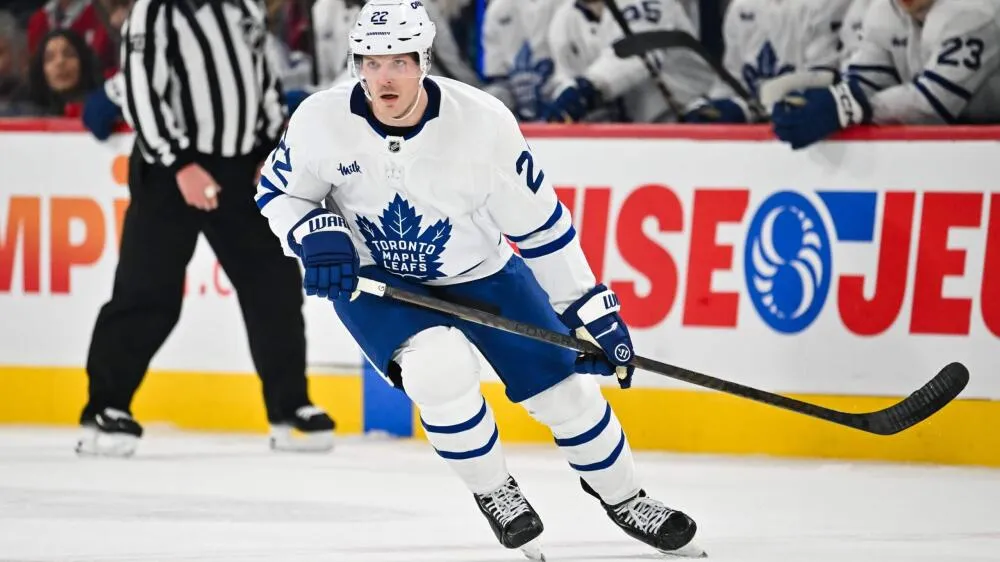
The Toronto Maple Leafs early season injuries 2025: Nylander’s lower-body setback
William Nylander’s absence has been the most glaring hole in Toronto’s lineup. The star winger, who recorded 98 points last season and was tracking toward potential career highs, left the first game of a back-to-back against Buffalo on October 24 with a lower-body injury. He didn’t return for the second game of the series, immediately raising alarm bells across Leafs Nation.
Head coach Craig Berube initially described Nylander as questionable for subsequent games, offering little in the way of concrete timelines. That ambiguity only amplified the concern among fans already jittery about the team’s slow start. Nylander returned to practice on October 27, skating alongside his teammates and rotating through drills, but his availability for game action remained uncertain. The Toronto Maple Leafs Nylander injury update 2025: timeline, severity and impact has been closely monitored throughout the early portion of the season.
The ripple effects of Nylander’s absence stretched beyond the scoresheet. Toronto’s top line, built around Auston Matthews and typically featuring Nylander as the trigger man on offense, lost its most dynamic creator. Matthews, already tracking toward an uncharacteristic 60-point pace through the season’s opening weeks, suddenly had less support in the offensive zone. The powerplay, which relies heavily on Nylander’s playmaking vision and shooting threat, looked pedestrian without him.
What made the injury particularly frustrating was its vague nature. Lower-body injuries can range from minor strains to significant muscle or joint issues, and the team’s tight-lipped approach left everyone guessing. Berube’s suggestion that Nylander could play against Calgary on October 29 offered a sliver of hope, but it also underscored the day-to-day uncertainty that has plagued Toronto’s season. The Leafs desperately needed their $11.5 million winger back in the lineup, not just for his production but for the stability he brings to the entire forward group.
Chris Tanev’s upper-body injury compounds Toronto Maple Leafs defensive woes
If losing Nylander hurt the offense, losing Chris Tanev crippled the defense. The veteran blueliner, acquired in the offseason to bring exactly the kind of steady, shutdown presence Toronto has lacked in playoff runs past, collided with New Jersey Devils forward Dawson Mercer on October 22 during a 5-2 loss. Tanev couldn’t return to the game, and the Maple Leafs placed him on injured reserve the following day.
Injured reserve carries a minimum seven-day absence from the date of the last game played, automatically ruling Tanev out for at least three contests: home-and-home games against Buffalo and a matchup with Calgary. The upper-body designation suggested a shoulder, neck, or head issue, though as with Nylander, the team kept specifics under wraps. According to The Hockey News, Berube acknowledged it was “possible” Tanev would miss time but remained hopeful the 35-year-old would return by the end of the week.
Tanev’s absence exposed just how thin Toronto’s defensive depth really is. The former Calgary Flame was brought in specifically to pair with Morgan Rielly and provide the kind of defensive conscience the Leafs have desperately needed. Without him, Toronto’s defensive pairings looked disjointed, prone to odd-man rushes, and vulnerable in their own zone. The team called up Dakota Mermis from the AHL to fill the roster spot—a decent depth player but not remotely the same caliber as Tanev.
The timing couldn’t have been worse. Toronto was already struggling defensively, allowing high-danger chances at an alarming rate and leaning heavily on goaltender Joseph Woll to bail them out. Losing Tanev meant more ice time for less experienced defensemen, more pressure on Rielly to play perfect hockey, and more chaos in the defensive zone. It also meant opposing teams could target Toronto’s weaker pairings, exploiting mismatches and generating quality scoring chances with frightening ease.
By late October, reports suggested Tanev could return by the end of the week, potentially rejoining the lineup for Toronto’s game against Philadelphia. But “could” isn’t “will,” and every game without Tanev felt like borrowed time. The Maple Leafs needed their veteran anchor back as soon as possible—before the early-season injury crisis turned into a full-blown standings disaster.
Nick Robertson seizes opportunity amid Toronto Maple Leafs early season injuries 2025
One of the few bright spots in Toronto’s injury-plagued October has been the emergence of Nick Robertson. The 23-year-old winger, who has spent much of his career yo-yoing between the NHL and AHL while battling his own injury issues, finally got a legitimate opportunity when Nylander went down. Berube inserted Robertson onto the top line alongside Matthews and Bobby McMann for Toronto’s October 30 game in Columbus, and the young forward made the most of it.
Robertson recorded a goal and an assist in more than 17 minutes of ice time during the Blue Jackets game, showing the kind of tenacity and skill that made him a second-round pick in 2019. What impressed most wasn’t just the production—it was the effort. Even in a lopsided 6-1 loss, Robertson kept competing, chasing pucks, creating chances, and refusing to give in. That kind of determination has been conspicuously absent from Toronto’s lineup during their early struggles.
Berube’s decision to promote Robertson wasn’t just about filling a roster spot; it was a statement about earning opportunity. Robertson had publicly requested a trade in the offseason, frustrated by his limited role and lack of consistent ice time. Instead of granting the request, general manager Brad Treliving kept him, betting that a coaching change and injuries might open a door. That bet looks increasingly savvy.
The question now is whether Robertson has done enough to stay in a top-six role when Nylander returns. The logical lineup would see Robertson remain on the top line with Matthews and Nylander, giving Toronto a fast, skilled trio capable of creating offense in multiple ways. Robertson’s speed complements Matthews’ power game, while Nylander’s playmaking ties it all together. It’s not a perfect fit, but it’s intriguing enough that Berube would be foolish not to at least experiment with it.
If Robertson can maintain this level of play, he transforms from trade bait into a legitimate top-six contributor—exactly the kind of depth scoring Toronto has needed in recent playoff disappointments. His emergence doesn’t solve all of Toronto’s problems, but it does give Berube another weapon to deploy and another reason to believe this team might still find its footing once healthy.
Nikita Grebenkin’s trade and early Philadelphia success
While Toronto battles through its injury crisis, one former Leafs prospect is quietly thriving elsewhere. Nikita Grebenkin, dealt to the Philadelphia Flyers along with a 2027 first-round pick in exchange for Scott Laughton last March, has made a solid early impression in the City of Brotherly Love. The 22-year-old winger has appeared in four games for Philadelphia, recording an assist while averaging just under 10 minutes per game.
The numbers don’t jump off the page, but Grebenkin’s underlying play has been encouraging. He shows the same combination of skill and physicality that made him an intriguing prospect in Toronto’s system, with smart positioning, quick hands in tight spaces, and a willingness to engage physically along the boards. The Flyers have given him sheltered minutes in a bottom-six role, allowing him to adjust to NHL speed without overwhelming defensive responsibilities.
For Philadelphia, Grebenkin represents a long-term bet—a young forward with upside who could develop into a complementary scorer over the next few seasons. For Toronto, his early success is a reminder of the cost of win-now moves. The Maple Leafs traded Grebenkin and a first-round pick to acquire Laughton, a veteran center who was supposed to provide depth and playoff experience. Instead, Laughton hasn’t played a single game for Toronto yet due to a lower-body injury that has kept him sidelined since before opening night.
According to Hockey Patrol, Berube indicated that Laughton could begin practicing with the team by early November, potentially making his Maple Leafs debut against his former team when Toronto visits Philadelphia. The irony wouldn’t be lost on anyone: Grebenkin skating for the Flyers while the player Toronto traded him for watches from the press box or skates in a limited role.
Grebenkin’s development in Philadelphia doesn’t necessarily mean the trade was a mistake—Laughton’s value will be judged over the course of the season, particularly in playoff hockey. But it does underscore a broader truth about roster construction: young players often take time to develop, and trading them for immediate help carries real opportunity cost. If Grebenkin blossoms into a 20-goal scorer in Philadelphia while Laughton provides solid but unspectacular depth play in Toronto, the Leafs might look back on this trade with regret.
Toronto Maple Leafs early season injuries 2025: Nylander, Tanev, Robertson, Grebenkin and the broader impact
The injury situation in Toronto extends beyond just Nylander and Tanev. Calle Jarnkrok remains day-to-day with a lower-body injury, robbing the Leafs of a versatile forward capable of playing up and down the lineup. Jarnkrok practiced on October 27 but was ruled out for the Calgary game, extending his absence into early November. His return, like Nylander’s and Tanev’s, remains frustratingly uncertain.
What makes this injury crisis particularly damaging is its cumulative effect. Losing one star player is manageable for a contending team—losing multiple key contributors simultaneously creates compounding problems. Lines lose chemistry, role players get pushed into situations they’re not ready for, and the margin for error shrinks to nothing. Toronto has felt every inch of that squeeze through the first few weeks of the season.
The good news, if there is any, is that most of these injuries appear short-term. Nylander, Tanev, Jarnkrok, and Laughton could all return within days of each other, potentially giving Toronto something close to a fully healthy lineup for the first time all season. When that happens, the Maple Leafs will finally be able to deploy the roster they envisioned entering the year—and prove whether their championship aspirations have merit or were just preseason optimism.
Until then, Toronto must grind through games shorthanded, relying on depth players like Robertson to step up and veterans like Matthews to carry heavier loads. Toronto Maple Leafs injury update: Woll returns and Nylander injury creates concern has been a recurring storyline throughout this challenging stretch. It’s not the October anyone in the organization hoped for, but it’s the reality they're facing.
The Toronto Maple Leafs didn’t enter the 2025-26 season expecting to fight for survival in October, but that's exactly where they find themselves. The injury bug has bitten hard, stripping away key pieces and forcing the coaching staff to cobble together lineups on the fly. William Nylander's lower-body injury robbed the offense of its most dynamic playmaker, while Chris Tanev's upper-body ailment left the defense vulnerable and overmatched. Nick Robertson has seized his opportunity, showing the kind of determination that could earn him a permanent top-six role, while Nikita Grebenkin's early success in Philadelphia serves as a bittersweet reminder of prospects traded away for win-now moves.
The road ahead remains uncertain. If Toronto can get healthy soon, there's still time to salvage the season and prove they belong among the Eastern Conference elite. But every game played without Nylander, Tanev, and others is a game that could haunt them in April. The Atlantic Division is unforgiving, and the margin for error grows thinner by the day. For now, the Maple Leafs must battle through adversity, hope for speedy recoveries, and find ways to win even when operating below full strength. The injuries may have knocked them down, but whether they stay down will define their entire season.

Par Mike Jonderson
Mike Jonderson is a passionate hockey analyst and expert in advanced NHL statistics. A former college player and mathematics graduate, he combines his understanding of the game with technical expertise to develop innovative predictive models and contribute to the evolution of modern hockey analytics.