






The Toronto Maple Leafs injury crisis of October and November 2025 has tested the organization’s depth and resilience in ways few could have predicted. What began as a manageable series of minor setbacks in training camp evolved into a full-blown roster emergency by mid-November, with key players falling at an alarming rate. The team’s medical staff worked overtime while head coach Craig Berube juggged line combinations nightly, refusing to use injuries as an excuse even as his bench grew increasingly thin. This timeline examines how the Leafs’ injury troubles unfolded over these critical two months and the impact on Toronto’s early-season performance.
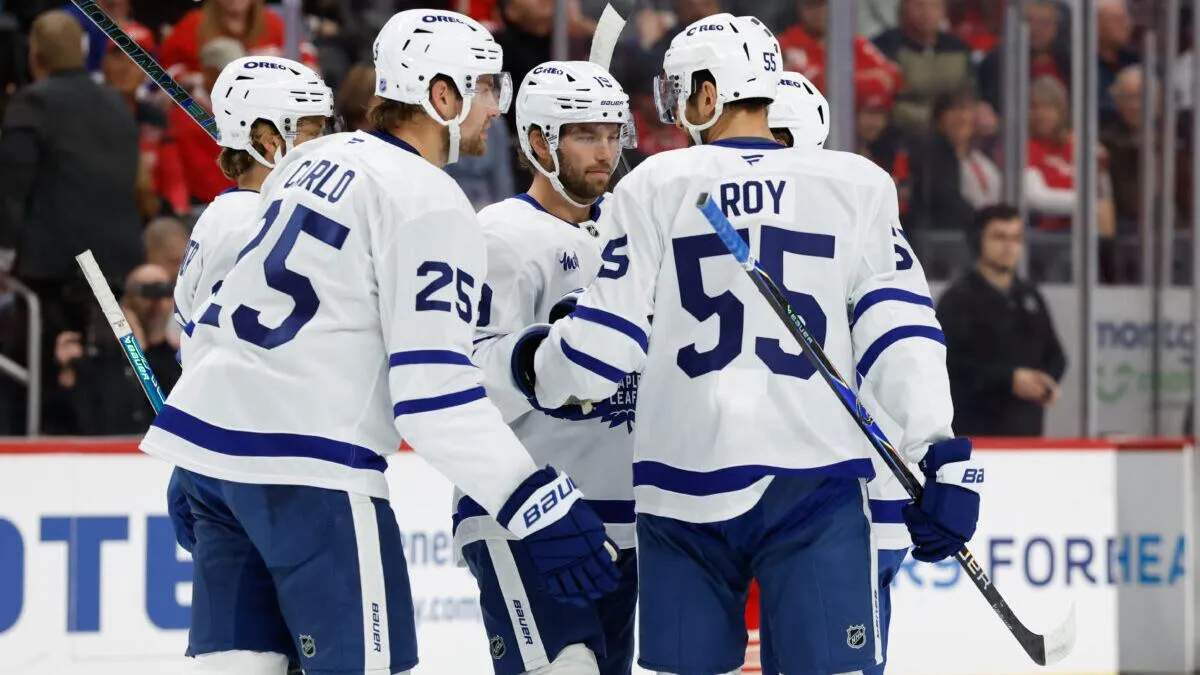
October injury setbacks for Toronto Maple Leafs in 2025 season
The Leafs’ injury problems began before the regular season even started. On October 7, defenseman Marshall Rifai was placed on long-term injured reserve with a wrist injury sustained during training camp. The move gave Toronto some salary cap flexibility but immediately depleted their defensive depth. While not a star player, Rifai’s absence forced the organization to lean on younger, less experienced blueliners earlier than anticipated.
The coaching staff initially expressed optimism that Rifai’s placement would be precautionary. However, the wrist injury proved more complicated than first disclosed. Team sources indicated the recovery process would require several weeks of rehabilitation before he could even be re-evaluated. The Leafs’ front office used the LTIR designation strategically, creating temporary cap space to make other roster moves while Rifai’s $775,000 cap hit remained off the books.
Throughout October, the Leafs managed to avoid major injury catastrophes despite a demanding early-season schedule. Minor day-to-day ailments affected several depth players, but Toronto’s core remained intact. The team finished October with a respectable record, giving fans hope that perhaps this season would be different. That optimism would prove short-lived as November brought a brutal turn of fortune.
The injury situation escalated dramatically as the calendar turned. What had been a manageable situation in October transformed into a crisis that would reshape the team’s entire season trajectory. The Leafs’ medical and training staff found themselves working around the clock as new names kept appearing on the injury report with disturbing regularity.
November injury cascade for Toronto Maple Leafs: Timeline of disaster
November 8 marked the first major blow when veteran forward Scott Laughton was placed on injured reserve retroactive to that date. Laughton, a key penalty killer and trusted bottom-six forward, had been playing through discomfort for several games before the medical staff decided to shut him down. His absence immediately impacted Toronto’s special teams and defensive zone coverage, areas where his experience and positioning proved invaluable.
The situation turned dire on November 11 during a pivotal matchup against the Boston Bruins. In a single disastrous game, the Leafs lost both their captain and their starting goaltender. Auston Matthews exited midway through the second period after taking a hit from behind from Bruins defenseman Nikita Zadorov, falling awkwardly into the boards. He left the ice gingerly and headed straight to the locker room with what was later diagnosed as a lower-body injury.
Goaltender Anthony Stolarz also left the same game after surrendering three goals on just seven shots in the first period. The nature of his upper-body injury remained unclear initially, but concerns mounted when head coach Craig Berube addressed the media. The injury was “worse than anticipated,” Berube admitted, sending shockwaves through the organization. The team ruled Stolarz out indefinitely, though officials declined to provide a specific timeline for his return.
By November 13, the Leafs officially confirmed both Matthews and Stolarz would miss significant time. Matthews was projected to miss at least a week, though the team remained deliberately vague about the exact severity. Stolarz’s status grew more concerning with each passing day. The goaltending situation became so desperate that Toronto had to rely on rookie Dennis Hildeby and an overworked Joseph Woll, with Berube admitting the team needed to carefully manage Woll’s workload to prevent further injury.
Toronto Maple Leafs injury timeline affecting core roster players
The impact on Toronto’s lineup cannot be overstated. Auston Matthews, the team’s captain and offensive engine, had finally found his rhythm after a slow start to the season. He had scored nine goals and five assists for 14 points through 17 games, including goals in four of his last five contests before the injury. His absence forced John Tavares back into the top-line center role and placed additional scoring pressure on William Nylander, who led the team with 23 points at the time.
Anthony Stolarz’s injury proved equally devastating for the crease. In 12 appearances before the injury, Stolarz had posted a 6-5-1 record with a .889 save percentage and 3.35 goals-against average. While those numbers weren’t spectacular, his experience provided stability. Without him, the Leafs had to thrust Hildeby into NHL action sooner than planned and ride Woll extensively. As one team source noted, “already down a goalie, we hung Woll out to dry,” highlighting the impossible situation facing the young netminder.
Scott Laughton’s absence rippled throughout the lineup. His versatility allowed him to play multiple forward positions and serve as a defensive conscience for younger linemates. Without him, Toronto’s bottom six struggled with consistency, and special teams showed noticeable cracks. The penalty kill, in particular, saw its effectiveness drop by nearly five percentage points during his absence.
Marshall Rifai’s placement on LTIR with the wrist injury created problems on the blue line. While not a top-pairing defenseman, his steady presence and physicality would have been valuable as the schedule intensified. By mid-November, he became eligible to return, but team doctors remained cautious about clearing him for contact, leaving the Leafs shorthanded on defense.
Impact of Toronto Maple Leafs injuries on team performance and standings
The injury wave hit just as the Leafs faced their most challenging stretch of the schedule. Toronto dropped six of seven games during one brutal mid-November stretch, their worst skid since 2019. The team fell below .500 and watched their playoff positioning evaporate. By November 22, sports analysts were openly questioning whether the season could be salvaged.
Head coach Craig Berube maintained a defiant public stance throughout the crisis. “There’s no excuses,” he told reporters after a particularly difficult loss. “We believe we have a very deep team.” However, the on-ice product told a different story. Line combinations changed nightly, defensive pairings rarely remained intact for consecutive games, and the team’s structure showed increasing cracks.
The goaltending situation created a domino effect across the entire roster. Defensemen began playing more conservatively to protect their inexperienced netminder, which limited their offensive contributions. Forwards had to cheat back defensively, reducing their scoring opportunities. The entire team seemed to play with the weight of uncertainty pressing down on them.
Front office executive Brad Treliving faced mounting pressure to address the roster holes. At one point, he fell on his sword publicly, telling media “I take full responsibility” for the slow start. While he constantly looked for ways to improve the team, he also acknowledged limitations: “I won’t be trading my way out of this,” suggesting the internal belief that the roster, when healthy, remained strong enough to compete.
Recovery timeline for Toronto Maple Leafs injured stars
As late November approached, the Leafs began receiving modestly encouraging news. Auston Matthews traveled with the team and participated in morning skates, though he remained sidelined for a fifth straight game on November 22. The team maintained his timeline as “week-to-week” rather than daily, suggesting caution but also optimism about avoiding a long-term absence. One insider report indicated Matthews could return within another week, though the Leafs were understandably guarding exact details.
The situation with Anthony Stolarz grew more concerning. After initial optimism, subsequent evaluations revealed the upper-body injury was “obviously worse than we thought,” according to Berube. The goaltender required additional testing and consultation with specialists, pushing his return indefinitely into December at earliest. This forced Toronto to explore external goaltending options, potentially including trade discussions or AHL call-ups beyond Hildeby.
Scott Laughton’s recovery progressed more predictably. Placed on IR retroactive to November 8, he became eligible to return after missing seven games. Medical staff indicated his injury responded well to treatment, and he participated in non-contact practices by late November. His return would provide an immediate boost to penalty killing and defensive zone faceoffs.
Marshall Rifai reached a major milestone in his wrist recovery by mid-November, becoming eligible to come off LTIR. However, the Leafs faced a salary cap puzzle in activating him. Team officials had to carefully time his return to ensure proper cap compliance, potentially delaying his comeback even after receiving medical clearance. The front office planned his activation for early December, giving him additional recovery time while solving the financial logistics.
The injury crisis ultimately tested Toronto’s organizational depth and mental fortitude. While November brought unprecedented challenges, the team’s refusal to make excuses suggested a resilient mindset. The timeline for recovery remained fluid, but by late November, the Leafs could finally see potential relief on the horizon. Whether they could climb back into playoff contention once healthy would define the remainder of their season.
Frequently Asked Questions

Par Mike Jonderson
Mike Jonderson is a passionate hockey analyst and expert in advanced NHL statistics. A former college player and mathematics graduate, he combines his understanding of the game with technical expertise to develop innovative predictive models and contribute to the evolution of modern hockey analytics.