











On June 28, 1994, the hockey world witnessed one of the most seismic trades in NHL history when the Toronto Maple Leafs shipped their beloved captain Wendel Clark to the Quebec Nordiques in exchange for Swedish center Mats Sundin. The deal, announced dramatically on the draft floor in Hartford, Connecticut, sent shockwaves through the hockey community and left Maple Leafs fans reeling. At the time, it seemed almost unthinkable to trade away a 46-goal scorer who embodied everything Toronto fans cherished about their team. Yet three decades later, this blockbuster swap stands as one of the shrewdest moves in franchise history and a masterclass in understanding both player value and market timing.
The wendel clark for mats sundin trade analysis reveals layers of complexity that extend far beyond the simple exchange of two star centers. This was a deal rooted in careful calculation, understanding of aging curves, contract leverage, and the willingness to absorb short-term criticism for long-term gain. General manager Cliff Fletcher made a decision that required tremendous courage, trading away the most popular player in Toronto at the peak of his market value to acquire a young superstar who would define the next era of Maple Leafs hockey.
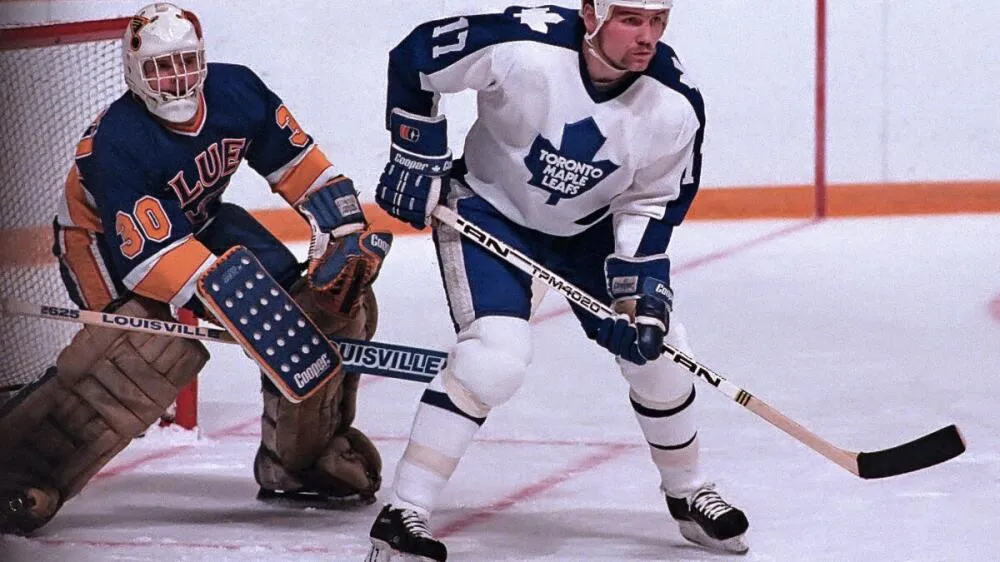
The context behind the wendel clark for mats sundin trade analysis
The 1993-94 season had been a rollercoaster for both franchises involved in this historic deal. Toronto had just completed back-to-back appearances in the Western Conference Finals, losing to Wayne Gretzky’s Los Angeles Kings in 1993 and falling short again in 1994. The team had built a contender around Doug Gilmour, and Clark had just posted career-high numbers with 46 goals in only 64 games. He was playing on a dominant line alongside Gilmour and Dave Andreychuk, and his combination of scoring prowess and physical intimidation made him irreplaceable in the eyes of most fans.
For Quebec, the situation was markedly different. The Nordiques had been eliminated by Montreal in the 1993 playoffs and missed the postseason entirely in 1994. Despite possessing an embarrassment of riches at center ice with Joe Sakic, Peter Forsberg, Mike Ricci, and Sundin, the team lacked the grit and defensive stability needed for playoff success. Owner Marcel Aubut had fired general manager and head coach Pierre Page just a month before the draft, bringing in former player agent Pierre Lacroix to reshape the roster.
The trade’s genesis began months earlier, according to then-Nordiques assistant GM Sherry Bassin, who was scouting at Maple Leaf Gardens during the winter when the Leafs inquired about acquiring Ricci. Bassin mentioned Sundin’s name to Fletcher, asking for Clark and defenseman Sylvain Lefebvre in return. Fletcher’s initial reaction captured the magnitude of what was being proposed: “Are you f—-ing crazy? If I put Clark’s name in the deal, you might as well put mine in there, too, because they’ll run me out of town.”
But Fletcher was also thinking like a general manager, not a fan. He recognized that Clark’s body had absorbed tremendous punishment over his nine-year career. The Saskatchewan farm boy played with reckless abandon, fighting heavyweights, throwing bone-crushing hits, and sacrificing his body every shift. Fletcher saw an asset whose trade value would never be higher and whose physical decline was inevitable. The GM also knew Lacroix was in a difficult negotiating position, as Sundin was pushing hard for a contract renegotiation that the stubborn former agent refused to consider.
The details of the blockbuster swap
The final trade package was far more extensive than a simple Clark-for-Sundin exchange. Toronto sent Clark, defenseman Sylvain Lefebvre, prospect Landon Wilson, and their first-round pick (22nd overall) to Quebec. In return, the Maple Leafs acquired Sundin, veteran defenseman Garth Butcher, prospect Todd Warriner, and Quebec’s first-round selection (10th overall).
The timing and location of the announcement amplified its dramatic impact. As the draft proceedings unfolded at the Hartford Civic Centre, rumors swirled among the assembled media and executives. When the trade was finally announced from the draft floor, an audible gasp rippled through the crowd. This wasn’t just a significant deal—it was a seismic shift that would reshape two franchises.
Clark himself learned about the trade in perhaps the most anticlimactic way possible. While at an Esso gas station in downtown Toronto, he turned on his car radio to hear who the Leafs had selected in the first round. Instead, he heard that he was no longer a Maple Leaf. For a player who believed he would spend his entire career in Toronto, the shock was devastating. The usually stoic Clark openly cried when speaking to the media afterward.
The fan reaction was equally emotional. Thousands of supporters showed up at Mel Lastman Square for Clark’s impromptu send-off, demonstrating the deep connection between player and city. Don Cherry, never one to miss an opportunity for passionate commentary, used his Coach’s Corner platform to criticize the trade and predict doom for the Maple Leafs. Fletcher himself joked years later that “They wouldn’t let me into bars and restaurants in Toronto” following the deal.
The complete details of the negotiation remain somewhat murky, with different principals offering varying accounts. Fletcher recalls dealing primarily with Lacroix, while Watters believes the final negotiations centered on money between Fletcher and Aubut. Bassin claims he quarterbacked the entire transaction, speaking with both Fletcher and Watters at different times. What’s clear is that the deal came together either the night before the draft or on draft morning itself, reflecting an era when general managers had far more autonomy to make snap decisions.
Immediate aftermath and career trajectories
The short-term results seemed to validate the critics’ concerns. Clark played just one season in Quebec before the franchise relocated to Denver, and he was traded to the New York Islanders in a three-way deal that brought Claude Lemieux to the Avalanche. He never found the same chemistry or success he’d enjoyed in Toronto, bouncing between the Islanders, Lightning, Red Wings, and Blackhawks before Fletcher reacquired him for Toronto in March 1996—giving up defenseman Kenny Jonsson and a fourth-round pick that became goaltender Roberto Luongo.
Fletcher’s comment upon reacquiring Clark became infamous. “Wendel was so popular I had to bring him back,” he explained, adding his “draft schmaft” quip that would haunt him when Luongo developed into a future Hall of Famer. Clark finished his career with the Maple Leafs in 1999-2000, but his best years were behind him. The physical style that made him a legend had taken its toll.
For Quebec, the trade initially seemed to address their needs. Lefebvre provided steady defensive play and ultimately won a Stanley Cup with the Colorado Avalanche in 1996. He played nine more NHL seasons, making him the most successful player Quebec received in the deal from a longevity standpoint. Wilson, a first-round pick by Toronto in 1993, never suited up for the Nordiques/Avalanche, while the 22nd overall selection became defenseman Jeff Kealty, who never played an NHL game.
Warriner, who had been Toronto’s fourth overall pick in 1992, thought he was part of Quebec’s future plans. He had represented Team Canada at the 1994 Winter Olympics when Cliff Fletcher made a point of meeting his parents in Lillehammer and praising their son. “My dad thought that was a bit odd,” Warriner recalled. “It made more sense later.” He ended up playing six seasons for Toronto, scoring 36 goals before moving to Tampa Bay.
Long-term impact reveals clear winner in wendel clark for mats sundin trade analysis
With the benefit of three decades of perspective, the wendel clark for mats sundin trade analysis shows an overwhelmingly lopsided result in Toronto’s favor. Sundin played 13 seasons with the Maple Leafs, becoming the franchise’s all-time leading scorer with 987 points in a Toronto uniform. He served as team captain for a decade, leading by example with his combination of skill, size, and two-way responsibility. According to The Hockey Writers, Fletcher considered Sundin’s leadership abilities underrated: “What’s underrated is that he was a great captain. He challenged our players.”
Sundin’s tenure included multiple playoff appearances and two trips to the Eastern Conference Finals. While the Leafs struggled in the two seasons immediately following the trade—losing in the first round in 1995 and missing the playoffs in 1996—they returned to playoff contention in 1999 and remained competitive throughout most of Sundin’s captaincy. His consistency was remarkable: he posted 11 seasons with at least 70 points and seven seasons with 30 or more goals as a Maple Leaf.
The Swedish center’s impact extended beyond statistics. As the first European player selected first overall in NHL history (by Quebec in 1989), Sundin helped pave the way for international players in Toronto and throughout the league. His professionalism, work ethic, and dignified approach to the captaincy set standards that influenced the organization for years. He was inducted into the Hockey Hall of Fame on the first ballot in 2012, cementing his legacy as one of the game’s true stars.
Clark, meanwhile, remains beloved in Toronto despite the trade. His No. 17 hangs in the rafters at Scotiabank Arena, and he’s been inducted into both the Ontario and Saskatchewan Halls of Fame. Maple Leafs fans still argue he deserves Hockey Hall of Fame recognition, though his career statistics—377 goals and 564 points in 793 games—fall short of the typical threshold. If there were a Hall of Fame category for heart and toughness, Clark would be a first-ballot selection.
The defensive swap heavily favored Quebec, with Lefebvre providing far more value than Butcher, who played just 45 games for Toronto before retiring at age 32. But this minor victory for the Nordiques paled in comparison to the massive advantage Toronto gained in the centerpiece exchange.
The wendel clark for mats sundin trade analysis in modern context
Examining this trade through a contemporary lens reveals fascinating parallels and contrasts with today’s NHL. The deal occurred in an era when general managers wielded far more unilateral power. Fletcher could walk across the draft floor, strike up a conversation with another GM, and complete a significant transaction on the spot. The process was simpler, relationships between GMs often spanned decades, and there was no salary cap to complicate matters.
“You could make more things happen then,” Fletcher reflected years later. “Things are much more different now for GMs than when I was doing the job. Things just don’t happen like they used to. In the old days, you could make a deal. Now, it’s like you have to match dollar-for-dollar.” The complexity of modern roster management—with salary cap calculations, no-movement clauses, analytics departments, and layers of front-office consensus—makes blockbuster trades far more difficult to execute.
Yet the core principle remains relevant: trading a beloved player at peak value requires courage and conviction. The comparison to the Toronto Raptors’ 2018 trade of DeMar DeRozan for Kawhi Leonard is apt. Both deals involved franchise icons being moved for superstars, both generated immediate fan backlash, and both ultimately proved correct. The Raptors won the 2019 NBA championship, vindicating management’s difficult decision.
For current Maple Leafs management, the lessons from the wendel clark for mats sundin trade analysis remain instructive. Making decisions based on long-term competitive advantage rather than short-term popularity, understanding aging curves and injury risk, and having the intestinal fortitude to withstand criticism are all essential qualities for successful general managers. Analyzing blockbuster trades provides valuable insights into roster construction and value assessment.
Fletcher’s willingness to absorb tremendous criticism in pursuit of what he believed was the right hockey decision exemplifies leadership. He knew Clark’s popularity made the trade radioactive, but he also recognized that Sundin represented a generational talent entering his prime while Clark, despite his 46-goal season, was a physical player whose body was beginning to break down. The trade required looking past emotion and sentiment to see the cold, hard reality of player evaluation.
Why timing made this trade possible
The wendel clark for mats sundin trade analysis must consider the unique circumstances that allowed such a deal to materialize. Several factors aligned to create the opportunity. First, Lacroix’s contract dispute with Sundin created genuine friction within the Quebec organization. The young center wanted his deal renegotiated, while Lacroix—having spent years as an agent telling teams not to renegotiate contracts—refused on principle. This philosophical stalemate created trade motivation.
Second, the Nordiques possessed organizational depth at center that made Sundin expendable in their eyes. With Sakic, Forsberg, and Ricci all on the roster, moving one elite center for immediate help on defense and toughness up front seemed logical. The franchise was also in transition, with the Colorado move looming (though not yet announced), creating additional uncertainty.
Third, Fletcher recognized market dynamics. He understood that Clark’s value would never be higher than after a 46-goal season, and that the inevitable physical decline was coming. Trading a player one year too early is preferable to trading him one year too late—a maxim proven countless times in NHL history.
Fourth, the personal relationships between the executives involved facilitated negotiations. Despite the complexity and magnitude of the trade, discussions remained productive because the principals knew and trusted each other. In today’s more corporate NHL environment, such relationships are less common, making blockbusters harder to complete.
Finally, both teams believed they were improving. This wasn’t a salary dump or a rebuilding fire sale. Quebec genuinely thought Clark’s toughness and goal-scoring would elevate them, while Toronto believed Sundin’s age, talent, and potential made him the better long-term investment. That mutual conviction—even if one side proved dramatically more correct—allowed the deal to happen.
The human element in franchise-altering decisions
Beyond the statistics and strategic considerations, the wendel clark for mats sundin trade analysis must acknowledge the human cost of such transactions. Clark’s emotional reaction—crying in front of the media, something the tough-as-nails forward rarely did—revealed the depth of his connection to Toronto. He had been drafted by the Leafs, developed with the organization, become their captain, and envisioned finishing his career there. The trade shattered that vision.
For Fletcher, the decision carried professional risk. As he joked about not being welcomed in Toronto restaurants, there was underlying truth. Trading a beloved captain who just scored 46 goals invited tremendous scrutiny. If Sundin had struggled or been injured, Fletcher’s tenure would be remembered very differently. The pressure of making such a call, knowing the entire fanbase would initially oppose it, requires a rare combination of confidence and conviction.
Warriner’s experience illustrated the uncertainty prospects face. He believed he was part of Quebec’s plans, having been a high draft pick and Olympic team member. Suddenly finding himself traded to Toronto—while ultimately positive for his career—underscored how quickly circumstances can change in professional hockey.
Even Don Cherry’s passionate criticism on Coach’s Corner reflected the emotional investment people make in sports figures. Cherry wasn’t analyzing asset management or aging curves; he was expressing the hurt and betrayal fans felt seeing their hero leave. That Fletcher proved correct didn’t diminish the legitimacy of those initial emotions.
The trade also affected families. Clark’s wife and children had built a life in Toronto. Sundin had to uproot from Quebec and take over as the centerpiece of hockey’s most demanding market. These human considerations don’t change whether a trade is analytically sound, but they remind us that spreadsheets and projections involve real people making difficult adjustments.
Three decades after the wendel clark for mats sundin trade analysis shocked the hockey world, its legacy is secure as one of the most one-sided deals in NHL history—in Toronto’s favor. Fletcher’s courage to make an unpopular decision, his ability to evaluate talent and project future performance, and his willingness to endure criticism for what he believed was right all combined to reshape the Maple Leafs franchise. Sundin’s 13 years of excellence, his Hall of Fame induction, and his standing as one of the greatest players in franchise history vindicate a trade that, on June 28, 1994, seemed destined to destroy Fletcher’s reputation. Instead, it secured his legacy as a bold, brilliant general manager who understood that sometimes the hardest decisions yield the greatest rewards.

Par Mike Jonderson
Mike Jonderson is a passionate hockey analyst and expert in advanced NHL statistics. A former college player and mathematics graduate, he combines his understanding of the game with technical expertise to develop innovative predictive models and contribute to the evolution of modern hockey analytics.