





Slow start, strong middle, puzzling finish. The story writes itself for the Buffalo Sabres this season. Fans who filled KeyBank Center with growing optimism watched a team flash brilliance one night and look completely lost the next. Coaches talk about process. Players promise consistency. Yet the scoreboard and standings tell a different story—one of a hockey club still searching for its identity two months into the campaign.
What makes this season particularly frustrating is the pattern itself. The Sabres haven’t merely struggled; they’ve yo-yoed through peaks and valleys with dizzying speed. A dominant win against a top conference opponent gets erased by a flat performance against a rebuilding squad. String together three solid periods, then disappear for the next six. For a franchise desperate to return to playoff relevance, this pattern raises difficult questions about roster construction, system execution, and mental fortitude.
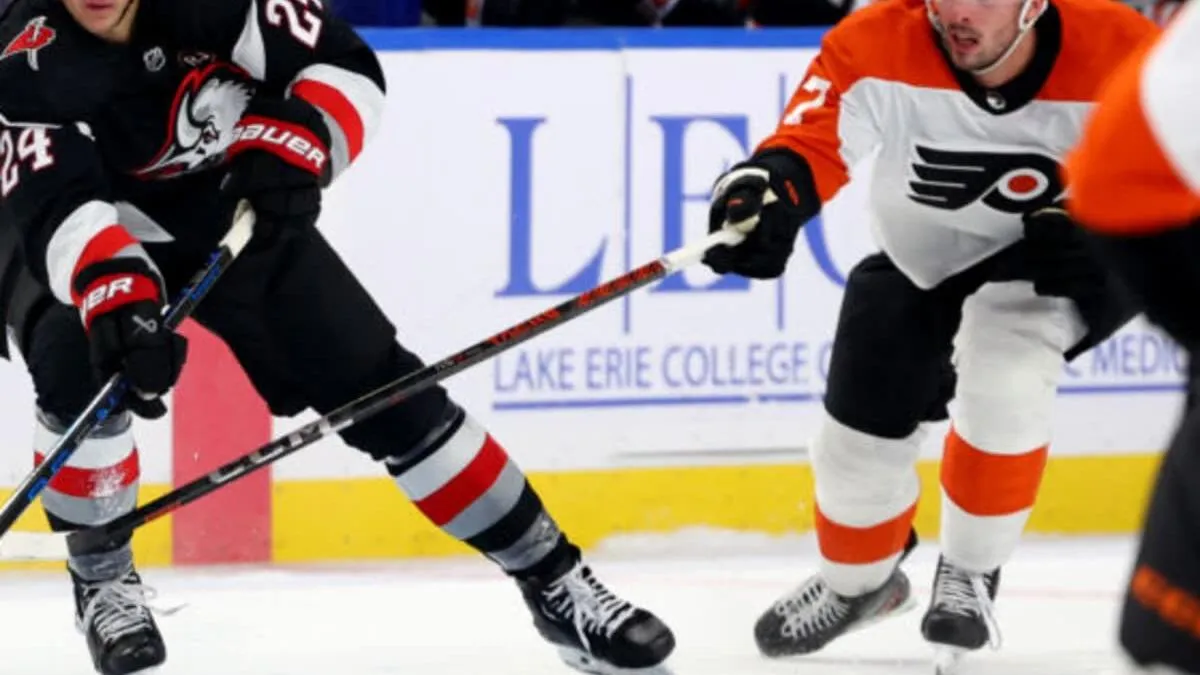
Understanding the root causes of buffalo sabres inconsistent play this season
The inconsistency shows up in every corner of the stat sheet. One night the power play clicks at 30 percent efficiency, the next it goes 0-for-5 with shorthanded chances against. The penalty kill ranks in the top ten league-wide for stretches, then suddenly surrenders goals on three consecutive opportunities. These aren’t random blips—they reveal deeper structural issues that opponents have begun exploiting.
Coaching staff adjustments mid-game have shown mixed results. Head coach Don Granato has shuffled line combinations with increasing frequency, searching for chemistry that sometimes appears and vanishes within the same period. The underlying analytics paint a picture of a team that dominates expected goals for 40 minutes, then collapses in defensive zone coverage for 20. This Jekyll-and-Hyde act leaves goaltenders exposed and confidence shattered.
Youth movement growing pains
Buffalo’s reliance on young talent creates natural volatility. Peyton Krebs, Jack Quinn, and JJ Peterka possess game-breaking speed and skill, but NHL consistency requires experience that only time provides. These players regularly create highlight-reel goals, yet their defensive positioning and decision-making under pressure remain works in progress. The coaching staff accepts these growing pains as part of a necessary rebuild, but the fanbase’s patience wears thin when mistakes cost critical points in the standings.
Veteran leadership was supposed to provide stability. Kyle Okposo and Zemgus Girgensons offer locker-room presence, but their on-ice impact has diminished. The gap between the veterans’ voices and their production creates a disconnect. Young players hear the right messages but lack on-ice examples to follow consistently. This leadership vacuum appears most glaringly during third-period collapses, where composure evaporates and panic sets in.
Special teams: The epicenter of buffalo sabres inconsistent play this season
No area better illustrates Buffalo’s struggles than special teams. The power play, stocked with elite talent like Tage Thompson and Rasmus Dahlin, owns the potential to rank among the league’s best. In October, it converted at a 26 percent clip. November delivered a cold streak below 12 percent. The difference isn’t effort—it’s execution under pressure. When opponents apply aggressive penalty-kill forechecks, Buffalo’s breakouts become predictable, forcing low-percentage shots from the perimeter.
The penalty kill tells a similar story. Early-season success stemmed from aggressive shot-blocking and quick clears. As the schedule intensified, teams adjusted by using more drop passes and lateral movement, forcing Buffalo’s killers to chase instead of dictate. The results show up in the numbers: 12 shorthanded goals against in the last 15 games after surrendering just three in the first month. These swings directly correlate with wins and losses.
Goaltending carousel compounds issues
Craig Anderson’s veteran steadiness masked many flaws early. When injuries forced Ukko-Pekka Luukkonen and Eric Comrie into extended action, the inconsistencies magnified. Luukkonen shows flashes of being a legitimate NHL starter, posting two shutouts in a five-game stretch, then allows four goals on 19 shots the following week. Comrie’s confidence appears shaken after several rough outings where defensive breakdowns left him vulnerable.
The goaltending instability forces defensemen to play more conservatively, which limits offensive activation from the back end. Rasmus Dahlin’s point production has dropped nearly 30 percent from his breakout campaign last year, partly because he’s been forced to prioritize defensive responsibility over joining the rush. This trickle-down effect suffocates the entire offensive system, creating a feedback loop of poor play.
System breakdowns and tactical adjustments
The Sabres’ tactical identity was supposed to be speed and puck possession. Through the first 20 games, they controlled 52 percent of five-on-five shot attempts, a significant improvement over previous seasons. However, that number has cratered to 46 percent in recent weeks. Opponents have figured out that aggressive forechecking against Buffalo’s young defense corps produces turnovers in dangerous areas. The Sabres continue trying to make skill plays through the neutral zone instead of opting for simpler chip-and-chase hockey when pressured.
Video sessions have exposed repetitive mistakes. Defensive zone coverage collapses too deep, leaving the points open for opposing defensemen to unleash uncontested shots. Offensive zone entries lack variation—teams stack the blue line and force giveaways. The coaching staff’s message about playing fast sometimes translates to playing rushed, with players making decisions before scanning the ice properly. This mental fatigue manifests most clearly in the second half of back-to-back games, where Buffalo’s record sits at 2-6-1.
Key statistical indicators of inconsistency
- Goal differential by period: Plus-5 in first periods, minus-8 in third periods
- Win rate when scoring first: 58 percent (league average is 68 percent)
- Save percentage in second games of back-to-backs: .885 compared to .912 in rested situations
- Power-play efficiency vs. top-10 penalty kills: 11.3 percent. Against bottom-10 units: 28.7 percent
- Wins when trailing after two periods: Zero
These numbers reveal a team that starts strong but lacks the conditioning or composure to close out games. The dramatic splits between performance against good and bad teams suggest Buffalo plays to its competition level—a classic hallmark of an immature roster.
Looking ahead: Breaking the cycle of buffalo sabres inconsistent play this season
General manager Kevyn Adams faces difficult decisions approaching the trade deadline. Does he sacrifice future assets for veteran help to stabilize the present? Or does he stay patient, allowing this youth movement to mature organically? The answer likely depends on whether Buffalo remains within striking distance of a wild-card spot through January. Every inconsistent stretch makes the argument for patience harder to sell to a starving fanbase.
The schedule ahead offers both challenge and opportunity. A brutal five-game road trip against Western Conference powerhouses will test mental toughness. Following that, a homestand against fellow bubble teams presents a chance to bank points and build momentum. How the Sabres navigate this stretch could define the season’s narrative. String together a few consistent performances, and playoff talk becomes realistic. Another swoon might trigger front-office changes and increased scrutiny on the coaching staff.
Internal pieces that could provide stability
Granato recently moved Dylan Cozens to center the second line, hoping his two-way reliability can provide a stabilizing presence. Early returns show improved possession numbers, though goal production remains sporadic. The return of injured winger Alex Tuch from IR should add veteran experience and net-front presence, potentially sparking the dormant power play. Perhaps most importantly, the coaching staff has simplified defensive zone responsibilities, asking players to focus on clearing the puck over making perfect breakout passes.
These adjustments represent acknowledgment that talent alone doesn’t win games. Structure, discipline, and mental toughness matter more during the grind of an 82-game season. For a franchise that hasn’t tasted playoff hockey in over a decade, learning these lessons feels agonizingly slow. Yet the alternative—abandoning the rebuild—would reset progress to zero.
The remainder of the season will reveal whether this Sabres squad can mature in real-time or if the inconsistency reflects fundamental roster flaws that require another offseason overhaul. Fans have seen enough flashes to believe in the potential. What they need now is proof that potential can become productivity, night after night, for 60 full minutes. Only then will the endless cycle of hope and heartbreak finally break.
Frequently Asked Questions

Par Mike Jonderson
Mike Jonderson is a passionate hockey analyst and expert in advanced NHL statistics. A former college player and mathematics graduate, he combines his understanding of the game with technical expertise to develop innovative predictive models and contribute to the evolution of modern hockey analytics.