






The Buffalo Sabres delivered their most potent offensive performance of the season, routing the Chicago Blackhawks 9-3 at KeyBank Center on November 21, 2025. The victory marked Buffalo’s third win in four games and showcased a balanced attack that saw seven different skaters record multi-point performances. Jason Zucker, returning from an eight-game absence due to illness, immediately made his presence felt with a goal and two assists, while Josh Doan scored twice to pace the Sabres’ onslaught.
For Chicago, the lopsided defeat represented a concerning step backward after building momentum through a six-game point streak. The Blackhawks had entered the matchup following a heartbreaking 3-2 loss to Seattle the previous night, where they surrendered three third-period goals after holding a 2-0 lead. Fatigue appeared to factor into their performance against Buffalo, as defensive breakdowns and costly turnovers plagued them throughout the contest.
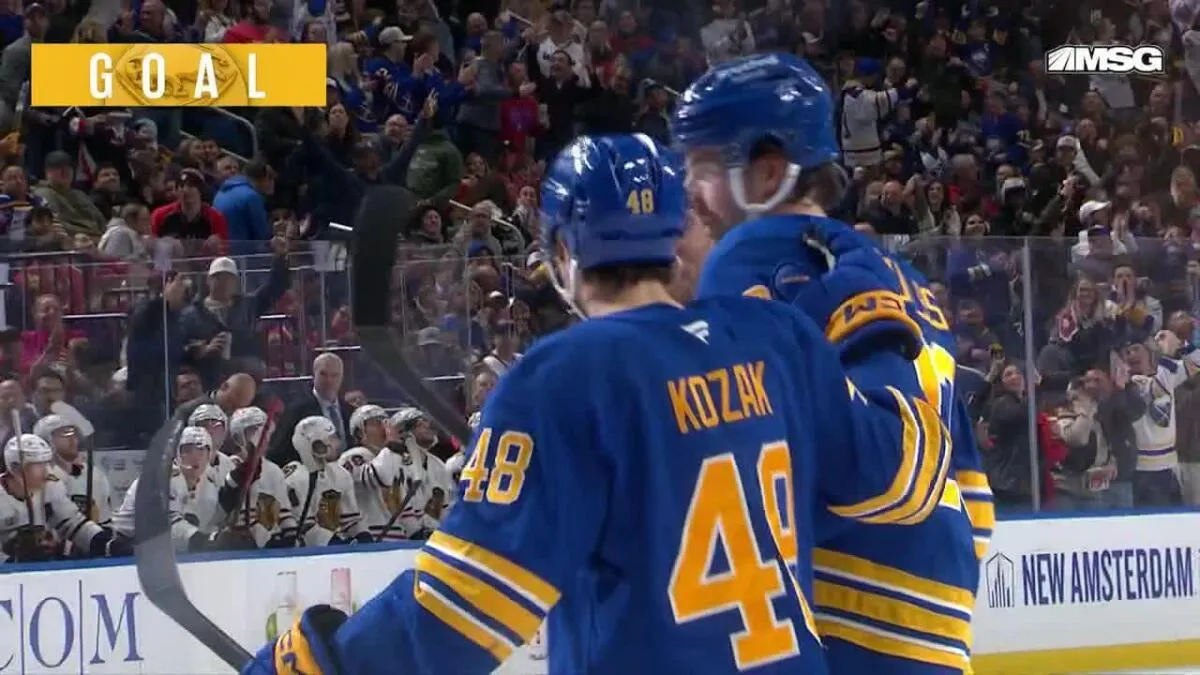
Game flow: how Buffalo built an insurmountable lead
The Sabres established their dominance early, scoring three times in the opening period while controlling possession and limiting Chicago’s quality scoring chances. Buffalo’s forecheck consistently disrupted Chicago’s breakout attempts, creating turnovers that transitioned directly into offensive opportunities. The Blackhawks struggled to contain Buffalo’s speed through the neutral zone, a weakness the Sabres exploited repeatedly.
Chicago’s defensive structure, which had been solid during their recent point streak, completely unraveled as the game progressed. The Blackhawks allowed nine goals on just 30 shots against, with goaltender Arvid Soderblom receiving little support from the skaters in front of him. Backup netminder Soderblom, starting in the second game of a back-to-back situation, made 21 saves but faced numerous high-danger opportunities from point-blank range.
The physical intensity remained relatively low despite the blowout scoreline, as both teams focused on special teams play and positional systems. Buffalo converted on one of their power-play opportunities while successfully killing off both Chicago penalties, showcasing improved discipline and execution in crucial situations.
First period fireworks set the tone
Buffalo struck first at 13:57 when Josh Doan capitalized on his own rebound, tucking the puck past Soderblom’s left pad after a sustained offensive zone presence. The goal energized the home crowd and established momentum the Sabres would never relinquish. Just 82 seconds later, Jason Zucker doubled the advantage, finishing a beautiful no-look backhand feed from Jack Quinn that left Soderblom helpless on the blocker side.
The Sabres continued pressing, and their efforts paid off on the power play at 17:33. Bowen Byram expertly redirected Alex Tuch’s diagonal cross-ice pass, sneaking the puck under Soderblom’s right arm to push the lead to 3-0. Chicago finally responded before the intermission when Tyler Bertuzzi gathered a loose puck in the slot and backhanded it over Luukkonen’s glove with just 48 seconds remaining in the period.
Middle frame sees Buffalo pull away decisively
The second period began disastrously for Chicago, as Buffalo scored twice within eight seconds to essentially put the game out of reach. Ryan McLeod wristed a shot under Soderblom’s right arm from the right hash marks at 5:42, and Mattias Samuelsson’s point shot deflected off Blackhawks defenseman Louis Crevier and into the net at 5:50, giving Buffalo a 5-1 advantage.
Alex Vlasic briefly stemmed the tide for Chicago, beating a screened Ukko-Pekka Luukkonen from above the right faceoff circle to make it 5-2 at 14:45. However, any hopes of a comeback vanished when Doan struck again at 17:31, firing short-side from the right circle to restore the four-goal cushion. The period ended with Buffalo firmly in control, outshooting Chicago 15-9 in the frame.
Third period completes the demolition
Chicago showed brief life just 24 seconds into the final period when Bertuzzi tipped Connor Bedard’s shot on the power play, pulling the Blackhawks within 6-3. The momentum proved fleeting, however, as Tage Thompson responded just 92 seconds later, driving to the net and slipping the puck under Soderblom’s pads for a 7-3 lead. Jack Quinn added Buffalo’s eighth goal at 7:07, roofing a wrist shot under the crossbar with precision.
Defenseman Jacob Bryson capped the scoring at 16:22, finding a loose puck in the slot and tucking it around Soderblom at the left post for the 9-3 final. The goal prompted chants of “we want 10” from the satisfied Buffalo faithful, who watched their team dominate from start to finish. Despite the blowout, both teams played out the final minutes without incident, focusing on structured play and avoiding potential injuries.
Key performances and storylines
The Sabres’ offensive explosion featured contributions throughout the lineup, demonstrating the depth that general manager Kevyn Adams has worked to establish. Seven players finished with two or more points, including the entire top line of Josh Doan, Tage Thompson, and Alex Tuch. This balanced scoring attack represents Buffalo’s most complete performance of the season and provides a template for future success.
Ukko-Pekka Luukkonen delivered a solid performance in net, stopping 20 of 23 shots to earn his eighth win of the season. While not severely tested, the Finnish goaltender made several timely saves during Chicago’s brief comeback attempts, maintaining composure throughout the lopsided contest. His ability to stay focused despite long stretches of inactivity proved crucial in preserving Buffalo’s momentum.
On the Chicago side, Tyler Bertuzzi scored twice and Connor Bedard recorded two assists, but their efforts lacked support from the supporting cast. The Blackhawks’ top line generated some offensive chances but couldn’t overcome the disastrous defensive play that allowed Buffalo to score from prime scoring areas repeatedly. Chicago’s special teams struggled as well, allowing a power-play goal while failing to convert on their own opportunities.
Jason Zucker’s return sparks lineup chemistry
Zucker’s comeback from an eight-game illness-related absence provided an immediate boost to Buffalo’s forward group. His goal and two assists demonstrated his importance to the Sabres’ secondary scoring, and his chemistry with linemates Ryan McLeod and Jack Quinn created matchup problems for Chicago’s depth defenders. The veteran forward’s presence allowed head coach Lindy Ruff to redistribute ice time more evenly, keeping fresh legs on the ice throughout the contest.
The Sabres have struggled with injuries all season, with Zach Benson, Dylan Cozens, and others missing significant time. Zucker’s healthy return represents a positive development as Buffalo attempts to climb back into playoff contention. If the Sabres can maintain this offensive output while integrating their injured players back into the lineup, they could become a dangerous team in the Eastern Conference wildcard race.
Offensive breakout provides confidence boost
Scoring nine goals against any NHL opponent represents a significant achievement, particularly for a Buffalo team that had averaged just 2.8 goals per game entering the matchup. The Sabres’ ability to finish scoring chances from high-danger areas showcased improved execution and decision-making with the puck. Players like Tage Thompson and Alex Tuch, who have struggled with consistency this season, finally converted their territorial advantage into tangible results.
The power play unit connected once on two opportunities, a respectable rate that reflects the coaching staff’s emphasis on puck movement and creating shooting lanes. Buffalo’s penalty kill also performed admirably, neutralizing Chicago’s man-advantage situations and preventing any momentum shifts. This comprehensive special teams performance supplemented the even-strength dominance that defined the victory.
Chicago’s defensive collapse raises concerns
The Blackhawks entered Buffalo with legitimate optimism after compiling a 5-0-1 record over their previous six games. However, the defensive lapses that plagued them against Seattle on Thursday carried over into this contest, resulting in their most lopsided defeat of the season. Chicago allowed nine goals while surrendering relatively few shots, indicating poor defensive coverage and goaltending that failed to make timely saves.
Head coach Anders Sorensen must address the structural issues that allowed Buffalo’s forwards to operate freely in the slot and crease areas. The Blackhawks’ defensive corps, featuring young players like Alex Vlasic and Kevin Korchinski, needs to improve its communication and positioning to prevent similar blowouts. With Connor Bedard producing at an elite level offensively, Chicago’s playoff hopes depend entirely on shoring up their defensive zone coverage.
What this means for both teams moving forward
For Buffalo, the victory represents more than just two points in the standings. The dominant performance against a conference opponent provides tangible evidence that their roster construction and coaching strategies can produce results. If the Sabres can maintain this level of offensive production while receiving adequate goaltending, they have the potential to challenge for a wildcard spot in the tightly contested Eastern Conference. The challenge lies in replicating this performance consistently against higher-caliber opponents.
The win also alleviates some pressure on head coach Lindy Ruff, who has faced criticism for the team’s inconsistent start to the season. Buffalo’s ability to integrate returning players like Zucker while developing young talent like Josh Doan suggests the organization is building toward sustainable success. However, the Sabres must prove they can string together wins during upcoming challenging stretches against playoff-caliber teams.
Chicago’s perspective is decidedly less optimistic. After building momentum through November, consecutive losses have exposed defensive vulnerabilities that playoff teams will exploit mercilessly. The Blackhawks must quickly address their coverage issues and receive better goaltending from either Soderblom or starter Petr Mrazek to remain competitive. While Bedard’s offensive brilliance provides a foundation for future success, hockey remains a team sport where defensive responsibility ultimately determines playoff outcomes.
The Blackhawks’ upcoming schedule features several matchups against Central Division rivals, providing immediate opportunities for redemption. How they respond to this embarrassing defeat will reveal much about the team’s character and coaching staff’s ability to make necessary adjustments. If Chicago can learn from their mistakes and tighten their defensive structure, they still possess the offensive firepower to compete for a postseason berth.
The Sabres now turn their attention to a weekend matchup against the Carolina Hurricanes, where they’ll attempt to build on this momentum. With Zach Benson potentially returning to the lineup soon, Buffalo could finally ice their complete forward group for the first time this season. The team’s ability to maintain offensive consistency while integrating additional personnel will determine whether this victory represents a turning point or merely an outlier in another disappointing campaign.
Frequently Asked Questions

Par Mike Jonderson
Mike Jonderson is a passionate hockey analyst and expert in advanced NHL statistics. A former college player and mathematics graduate, he combines his understanding of the game with technical expertise to develop innovative predictive models and contribute to the evolution of modern hockey analytics.