







The Columbus Blue Jackets recently concluded a grueling four-game western road trip that tested the team’s resilience in ways they couldn’t have anticipated. Between battling through an illness outbreak, adjusting to multiple time zones, and facing some of the Western Conference’s most formidable opponents, the Blue Jackets’ journey through Calgary, Vancouver, Edmonton, and Seattle became a character-defining stretch of their 2025-26 campaign. While the trip didn’t deliver the results they hoped for initially, ending with a record of 1-2-1, the final shootout victory in Seattle provided a crucial moment of relief and validated the team’s determination to compete despite mounting adversity.
Throughout this challenging road swing, one aspect of the Blue Jackets’ game remained remarkably consistent: their faceoff performance. With a season-long faceoff win percentage of 51.7 percent, Columbus has established itself as one of the more reliable dot-winning teams in the league. This fundamental strength proved especially valuable during a trip where controlling possession and limiting opponents’ offensive opportunities became paramount to survival. The combination of veteran centers Sean Monahan and Boone Jenner, along with newcomer Charlie Coyle, has given head coach Dean Evason multiple options to deploy in crucial faceoff situations across all game states.
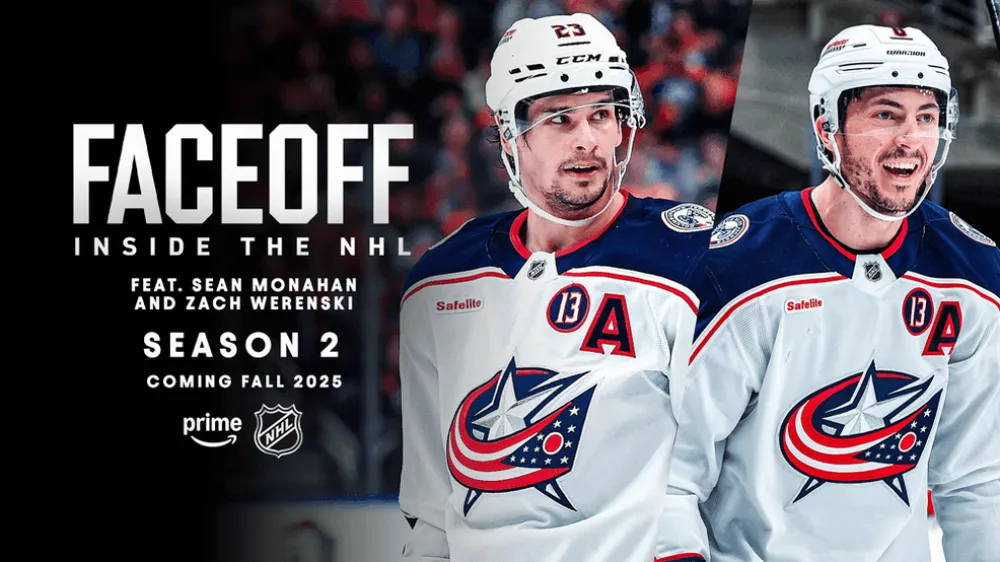
Columbus Blue Jackets road trip recap and faceoff performance: Calgary setback opens western swing
The road trip began on a sour note in Calgary, where the Flames handed the Blue Jackets a decisive 5-1 defeat on November 5. Playing in his 1,000th NHL game, Nazem Kadri sparked the Flames’ offensive outburst as Calgary dominated from start to finish at the Scotiabank Saddledome. The loss exposed some defensive vulnerabilities that would become recurring themes throughout the trip, particularly the team’s struggle to limit high-danger scoring chances and maintain consistent pressure in the offensive zone.
Despite the lopsided scoreline, Columbus showed flashes of the competitive structure that would serve them better in subsequent games. The faceoff circle provided one of the few bright spots, as the Blue Jackets held their own in possession battles. Sean Monahan, facing his former team, won several critical draws that helped Columbus generate brief periods of sustained offensive pressure. However, the Flames’ speed and execution proved too much for a Blue Jackets squad still searching for consistency in their defensive zone coverage.
The Calgary defeat initiated what would become a four-game losing streak, forcing the coaching staff to reevaluate certain tactical approaches. Dean Evason emphasized the importance of staying on the “right side” of the puck, a philosophy that would become increasingly important as the trip progressed. The team’s inability to capitalize on their opportunities while making crucial mistakes at inopportune moments set a frustrating pattern that would persist through the next two games.
As they departed Calgary, the Blue Jackets faced the reality that this road trip would require more than just tactical adjustments. With illness beginning to circulate through the locker room and a series of demanding opponents ahead, Columbus needed to find ways to compete through adversity while maintaining their structural integrity. The faceoff dot would become an increasingly important battleground for controlling game flow and limiting opposition momentum.
Columbus Blue Jackets road trip recap and faceoff performance: Vancouver heartbreak extends the skid
The Blue Jackets’ fortunes didn’t improve in Vancouver, where they fell 4-3 to the Canucks on November 8 at Rogers Arena. This loss proved particularly frustrating because Columbus demonstrated significant improvement in their overall play but couldn’t close out the game. Boeser’s decisive goal highlighted the Canucks’ ability to capitalize on mistakes, a lesson that would haunt the Blue Jackets throughout the remainder of the trip.
Columbus showed positive signs in their early-season progress, but the Vancouver game exposed their ongoing struggle with late-game execution. The team generated quality scoring chances and matched the Canucks’ intensity for significant stretches, yet sloppy play in the offensive zone led to costly turnovers. These transitional breakdowns allowed Vancouver to generate odd-man rushes that eventually proved decisive.
In the faceoff circle, the Blue Jackets continued to hold their ground with Monahan and Jenner combining for strong performances on the draw. Their ability to win key faceoffs in the defensive zone helped limit some of Vancouver’s offensive zone time, but it wasn’t enough to overcome the mistakes elsewhere on the ice. Coyle, still adjusting to his new team, showed glimpses of the versatility he would later display in Seattle, winning crucial draws in all three zones.
The loss to Vancouver represented the team’s third consecutive defeat, and the mounting pressure began to weigh on the group. However, beneath the surface of these losses, the Blue Jackets were building toward something. Their compete level remained high, their structural discipline improved game over game, and their veterans continued to lead by example in all the small battles that don’t show up on the scoresheet. The faceoff performance remained a quiet constant, with Columbus maintaining better than 50 percent success rate even as other aspects of their game fluctuated.
Columbus Blue Jackets road trip recap and faceoff performance: Edmonton overtime thriller showcases resilience
The November 10 matchup against the Edmonton Oilers at Rogers Place proved to be both the most encouraging and most heartbreaking game of the entire road trip. Despite battling through illness that sidelined multiple players, including Miles Wood and Cole Sillinger, the Blue Jackets delivered what many considered their most complete performance of the season, only to fall 5-4 in overtime when former Columbus forward Jack Roslovic scored the winner.
Columbus built leads of 1-0 and 3-1 against the high-powered Oilers, getting goals from Boone Jenner, Sean Monahan, Ivan Provorov, and Adam Fantilli. The line of Dmitri Voronkov, Fantilli, and Kirill Marchenko dominated possession throughout the night, creating numerous scoring chances while maintaining defensive responsibility. The Blue Jackets held clear advantages in possession time, shot attempts, and scoring chances at 5-on-5, demonstrating the type of hockey that had eluded them earlier in the trip.
Faceoff performance played a crucial role in Columbus’s ability to control the game’s tempo against Connor McDavid and Leon Draisaitl. Monahan won 20 of 26 faceoffs in the game according to reports, providing his team with consistent possession starts that allowed them to dictate play for extended stretches. Jenner also excelled in the circle, particularly during penalty kill situations where winning the draw could negate Edmonton’s lethal power play. The Blue Jackets’ collective faceoff success helped them maintain territorial advantages despite being outmanned due to illness.
However, two spectacular individual efforts from McDavid kept Edmonton alive, and a shorthanded goal in the final minute—born from both bad decisions and bad luck—tied the game before Roslovic’s overtime winner. Head coach Dean Evason expressed frustration with how the team lost possession leading up to the tying goal but couldn’t fault the overall effort. “I thought our compete, our level of urgency, our willingness, our desperation to compete, to battle was great,” Evason said afterward. The loss extended Columbus’s losing streak to four games, but it also provided evidence that better results were imminent if they maintained that standard.
Columbus Blue Jackets road trip recap and faceoff performance: Seattle salvation ends the drought
Playing less than 24 hours after their heartbreaking loss in Edmonton, the Blue Jackets faced the Seattle Kraken on November 11 in what became a defining moment of their season. The circumstances couldn’t have been more challenging: a second game in two nights, illness still affecting the roster, captain Boone Jenner leaving early in the second period with injury, and the emotional toll of four consecutive defeats weighing on every player.
Yet Columbus found a way to gut out a 2-1 shootout victory at Climate Pledge Arena, with Charlie Coyle delivering the deciding goal. The veteran center’s shootout winner initially drew a delayed reaction from the bench, with players temporarily uncertain whether the contest had ended since Seattle shot first. “I think guys kind of forgot that it was over,” Zach Werenski admitted afterward. “They went first. I know (Damon Severson) looked at me and was like, ‘It is over?’” The confusion spoke to the exhaustion permeating the team, but once reality set in, the celebration was genuine.
Adam Fantilli scored in regulation for Columbus, while Jet Greaves delivered a stellar performance in his second consecutive start, making 22 saves against a Seattle team that entered the game with one of the league’s best defensive records. The Blue Jackets’ forechecking and defensive improvements became evident in this game, as they refused to chase goals and instead exercised remarkable patience against a Kraken team designed to force mistakes.
“What we liked, and we’ve talked about this a lot, is we were on the right side (of the puck),” Evason explained. “We were on the Jackets side. We didn’t cheat the game tonight. We didn’t give them those freebies, the odd-man rushes. We stayed the course with that kind of stuff, and we’re able to get the job done.” This disciplined approach, combined with strong faceoff work from Coyle and the remaining healthy centers, allowed Columbus to control game flow despite being undermanned and exhausted.
The faceoff circle continued to be a strength even with Jenner unavailable for much of the game. Coyle stepped into a larger role, winning key draws in all three zones while also providing the offensive heroics in the shootout. The victory not only ended the four-game losing streak but also validated the team’s belief that their process was sound even when results weren’t materializing. Getting three of four possible points in a back-to-back situation, given all the adversity, represented a significant character victory.
Columbus Blue Jackets road trip recap and faceoff performance: Faceoff excellence anchors possession strategy
While the road trip’s 1-2-1 record might seem disappointing on the surface, the Blue Jackets’ faceoff performance throughout the four-game swing provided a foundation for optimism moving forward. Columbus maintained its season-long faceoff win percentage of 51.7 percent during the trip, consistently winning the possession battle at the dot even when other aspects of their game faltered. This success in the faceoff circle has become a hallmark of the 2025-26 Blue Jackets, ranking them among the league’s better teams in this critical category.
Sean Monahan has emerged as the team’s most reliable faceoff specialist, combining experience with excellent technique to win draws in all situations. His 52.6 percent faceoff win percentage through 16 games demonstrates consistent excellence, and his ability to win crucial defensive zone faceoffs during penalty kills has been invaluable. Monahan’s veteran presence extends beyond the dot, as he often uses successful faceoffs to immediately initiate breakouts or defensive zone clears that prevent sustained pressure.
Boone Jenner, despite missing portions of the Seattle game due to injury, has maintained his status as one of the team’s most dominant faceoff men. Known for his 70 percent success rate on the penalty kill from previous seasons, Jenner’s work in the circle directly contributes to Columbus’s improved special teams performance. His physical style and timing allow him to win draws cleanly, giving his linemates immediate possession with time and space to execute. When healthy, the Jenner-Monahan combination gives the Blue Jackets two reliable options in critical faceoff situations.
Charlie Coyle’s addition to the roster has provided a third veteran center capable of winning draws at an above-average rate. His versatility allows the coaching staff to deploy him in various situations, and his faceoff competence means the Blue Jackets don’t suffer a significant drop-off when Monahan or Jenner need a breather. Coyle’s shootout heroics in Seattle overshadowed his steady work in the circle throughout the game, but his faceoff performance was equally important to the victory.
The Blue Jackets’ collective faceoff success creates multiple advantages beyond simple possession statistics. Winning draws in the defensive zone allows Columbus to initiate controlled breakouts rather than scrambling to retrieve pucks under pressure. In the offensive zone, faceoff victories give the team immediate shooting or passing opportunities before defensive structures fully set. On special teams, particularly the penalty kill, winning draws can eliminate entire power-play possessions or at minimum reduce the time opponents spend in threatening areas. These cumulative advantages help explain why Columbus has remained competitive despite injuries and illness throughout the season.
Columbus Blue Jackets road trip recap and faceoff performance: Looking ahead with renewed confidence
The Blue Jackets returned home from their western road trip having learned valuable lessons about their identity and resilience. The 1-2-1 record doesn’t tell the complete story of a team that competed admirably against quality opponents while dealing with significant adversity. In three of the four games, Columbus held leads and controlled significant stretches of play, demonstrating that their underlying process is sound even when bounces don’t go their way.
The trip reinforced several important trends for Dean Evason’s squad. First, their faceoff excellence provides a consistent foundation that allows them to compete regardless of circumstances. Having three reliable centers who can win draws at better than 50 percent gives Columbus a structural advantage that compounds throughout 60 minutes of play. Second, the team’s commitment to defensive structure and staying on the “right side” of the puck has improved dramatically from early-season performances, suggesting sustainable progress rather than temporary variance.
Individual performances throughout the trip also provided reasons for optimism. Kirill Marchenko extended his career-best point streak to eight games during the road swing, with his 17 points through 15 games ranking fourth in Blue Jackets history for that span. Adam Fantilli’s multi-point performances in Edmonton and Seattle demonstrated his growing offensive confidence and ability to impact games beyond the scoresheet. Zach Werenski’s continued excellence on both sides of the puck, averaging over 26 minutes per night, has anchored the defensive corps.
The character displayed in Seattle, where the Blue Jackets refused to fold despite exhaustion, illness, and injuries, speaks to the culture Evason is building. “I think it speaks a lot about our character,” Werenski said after the shootout victory. “Obviously the road trip hasn’t gone our way and we’re obviously not happy about how some of the games have gone, but we just dug deep and found a way to win this one.” This resilience will be tested repeatedly throughout a long season, but the foundation appears solid.
As Columbus moves forward, their faceoff performance will continue to be a quiet advantage that enables success in other areas. The ability to control possession from the opening faceoff of each shift gives the Blue Jackets opportunities to dictate play, limit opponents’ dangerous chances, and generate offense through sustained pressure. Combined with improving defensive structure and growing offensive depth, this faceoff excellence positions Columbus as a team capable of exceeding preseason expectations. The western road trip, despite its challenges, may ultimately be remembered as a turning point where the 2025-26 Blue Jackets discovered their identity and the resilience needed to compete in the NHL’s demanding Metropolitan Division.

Par Mike Jonderson
Mike Jonderson is a passionate hockey analyst and expert in advanced NHL statistics. A former college player and mathematics graduate, he combines his understanding of the game with technical expertise to develop innovative predictive models and contribute to the evolution of modern hockey analytics.