










The Edmonton Oilers have spent the past three Octobers navigating treacherous waters in what should be a month of opportunity. While the 2025-26 campaign has shown marked improvement over previous seasons, the franchise’s struggles to establish early-season momentum remain a persistent theme. For a team built around generational talents like Connor McDavid and Leon Draisaitl, October has become a litmus test that reveals both character flaws and resilience.
This season’s 5-4-2 record through October represents the best start the Oilers have managed in three years, a modest achievement that nonetheless carries significant weight. The team has avoided the catastrophic collapses that plagued previous campaigns, yet the recurring pattern of slow starts raises questions about preparation, systems, and the mental approach required to hit the ground running when the season begins.
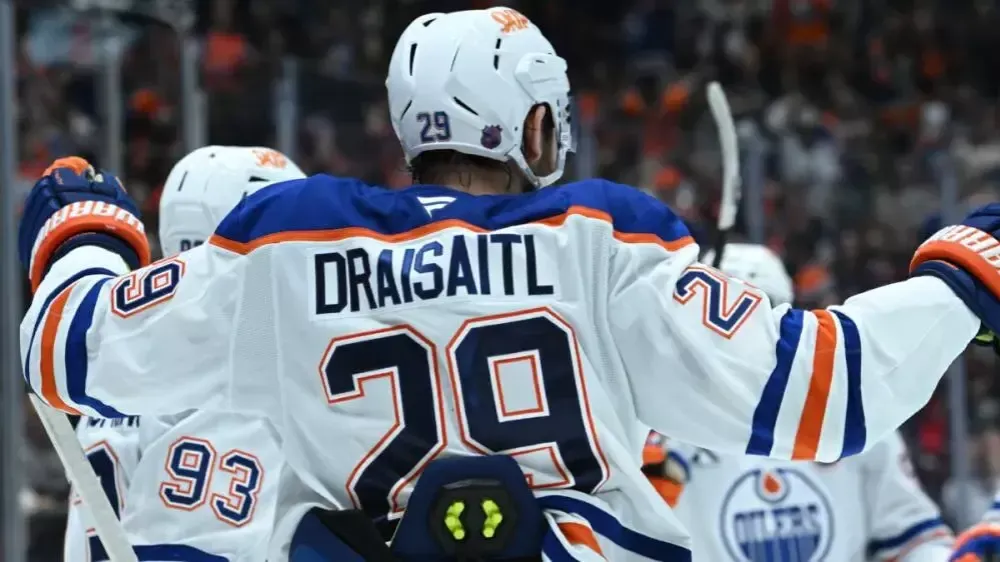
The evolution of Edmonton Oilers October winning habits through recent seasons
The trajectory of the Oilers’ October performances tells a story of gradual improvement masking deeper concerns. In 2023-24, the team posted a dismal 2-5-1 record through the first month, plagued by Jack Campbell’s struggles in net where he couldn’t maintain a save percentage above .880. Connor McDavid’s early injury compounded the issues, leaving the team without its captain during crucial early games.
The following October in 2024-25 saw marginal improvement with a 5-5-1 record. Both Stuart Skinner and Calvin Pickard battled inconsistency, posting save percentages of .872 and .897 respectively. The goaltending carousel continued to spin without finding stability, and the team’s defensive structure remained suspect. According to recent analysis, the Oilers trailed in eight of their first twelve games this season, suggesting that despite the improved record, the underlying habits haven’t fully transformed.
This season’s 5-4-2 start marks incremental progress, but the improvements have come grudgingly. The team has dealt with injuries, lineup shuffling, and an offense that has struggled to find consistent flow. Veterans like Mattias Ekholm acknowledge the pattern but admit uncertainty about the solution. “If you look back on it, since I’ve been here, this is the best start that we’ve ever had,” Ekholm noted, “but obviously, we want to start better.” His comments reflect the team’s awareness without offering clear answers.
The difference between mediocrity and excellence often lies in the margins. While five points in the standings might seem close to the five-win mark the team aspires to, those dropped points early in the season have historically cost Edmonton home-ice advantage and division titles. The cumulative effect of October struggles ripples through the entire campaign.
Defensive responsibility and the Edmonton Oilers October winning habits foundation
One of the most dramatic shifts in the Oilers’ October approach has been their commitment to defensive play. The numbers from the early weeks of the 2025-26 season paint a picture of a team that has learned hard lessons about protecting leads and limiting high-danger chances. Through the first three games of this season compared to last, the goal differential swung dramatically from minus-12 to plus-4, representing a seismic shift in philosophy.
The penalty kill has emerged as a cornerstone of the team’s improved October performance. After allowing five power-play goals through the first three games of 2024-25, the Oilers tightened up to allow just four total goals in the same span this year. That 88.9% penalty kill rate, doubled from the previous season’s 44.4%, reflects a commitment to structure and discipline that had been sorely lacking. These aren’t just statistical anomalies—they represent fundamental changes in how players position themselves, communicate, and execute their assignments.
Shot blocking and physical engagement have increased measurably. The team went from 44 to 56 hits per game and from 37 to 54 blocked shots across the opening stretch. These aren’t flashy statistics that generate highlight reels, but they’re the building blocks of championship hockey. When players sacrifice their bodies to block shots or finish checks in the defensive zone, it sends a message about collective commitment.
Perhaps most telling is the Oilers’ ability to avoid trailing through the first portion of the season. In a sport where momentum shifts can be devastating, playing with the lead allows teams to dictate tempo and force opponents to take risks. The fact that Edmonton took a lead into the third period in each of their first three games represents a fundamental shift in approach. Even when they’ve fallen behind this season, as evidenced by their 6-3 comeback victory over Utah, the team has shown resilience rather than collapsing under pressure.
The defensive improvements haven’t come at the expense of offensive production entirely, but there’s been a noticeable emphasis on limiting quality chances against. Calvin Pickard’s performance in a 3-1 victory against Vancouver, facing just 15 shots, demonstrated that when the team plays structured hockey in front of their goaltender, positive results follow. Stuart Skinner’s 30-save shutout against the Rangers at Madison Square Garden further validated the approach.
Goaltending consistency as a pillar of Edmonton Oilers October winning habits
The Oilers’ October fortunes have historically risen and fallen with goaltending performance, and this season has been no exception. The position has been a revolving door of inconsistency, with each October revealing new questions about whether the team has solved its most pressing issue. While the 2025-26 campaign has shown improvement, the path to reliable netminding remains fraught with uncertainty.
Stuart Skinner’s journey epitomizes the challenge. After a shaky opening night in a 4-3 shootout loss to Calgary on October 8, where he showed vulnerability, Skinner bounced back with a statement performance against the Rangers. His 30-save shutout at Madison Square Garden on October 14 demonstrated the high-end capability that makes him the presumptive number one, yet the inconsistency between performances highlights the ongoing concerns.
Calvin Pickard has provided solid backup work, including a performance against Vancouver where he faced just 15 shots in a 3-1 victory. The lighter workload reflected strong team defense, but Pickard’s steadiness when called upon has been crucial. Having a reliable tandem where both goaltenders can win games takes pressure off the starter and provides the coaching staff flexibility in managing workloads.
The goaltending concerns extend beyond individual performances to the broader question of whether the team can win consistently regardless of who’s in net. Championship teams typically feature goaltenders who can steal games when the team plays poorly and protect leads when the team plays well. The Oilers are still searching for that level of consistency, though the early returns this October suggest progress.
What’s changed is the team’s willingness to help their goaltenders through improved defensive structure. Reducing high-danger chances, clearing rebounds, and limiting second opportunities have all contributed to better goaltending statistics. It’s difficult to separate goaltender performance from team defense, and the Oilers seem to have finally recognized that protecting their netminders is as important as individual save percentages.
Offensive adjustments and Edmonton Oilers October winning habits sustainability
While defensive improvements have stabilized the Oilers’ October performances, questions linger about the sustainability of an offense that has sputtered compared to its usual high-powered output. Through the early portion of the season, Edmonton has managed just eight goals in their first three games, with two coming into empty nets. This represents a significant departure from the offensive fireworks fans have come to expect from a team featuring McDavid and Draisaitl.
Connor McDavid’s seven-game goal drought earlier this month, his longest career drought, highlighted the challenges even elite players face when timing and execution are off. His overtime winner against Ottawa on October 23 broke the slump, but the extended silence from the game’s best player demonstrated how the entire lineup can struggle when stars aren’t producing. The Oilers’ offensive identity has traditionally relied on overwhelming skill, but October has forced them to find wins through other means.
The line combinations have undergone constant shuffling as the coaching staff searches for chemistry. Leon Draisaitl’s partnership with Vasily Podkolzin, a product of the summer 2024 trade from Vancouver, has shown promise. The duo has developed an understanding that provides some stability on the second line, though consistency remains elusive. Ryan Nugent-Hopkins has shouldered significant responsibilities in various roles, adapting to whatever the team needs on a given night.
The reality is that the Oilers have won games this October despite modest offensive production, not because of it. They’re averaging fewer than three goals per game through the early stretch, a number that would be unsustainable over 82 games for a team with playoff aspirations. The positive spin is that when the offense inevitably improves—and with this roster, it will—the team will be even more formidable with their improved defensive foundation.
Injuries have complicated the offensive equation. Zach Hyman’s absence has removed a key net-front presence and complementary scorer from the top line. His ability to finish McDavid’s passes and battle for loose pucks creates space for the stars to operate. Getting key players healthy and into consistent roles will be crucial as the season progresses.
Mental fortitude and the Edmonton Oilers October winning habits mindset
Perhaps the most significant development in the Oilers’ October winning habits has been the evolution of their mental approach to adversity. The 6-3 comeback victory over Utah on a recent Tuesday night exemplified a team that has learned to weather storms rather than capitulate when things go wrong. After committing 16 first-period turnovers, the team could have crumbled. Instead, they regrouped and found a way to win.
This mental fortitude represents a departure from previous Octobers when setbacks snowballed into extended losing streaks. The 2023-24 season saw a 1-2-0 start deteriorate into a 2-9-1 record that nearly cost then-coach Jay Woodcroft his job. Last season, the team didn’t reach .500 until November, constantly playing catch-up in a competitive Pacific Division. The psychological weight of always chasing rather than leading takes a toll over 82 games.
Veteran leadership has played a crucial role in stabilizing the team’s mental approach. Players like Mattias Ekholm bring Stanley Cup Final experience and a calm presence that helps younger players navigate the highs and lows of a long season. His ability to laugh about the need for everyone to “take a deep breath” reflects a maturity that comes from experience, though he admits he doesn’t have all the answers about solving October woes.
Accountability has also improved. When Darnell Nurse made costly errors in the first period against Utah, the coaching staff benched him, sending a message that star players aren’t immune from consequences. This willingness to hold everyone accountable, regardless of contract or pedigree, reinforces team-first values and prevents complacency from taking root.
The ability to learn from mistakes without dwelling on them has become a hallmark of this season’s approach. After the shaky opening night loss to Calgary, the team responded with better performances. When they’ve trailed in games—which has happened frequently—they’ve found ways to battle back rather than accepting defeat. These are the intangibles that don’t show up in box scores but determine whether a team maximizes its potential.
Looking ahead: building on Edmonton Oilers October winning habits
As October transitions into November, the Oilers face a critical juncture. Their improved start has kept them in the playoff picture and avoided the panic that has characterized previous seasons, but the real test lies ahead. Can they build on these modest improvements and transform them into sustained excellence? Or will old habits resurface as the grind of the season intensifies?
The key performers from October 2025 provide a blueprint for success moving forward. Whether it’s the defensive contributions from newcomers, the scoring depth from secondary lines, or the improved goaltending, each element needs to continue developing. The team can’t afford to rest on the accomplishment of having their best October in three years when the ultimate goal is winning the Stanley Cup.
Health will be paramount. Getting Zach Hyman back to full strength, maintaining Connor McDavid’s fitness, and avoiding the injury cascade that has plagued them in the past will require careful management. The depth that seemed adequate in October will be tested as games pile up and fatigue sets in. The coaching staff’s ability to manage minutes and keep players fresh will be crucial.
Perhaps most importantly, the Oilers need to maintain the defensive identity they’ve established while allowing their offensive game to flourish. The two aren’t mutually exclusive, but finding the right balance requires constant adjustment. Championship teams play complete games in all three zones, and Edmonton has shown flashes of that capability this October. The question is whether they can sustain it through the long winter months ahead.
The foundation for success has been laid this October, but winning habits are only valuable if they become permanent. The Edmonton Oilers have proven they can learn from past mistakes and make incremental improvements. Now they need to prove those improvements aren’t temporary adjustments but lasting changes that will carry them through the playoffs and toward their ultimate goal.

Par Mike Jonderson
Mike Jonderson is a passionate hockey analyst and expert in advanced NHL statistics. A former college player and mathematics graduate, he combines his understanding of the game with technical expertise to develop innovative predictive models and contribute to the evolution of modern hockey analytics.