





The Los Angeles Kings entered the 2025-26 campaign with cautious optimism and calculated expectations. After finishing last season with 105 points and a 48-25-9 record, the franchise made significant roster adjustments, particularly on the blueline, while maintaining their core offensive structure. Through the opening quarter of the season, the Kings have demonstrated both resilience and inconsistency, compiling a 9-5-4 record that places them firmly in Pacific Division playoff contention. However, beneath the surface-level success lies a more complex narrative of home struggles, road excellence, and roster chemistry challenges that paint a nuanced picture of this team’s identity.
What makes the 2025-26 Kings particularly fascinating is the stark contrast between expectation and reality. A team that dominated at home last season with a 31-6-4 record at Crypto.com Arena has become nearly unbeatable on the road while struggling mightily in front of their own fans. This peculiar reversal, combined with the emergence of unexpected contributors and persistent special teams concerns, has created a season that defies easy categorization. As the Kings navigate a demanding schedule that included extensive early-season travel due to arena renovations, their performance provides valuable insights into both their immediate playoff prospects and long-term competitive ceiling.
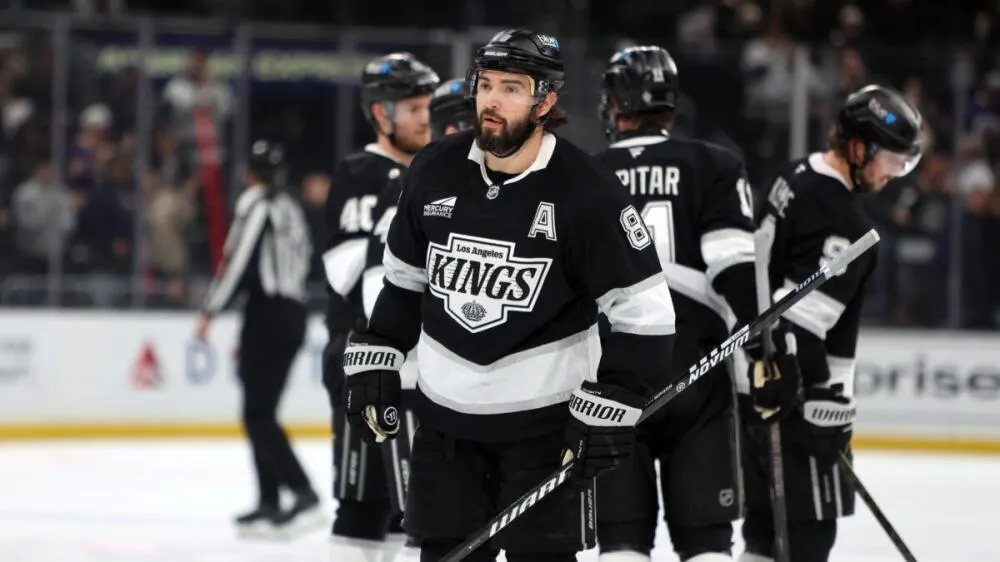
The Kings’ paradoxical home and road performance split
The most perplexing aspect of the Los Angeles Kings’ road dominance has been its complete inversion from the previous season. Through 18 games, the Kings have posted an impressive 8-1-2 road record while stumbling to a dismal 1-4-2 mark at Crypto.com Arena. This represents one of the most dramatic home-road splits in recent NHL history and stands in stark contrast to their league-leading home performance in 2024-25.
The road success has been nothing short of remarkable. With just one regulation loss away from Los Angeles, the Kings have found a formula that works in hostile environments. Their five-game winning streak on the road demonstrated a level of composure and execution that has been consistently absent at home. The ability to dictate matchups typically favors the home team, yet the Kings have thrived when facing top opposition lines in enemy territory while faltering when they control the last change.
Several theories have emerged to explain this bizarre phenomenon. Some within the organization have suggested that the pressure to replicate last season’s home dominance created mental barriers that prevented the team from playing with the same freedom they experienced on the road. Others point to the extensive early-season travel schedule, which forced the team to develop road chemistry and routines that became their comfort zone. The arena renovations that delayed their home schedule may have inadvertently contributed to an away-game mentality becoming their default operating mode.
The psychological component cannot be overlooked. Playing on the road often simplifies a team’s focus, eliminating external distractions and creating an us-against-them mentality that can galvanize performance. The Kings have embraced this underdog role away from home, playing with an edge and desperation that mysteriously evaporates when they return to their own building. This pattern raises important questions about team culture and mental preparation that will need addressing as the season progresses.
The concerning aspect of this split is its sustainability. While the Kings have banked valuable points through their road excellence, no team can maintain such a lopsided performance differential over an 82-game schedule. Eventually, they must solve their home ice struggles or risk squandering the advantages their away success has provided. The fact that they’ve managed a winning record despite one of the NHL’s worst home performances speaks to both their road resilience and the precariousness of their current position.
Special teams struggles undermining five-on-five success
The Kings’ special teams performance has been a consistent source of frustration throughout the early season. Their power play, operating at just 16.1 percent, ranks seventh-worst in the NHL and represents a significant regression from late-season success with their five-forward unit. More alarmingly, the Kings have allowed four shorthanded goals while on the power play—the most in the league—turning what should be advantageous situations into momentum-killing disasters.
The decision to continue running a five-forward power play unit made sense given its effectiveness late last season. However, the execution has been poor, with the Kings struggling not just to score but to gain zone entry and establish sustained pressure. The absence of Brandt Clarke from the top unit remains puzzling, as the young defenseman possesses the exact offensive skill set that could provide the structure and blue-line presence the five-forward configuration lacks. His ability to create space along the blue line and quarterback the attack has been underutilized in a special teams role where he should be thriving.
The penalty kill presents equally troubling concerns. Operating at a 77.8 percent success rate—11th worst in the league—the Kings have lost the aggressive, structured approach that made them so effective in previous seasons. The departure of Matt Roy and Vladislav Gavrikov in consecutive offseasons has removed two shutdown defenders who excelled in shorthanded situations, and their replacements have not adequately filled that void. The combination of taking too many penalties and failing to kill them efficiently has created a dangerous cycle that has directly cost the Kings multiple games.
Discipline has been another major concern, particularly in the season’s opening weeks. The Kings found themselves shorthanded 22 times in their first four games alone, often taking offensive-zone penalties at critical junctures that allowed opponents to seize momentum. While this trend has improved recently, the team’s 28 total minors through seven games kept them tied for tenth most in the league. For a team that doesn’t draw many penalties themselves, staying out of the box is essential to maintaining even-strength advantages.
The compounding effect of special teams failures cannot be understated. When a team struggles on both the power play and penalty kill, it creates a psychological weight that affects confidence and game management. The Kings have surrendered leads and lost games directly due to special teams breakdowns, turning what should be competitive contests into frustrating losses. Until these issues are addressed through personnel changes, tactical adjustments, or both, they will continue to cap the team’s ceiling regardless of five-on-five performance.
Offensive production from unexpected sources
While the Kings’ struggles have dominated headlines, several players have exceeded expectations and provided the offensive spark necessary to maintain playoff positioning. Corey Perry’s addition has proven to be a masterstroke that goes beyond simple veteran leadership. The 40-year-old has scored seven goals and accumulated 11 points in just 12 games, providing the Kings with a dangerous net-front presence and clutch scoring they’ve lacked in previous seasons.
Perry’s impact extends beyond raw numbers. His positioning in high-traffic areas has created space for linemates and drawn defensive attention that opens up opportunities elsewhere. The fact that he ranks second among all Kings in goals despite missing the first six games of the season speaks to both his efficiency and the importance of his contributions. While projecting him to maintain this 70-plus point pace would be unrealistic, his presence has fundamentally altered the team’s offensive dynamic in ways that weren’t anticipated when he was signed.
Adrian Kempe continues to cement his status as the team’s most valuable forward. Leading all Kings with 19 points through 18 games, Kempe is on pace for a career-high 87 points in what happens to be his contract year. His three game-winning goals—two coming in overtime—have directly earned the Kings crucial points and demonstrated his ability to deliver in clutch situations. The combination of his speed, shot, and improving playmaking makes him the Kings’ most complete offensive weapon and increasingly attractive on the open market should extension talks continue to stall.
Kevin Fiala has found another level offensively, particularly in the goal-scoring department. With nine goals in 18 games, he’s projecting toward a 41-goal season that would shatter his previous career high of 35. Fiala’s increased confidence and willingness to shoot has made him a constant threat, and his recent three-game goal streak showcased the type of sustained excellence the Kings need from their top-six forwards. His chemistry with Quinton Byfield has been particularly encouraging, as the two skilled players seem to elevate each other’s games.
Byfield himself represents the most important development for the Kings’ long-term future. With two goals and four assists in seven games while averaging a team-leading 19:19 in ice time among forwards, the 22-year-old is finally receiving the opportunity and responsibility befitting a former second-overall pick. His physical tools and skill level make him a threat on every shift, and the question is no longer whether he’ll break through but how high his ceiling extends. If Byfield can approach point-per-game production, the Kings’ top-six suddenly looks far more formidable.
Defensive regression and goaltending stability
The Kings’ defensive structure has noticeably deteriorated from previous seasons, a predictable consequence of losing key contributors and integrating new pieces. The departure of Vladislav Gavrikov and Jordan Spence created holes that free agent additions Brian Dumoulin and Cody Ceci were expected to fill. The early results have been concerning, with the new pairing getting torched to the point where they needed to be separated and paired with more stable partners.
According to Natural Stat Trick, the Dumoulin-Ceci pairing allowed devastating numbers during their 41 minutes together at five-on-five. They were outchanced by a 2-to-1 margin, including a brutal 13-4 deficit in high-danger chances, while being outscored 5-0. While both veterans have performed better when paired separately—Dumoulin with Drew Doughty and Ceci with Mikey Anderson—their combined $30 million commitment over multiple years makes their early struggles particularly concerning for long-term roster construction.
The defensive breakdowns have been systemic rather than isolated to one pairing. Losing man coverage in critical areas, failing to arrive quickly enough to support positions, and leaving opponents wide open in the slot have become recurring issues. The structured, detail-oriented defensive play that defined Kings hockey under previous systems has given way to more chaotic coverage and reactive positioning. This regression was somewhat expected given the personnel changes, but the extent has been more pronounced than anticipated.
Brandt Clarke stands as the one bright spot on the restructured blueline. The 22-year-old has been more than solid in his second-pairing role alongside Joel Edmundson, demonstrating improved defensive awareness to complement his natural offensive gifts. However, his usage remains puzzling, with his ice time frequently failing to reach 15 minutes despite his effectiveness. Clarke’sible doesn’t kill penalties and shares second power-play unit time rather than anchoring the top unit, suggesting the coaching staff hasn’t fully committed to maximizing his considerable talents.
The saving grace has been Darcy Kuemper’s continued excellence in goal. After a Vezina Trophy-finalist campaign in 2024-25, legitimate questions existed about whether he could sustain that level of performance. Through 13 games, Kuemper has answered emphatically with a .903 save percentage that ranks ninth among goaltenders with at least 10 games played and a 2.44 goals-against average that sits fourth-lowest. For a team experiencing defensive regression, having an elite goaltender capable of stealing games and covering mistakes has been essential to maintaining their playoff position.
Looking ahead: sustainability and adjustments needed
As examined in the broader NHL early-season surprises analysis 2025-26, the Kings represent a fascinating case study in contradictions and sustainability questions. Their 9-5-4 record and second-place position in the Pacific Division paint a picture of a competitive team, yet the underlying metrics and performance patterns suggest a club that needs significant adjustments to maintain this trajectory over a full season.
The home-road split demands immediate attention. While the Kings have demonstrated they can win consistently away from Los Angeles, the notion that they’ll continue posting an 8-1-2 road record is unrealistic. Regression to the mean is inevitable, which means solving their home ice problems isn’t just important—it’s essential to avoiding a catastrophic slide in the standings. The upcoming stretch includes a lengthy homestand that will test whether the team can translate their road success back to Crypto.com Arena.
Special teams improvements must become a priority. The power play requires a fundamental restructuring that incorporates Clarke’s offensive talents and provides the blue-line presence the five-forward unit lacks. A suggested configuration featuring Quinton Byfield, Adrian Kempe, Kevin Fiala, Corey Perry, and Brandt Clarke on the top unit could provide the balance of skill, net presence, and structure needed to capitalize on man advantages. The penalty kill needs system refinements and potentially personnel changes to restore the aggressive, gap-controlling approach that previously defined Kings hockey.
The defensive corps remains the most significant long-term concern. While goaltending can paper over defensive deficiencies in the short term, sustained success requires a more stable and effective blueline. The Dumoulin-Ceci situation needs continued monitoring, as neither veteran has demonstrated the reliable shutdown ability the Kings require from their depth defenders. Clarke’s development and deployment will be crucial, as maximizing his capabilities could offset some of the group’s overall limitations.
Contract situations loom over the season’s narrative. Kempe’s extension talks remain unresolved as he continues to build his case for a significant raise. The longer negotiations drag without resolution, the greater the risk of distraction or departure. The Kings must balance rewarding their best player with maintaining long-term roster flexibility, a delicate negotiation that will shape the franchise’s competitive window.
The Kings’ early season performance reveals a team in transition, balancing veteran leadership with emerging young talent while adapting to significant roster changes. Their ability to bank points despite glaring weaknesses speaks to their resilience and the individual excellence of key contributors. However, sustainability requires addressing systemic issues in special teams, defensive structure, and home ice performance. The Pacific Division remains wide open, and the Kings have positioned themselves well for a playoff push. Whether they can iron out their inconsistencies and harness their road success at home will determine if this team becomes a legitimate contender or merely another playoff participant. The foundation exists for sustained success, but the execution must improve across multiple facets to maximize this roster’s potential.
Frequently Asked Questions

Par Mike Jonderson
Mike Jonderson is a passionate hockey analyst and expert in advanced NHL statistics. A former college player and mathematics graduate, he combines his understanding of the game with technical expertise to develop innovative predictive models and contribute to the evolution of modern hockey analytics.